









Idioma:
ingles
alemán


|
|
|
|
2-4
20'
8
Nenhum texto necessário no jogo
|
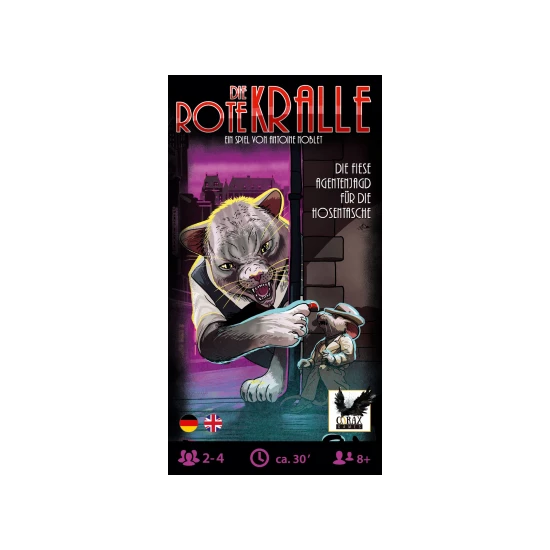
Die rote Kralle
Editor: Corax Games
 ¿Quieres vender tu copia de este juego?

¡Utilice nuestro mercado utrade!
Die rote Kralle
Contáctenos
Compartir en
El artículo no está disponible, puede utilizar la alerta para recibir una notificación cuando volverá a estar disponible.
FOTOS EN BGG
Estas fotos son propiedad de boardgamegeek.com y no se refieren específicamente a la edición de esta página.
 Descripción
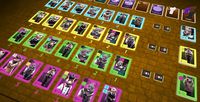
In The Red Claw, players are agents who have been compromised and must now flee. Every player is on their own and does not care about the fate of the others... The idea is based on a real situation in the 1970s when high class Stasi Agent Werner Stiller fled from East Germany towards FRG. When he left GDR, he took many classified documents with him that compromised hundreds of Stasi Agents deployed in West Germany. They immediately had to flee to avoid being captured. However the game does not adopt this scenery 100%, so players will not play Stasi Agents. At its core, The Red Claw is a damage avoidance game. Cards are put on the table in four rows of different colors. At their end are two tokens, usually with tracking (damage) points, and on the other end are the counteragents... In turn order, players play one of the cards in their hands. It contains two symbols. The Counter Agent of each corresponding row moves one card tile per symbol. All cards it touches go into the active player's hand. If a row is empty, the tokens at its end are scored. Whoever possesses more cards of the corresponding color "wins" the token and gets it. (Actually players usually want to avoid winning these tokens.) In case of a tie, the player with cards with the higher number gets it. This player then puts its cards of the corresponding color on the discard pile. Now the same procedure is done again for the second token. The discard pile of this color is shuffled and players build a new row from it and reveal new tokens. The game ends if one player has a certain number of tracking points. Points get counted, and whoever has the least wins the game.
 Información adicional
| mecanica: | Manejo de manos |
| Categorías: | Juegos de cartas Temático |
| Nombres alternativos: | Die rote Kralle The Red Claw |
| BARCODE: | 7108442104966 |
| Esto fue visto 2847 veces | |
Descripción
In The Red Claw, players are agents who have been compromised and must now flee. Every player is on their own and does not care about the fate of the others... The idea is based on a real situation in the 1970s when high class Stasi Agent Werner Stiller fled from East Germany towards FRG. When he left GDR, he took many classified documents with him that compromised hundreds of Stasi Agents deployed in West Germany. They immediately had to flee to avoid being captured. However the game does not adopt this scenery 100%, so players will not play Stasi Agents. At its core, The Red Claw is a damage avoidance game. Cards are put on the table in four rows of different colors. At their end are two tokens, usually with tracking (damage) points, and on the other end are the counteragents... In turn order, players play one of the cards in their hands. It contains two symbols. The Counter Agent of each corresponding row moves one card tile per symbol. All cards it touches go into the active player's hand. If a row is empty, the tokens at its end are scored. Whoever possesses more cards of the corresponding color "wins" the token and gets it. (Actually players usually want to avoid winning these tokens.) In case of a tie, the player with cards with the higher number gets it. This player then puts its cards of the corresponding color on the discard pile. Now the same procedure is done again for the second token. The discard pile of this color is shuffled and players build a new row from it and reveal new tokens. The game ends if one player has a certain number of tracking points. Points get counted, and whoever has the least wins the game.
Información adicional
| mecanica: | Manejo de manos |
| Categorías: | Juegos de cartas Temático |
| Nombres alternativos: | Die rote Kralle The Red Claw |
| BARCODE: | 7108442104966 |
| Esto fue visto 2847 veces | |
Lo que dicen los jugadores
Valoraciones de usuarios uplay: Aún no hay reseñas uplay. ¡Sé el primero!
Tu reseña
Los comentarios se moderan antes de publicarse: sin enlaces, insultos ni contenido ajeno al producto. Se aceptan opiniones negativas respetuosas.
Inicia sesión para reseñar
¡PRECAUCIÓN! No apto para niños menores de 3 años. Contiene piezas pequeñas que podrían tragarse o inhalarse.