


Idioma:
italiano
ingles
|
|
|
|
Mejor con 4 jugadores
9 votos de 10
Edad recomendada por los jugadores: 12+
4 votos de 4
2-4
90'
12
Kein notwendiger Text im Spiel
|
Magna Grecia
Editor: Venice Connection
 ¿Quieres vender tu copia de este juego?

¡Utilice nuestro mercado utrade!
Magna Grecia
Contáctenos
Compartir en
El artículo no está disponible, puede utilizar la alerta para recibir una notificación cuando volverá a estar disponible.
FOTOS EN BGG
Estas fotos son propiedad de boardgamegeek.com y no se refieren específicamente a la edición de esta página.




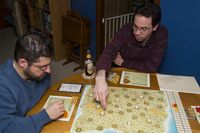




 Descripción
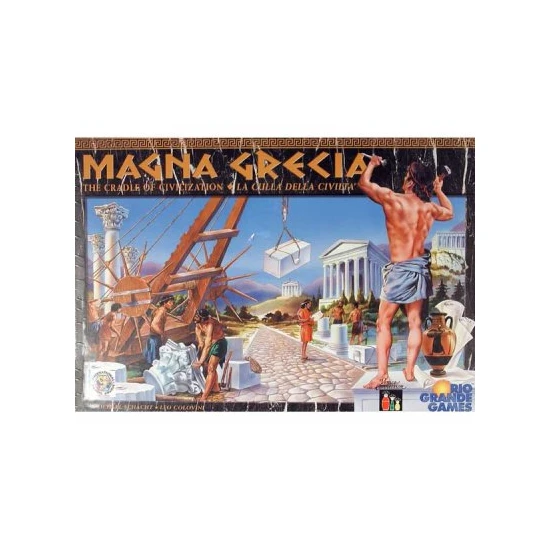
Magna Grecia (La cuna de la civilización) es la principal atracción del año con Clementoni. El juego es una colaboración entre Leo Colovini y Michael Schacht. La región sur de Italia se llamaba Magna Grecia y fue colonizada hace 2,500 años por comerciantes y aventureros griegos. Antes de la llegada de los griegos, el país estaba habitado solo por algunas pequeñas tribus. Suelo fértil, ríos navegables, grandes bosques y minas de bronce y plata ofrecían enormes posibilidades de desarrollo. Se desarrollaron ciudades más grandes, como Tarento, Siracusa, Catana, Locri y Naxos. Además, había numerosos pueblos de los cuales no queda rastro. Un sistema de carreteras local promovió el comercio, y se desarrollaron mercados ricos en las ciudades. Cada vez surgieron más rivalidades entre las ciudades, particularmente por el control del Oráculo, que representaba una fuente importante de fama y riqueza.
Material suficiente para una noche de juego. Cada jugador debe establecer y desarrollar con éxito Magna Grecia. En puntos favorables, se construyen mercados, los pueblos se desarrollan en ciudades y se interconectan mediante un sistema de carreteras. Solo así se puede abrir el interior y controlar el Oráculo. Construir tu propia gran ciudad suele ser muy caro, y a veces es más rentable construir en los pueblos neutrales o en las ciudades de los oponentes.
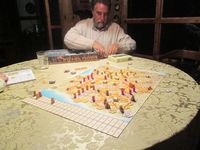
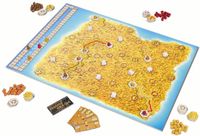
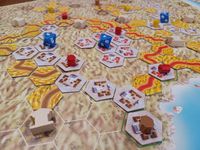
El tablero está cubierto con una cuadrícula hexagonal sobre la que se colocan piezas de carretera, ciudades o mercados. Un juego dura 12 rondas. Cada ronda está determinada por un mapa de acción, que se establece al comienzo del juego según un cierto patrón. El mapa especifica la secuencia de jugadores e indica hasta qué punto se pueden utilizar las tres acciones básicas (construcción de carreteras, construcción de ciudades y suministro). También hay, por supuesto, ciertas reglas de construcción a tener en cuenta. Además, se pueden establecer mercados, cuyo valor depende del número de ubicaciones conectadas. El Oráculo se muestra en el tablero. Para controlar el Oráculo, un jugador debe conectar una de sus propias ciudades a él por carretera. Pero si varias ciudades están conectadas a un Oráculo, la ciudad más importante tiene prioridad, determinada por el número de ubicaciones conectadas a la ciudad (sin incluir los Oráculos). Los mercados y el Oráculo determinan cuándo termina el juego.
Material suficiente para una noche de juego. Cada jugador debe establecer y desarrollar con éxito Magna Grecia. En puntos favorables, se construyen mercados, los pueblos se desarrollan en ciudades y se interconectan mediante un sistema de carreteras. Solo así se puede abrir el interior y controlar el Oráculo. Construir tu propia gran ciudad suele ser muy caro, y a veces es más rentable construir en los pueblos neutrales o en las ciudades de los oponentes.
El tablero está cubierto con una cuadrícula hexagonal sobre la que se colocan piezas de carretera, ciudades o mercados. Un juego dura 12 rondas. Cada ronda está determinada por un mapa de acción, que se establece al comienzo del juego según un cierto patrón. El mapa especifica la secuencia de jugadores e indica hasta qué punto se pueden utilizar las tres acciones básicas (construcción de carreteras, construcción de ciudades y suministro). También hay, por supuesto, ciertas reglas de construcción a tener en cuenta. Además, se pueden establecer mercados, cuyo valor depende del número de ubicaciones conectadas. El Oráculo se muestra en el tablero. Para controlar el Oráculo, un jugador debe conectar una de sus propias ciudades a él por carretera. Pero si varias ciudades están conectadas a un Oráculo, la ciudad más importante tiene prioridad, determinada por el número de ubicaciones conectadas a la ciudad (sin incluir los Oráculos). Los mercados y el Oráculo determinan cuándo termina el juego.
 Información adicional
| mecanica: | Construcción de rutas/redes Colocación de azulejos |
| Categorías: | Exploración Histórico |
| Nombres alternativos: | |
| BARCODE: | 655132002196 |
| En 6 listas de deseos En colecciones 9 Esto fue visto 22718 veces | |
Descripción
Magna Grecia (La cuna de la civilización) es la principal atracción del año con Clementoni. El juego es una colaboración entre Leo Colovini y Michael Schacht. La región sur de Italia se llamaba Magna Grecia y fue colonizada hace 2,500 años por comerciantes y aventureros griegos. Antes de la llegada de los griegos, el país estaba habitado solo por algunas pequeñas tribus. Suelo fértil, ríos navegables, grandes bosques y minas de bronce y plata ofrecían enormes posibilidades de desarrollo. Se desarrollaron ciudades más grandes, como Tarento, Siracusa, Catana, Locri y Naxos. Además, había numerosos pueblos de los cuales no queda rastro. Un sistema de carreteras local promovió el comercio, y se desarrollaron mercados ricos en las ciudades. Cada vez surgieron más rivalidades entre las ciudades, particularmente por el control del Oráculo, que representaba una fuente importante de fama y riqueza.
Material suficiente para una noche de juego. Cada jugador debe establecer y desarrollar con éxito Magna Grecia. En puntos favorables, se construyen mercados, los pueblos se desarrollan en ciudades y se interconectan mediante un sistema de carreteras. Solo así se puede abrir el interior y controlar el Oráculo. Construir tu propia gran ciudad suele ser muy caro, y a veces es más rentable construir en los pueblos neutrales o en las ciudades de los oponentes.
El tablero está cubierto con una cuadrícula hexagonal sobre la que se colocan piezas de carretera, ciudades o mercados. Un juego dura 12 rondas. Cada ronda está determinada por un mapa de acción, que se establece al comienzo del juego según un cierto patrón. El mapa especifica la secuencia de jugadores e indica hasta qué punto se pueden utilizar las tres acciones básicas (construcción de carreteras, construcción de ciudades y suministro). También hay, por supuesto, ciertas reglas de construcción a tener en cuenta. Además, se pueden establecer mercados, cuyo valor depende del número de ubicaciones conectadas. El Oráculo se muestra en el tablero. Para controlar el Oráculo, un jugador debe conectar una de sus propias ciudades a él por carretera. Pero si varias ciudades están conectadas a un Oráculo, la ciudad más importante tiene prioridad, determinada por el número de ubicaciones conectadas a la ciudad (sin incluir los Oráculos). Los mercados y el Oráculo determinan cuándo termina el juego.
Material suficiente para una noche de juego. Cada jugador debe establecer y desarrollar con éxito Magna Grecia. En puntos favorables, se construyen mercados, los pueblos se desarrollan en ciudades y se interconectan mediante un sistema de carreteras. Solo así se puede abrir el interior y controlar el Oráculo. Construir tu propia gran ciudad suele ser muy caro, y a veces es más rentable construir en los pueblos neutrales o en las ciudades de los oponentes.
El tablero está cubierto con una cuadrícula hexagonal sobre la que se colocan piezas de carretera, ciudades o mercados. Un juego dura 12 rondas. Cada ronda está determinada por un mapa de acción, que se establece al comienzo del juego según un cierto patrón. El mapa especifica la secuencia de jugadores e indica hasta qué punto se pueden utilizar las tres acciones básicas (construcción de carreteras, construcción de ciudades y suministro). También hay, por supuesto, ciertas reglas de construcción a tener en cuenta. Además, se pueden establecer mercados, cuyo valor depende del número de ubicaciones conectadas. El Oráculo se muestra en el tablero. Para controlar el Oráculo, un jugador debe conectar una de sus propias ciudades a él por carretera. Pero si varias ciudades están conectadas a un Oráculo, la ciudad más importante tiene prioridad, determinada por el número de ubicaciones conectadas a la ciudad (sin incluir los Oráculos). Los mercados y el Oráculo determinan cuándo termina el juego.
Información adicional
| mecanica: | Construcción de rutas/redes Colocación de azulejos |
| Categorías: | Exploración Histórico |
| Nombres alternativos: | |
| BARCODE: | 655132002196 |
| En 6 listas de deseos En colecciones 9 Esto fue visto 22718 veces | |
 Comprados juntos con frecuencia

Lo que dicen los jugadores
Con cuántos jugadores funciona mejor · 10 votos en BoardGameGeek
- 1 0 0 lo consideran el mejor, 0 lo recomiendan, 6 lo desaconsejan
- 2 0 0 lo consideran el mejor, 7 lo recomiendan, 1 lo desaconsejan
- 3 3 3 lo consideran el mejor, 7 lo recomiendan, 0 lo desaconsejan
- 4 9 9 lo consideran el mejor, 1 lo recomiendan, 0 lo desaconsejan
- 4+ 0 0 lo consideran el mejor, 0 lo recomiendan, 4 lo desaconsejan
El mejor Sugerido No recomendado
Valoraciones de usuarios uplay: Aún no hay reseñas uplay. ¡Sé el primero!
Tu reseña
Los comentarios se moderan antes de publicarse: sin enlaces, insultos ni contenido ajeno al producto. Se aceptan opiniones negativas respetuosas.
Inicia sesión para reseñar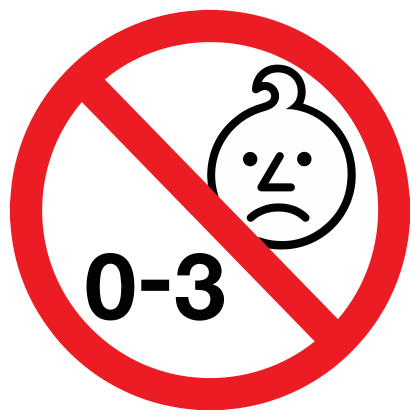
¡PRECAUCIÓN! No apto para niños menores de 3 años. Contiene piezas pequeñas que podrían tragarse o inhalarse.