








Idioma:
ingles
alemán
japonés



|
|
|
|
2-5
30'
10
Niezależny od języka
|
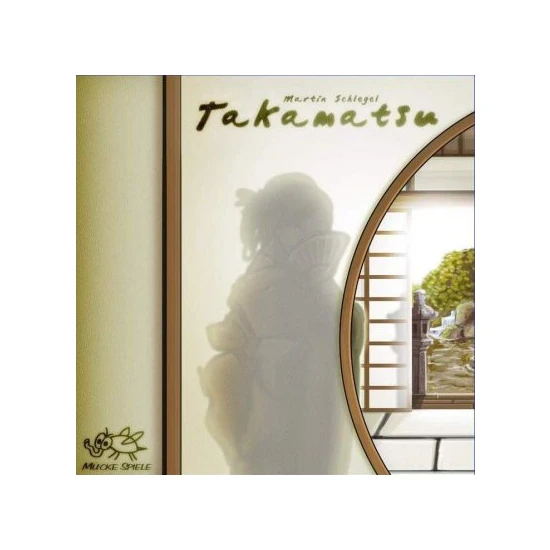
Takamatsu
Editor: Mücke Spiele
 ¿Quieres vender tu copia de este juego?

¡Utilice nuestro mercado utrade!
Takamatsu
Contáctenos
Compartir en
El artículo no está disponible, puede utilizar la alerta para recibir una notificación cuando volverá a estar disponible.
FOTOS EN BGG
Estas fotos son propiedad de boardgamegeek.com y no se refieren específicamente a la edición de esta página.




 Fundas de cartas en este juego.
23 tarjetas de 45.0mm de ancho y 90.0mm de alto
1x
(100 PC)

1x
(100 PC)

 Descripción
Hay emoción en la capital ya que el Shogun Tokugawa Ieyasu quiere asignar el Han de Takamatsu a un desafío. Los daimyos competidores dirigen a sus samuráis a través del palacio siguiendo reglas simples y rápidamente se dan cuenta de que pueden usar a los samuráis de los otros daimyos para sus propios fines.
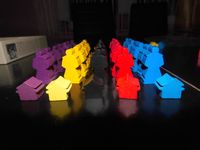
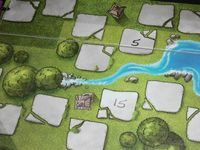
Takamatsu es un juego de conflicto y cooperación, donde los jugadores intentan colocar (¡o no colocar!) a sus samuráis en sus propias habitaciones. El palacio consiste en dos caminos circulares que se fusionan en un punto y luego se separan nuevamente. Los jugadores tienen de 5 a 7 samuráis que se dividen entre dos habitaciones codificadas por color al comienzo del juego, y una fila de cartas de puntuación - algunas boca abajo - se coloca junto al tablero.
En un turno, eliges una habitación que contenga al menos uno de tus samuráis, luego mueves un número de samuráis en esta habitación en el sentido de las agujas del reloj desde este espacio. Si la habitación contiene solo un samurái, puedes moverlo un espacio; si contiene dos, puedes mover ambos dos espacios o solo uno un espacio, pero si hay un samurái oponente contigo, debes mover ambos exactamente dos espacios. Cuando una habitación tiene tres o más samuráis, debe dejar al menos uno atrás (mientras que aún necesita llevar al menos un samurái oponente, si lo hay). Cuando un samurái termina su movimiento en una habitación del mismo color, el daimyo de ese samurái recoge la carta de puntuación superior, siendo posible múltiples puntuaciones en un turno. Por cada carta de puntuación abierta recogida, el jugador ajusta inmediatamente su marcador de puntuación, lo que podría hacer que retroceda en la pista, así que a veces quieres escoltar a otro samurái a su lugar en lugar de llevarlo al tuyo.
Cuando un jugador alcanza los veinte puntos, los jugadores terminan la ronda y luego suman sus cartas de puntuación ocultas, si las hay. ¡El jugador con más puntos gana! (Con dos jugadores, cada daimyo controla dos colores de samuráis y debe mover un samurái oponente cuando sea posible. Después de que una pagoda alcance el umbral de veinte puntos, los jugadores suman sus dos puntajes para determinar un ganador.)
Takamatsu es un juego de conflicto y cooperación, donde los jugadores intentan colocar (¡o no colocar!) a sus samuráis en sus propias habitaciones. El palacio consiste en dos caminos circulares que se fusionan en un punto y luego se separan nuevamente. Los jugadores tienen de 5 a 7 samuráis que se dividen entre dos habitaciones codificadas por color al comienzo del juego, y una fila de cartas de puntuación - algunas boca abajo - se coloca junto al tablero.
En un turno, eliges una habitación que contenga al menos uno de tus samuráis, luego mueves un número de samuráis en esta habitación en el sentido de las agujas del reloj desde este espacio. Si la habitación contiene solo un samurái, puedes moverlo un espacio; si contiene dos, puedes mover ambos dos espacios o solo uno un espacio, pero si hay un samurái oponente contigo, debes mover ambos exactamente dos espacios. Cuando una habitación tiene tres o más samuráis, debe dejar al menos uno atrás (mientras que aún necesita llevar al menos un samurái oponente, si lo hay). Cuando un samurái termina su movimiento en una habitación del mismo color, el daimyo de ese samurái recoge la carta de puntuación superior, siendo posible múltiples puntuaciones en un turno. Por cada carta de puntuación abierta recogida, el jugador ajusta inmediatamente su marcador de puntuación, lo que podría hacer que retroceda en la pista, así que a veces quieres escoltar a otro samurái a su lugar en lugar de llevarlo al tuyo.
Cuando un jugador alcanza los veinte puntos, los jugadores terminan la ronda y luego suman sus cartas de puntuación ocultas, si las hay. ¡El jugador con más puntos gana! (Con dos jugadores, cada daimyo controla dos colores de samuráis y debe mover un samurái oponente cuando sea posible. Después de que una pagoda alcance el umbral de veinte puntos, los jugadores suman sus dos puntajes para determinar un ganador.)
 Información adicional
| mecanica: | Colocación de trabajadores |
| Categorías: | Acción y destreza |
| Nombres alternativos: | |
| BARCODE: | 4280000153852 |
| En 22 listas de deseos En colecciones 6 Esto fue visto 8290 veces | |
Descripción
Hay emoción en la capital ya que el Shogun Tokugawa Ieyasu quiere asignar el Han de Takamatsu a un desafío. Los daimyos competidores dirigen a sus samuráis a través del palacio siguiendo reglas simples y rápidamente se dan cuenta de que pueden usar a los samuráis de los otros daimyos para sus propios fines.
Takamatsu es un juego de conflicto y cooperación, donde los jugadores intentan colocar (¡o no colocar!) a sus samuráis en sus propias habitaciones. El palacio consiste en dos caminos circulares que se fusionan en un punto y luego se separan nuevamente. Los jugadores tienen de 5 a 7 samuráis que se dividen entre dos habitaciones codificadas por color al comienzo del juego, y una fila de cartas de puntuación - algunas boca abajo - se coloca junto al tablero.
En un turno, eliges una habitación que contenga al menos uno de tus samuráis, luego mueves un número de samuráis en esta habitación en el sentido de las agujas del reloj desde este espacio. Si la habitación contiene solo un samurái, puedes moverlo un espacio; si contiene dos, puedes mover ambos dos espacios o solo uno un espacio, pero si hay un samurái oponente contigo, debes mover ambos exactamente dos espacios. Cuando una habitación tiene tres o más samuráis, debe dejar al menos uno atrás (mientras que aún necesita llevar al menos un samurái oponente, si lo hay). Cuando un samurái termina su movimiento en una habitación del mismo color, el daimyo de ese samurái recoge la carta de puntuación superior, siendo posible múltiples puntuaciones en un turno. Por cada carta de puntuación abierta recogida, el jugador ajusta inmediatamente su marcador de puntuación, lo que podría hacer que retroceda en la pista, así que a veces quieres escoltar a otro samurái a su lugar en lugar de llevarlo al tuyo.
Cuando un jugador alcanza los veinte puntos, los jugadores terminan la ronda y luego suman sus cartas de puntuación ocultas, si las hay. ¡El jugador con más puntos gana! (Con dos jugadores, cada daimyo controla dos colores de samuráis y debe mover un samurái oponente cuando sea posible. Después de que una pagoda alcance el umbral de veinte puntos, los jugadores suman sus dos puntajes para determinar un ganador.)
Takamatsu es un juego de conflicto y cooperación, donde los jugadores intentan colocar (¡o no colocar!) a sus samuráis en sus propias habitaciones. El palacio consiste en dos caminos circulares que se fusionan en un punto y luego se separan nuevamente. Los jugadores tienen de 5 a 7 samuráis que se dividen entre dos habitaciones codificadas por color al comienzo del juego, y una fila de cartas de puntuación - algunas boca abajo - se coloca junto al tablero.
En un turno, eliges una habitación que contenga al menos uno de tus samuráis, luego mueves un número de samuráis en esta habitación en el sentido de las agujas del reloj desde este espacio. Si la habitación contiene solo un samurái, puedes moverlo un espacio; si contiene dos, puedes mover ambos dos espacios o solo uno un espacio, pero si hay un samurái oponente contigo, debes mover ambos exactamente dos espacios. Cuando una habitación tiene tres o más samuráis, debe dejar al menos uno atrás (mientras que aún necesita llevar al menos un samurái oponente, si lo hay). Cuando un samurái termina su movimiento en una habitación del mismo color, el daimyo de ese samurái recoge la carta de puntuación superior, siendo posible múltiples puntuaciones en un turno. Por cada carta de puntuación abierta recogida, el jugador ajusta inmediatamente su marcador de puntuación, lo que podría hacer que retroceda en la pista, así que a veces quieres escoltar a otro samurái a su lugar en lugar de llevarlo al tuyo.
Cuando un jugador alcanza los veinte puntos, los jugadores terminan la ronda y luego suman sus cartas de puntuación ocultas, si las hay. ¡El jugador con más puntos gana! (Con dos jugadores, cada daimyo controla dos colores de samuráis y debe mover un samurái oponente cuando sea posible. Después de que una pagoda alcance el umbral de veinte puntos, los jugadores suman sus dos puntajes para determinar un ganador.)
Fundas de cartas en este juego.
23 tarjetas de 45.0mm de ancho y 90.0mm de alto
1x
(100 PC)
1x
(100 PC)
Información adicional
| mecanica: | Colocación de trabajadores |
| Categorías: | Acción y destreza |
| Nombres alternativos: | |
| BARCODE: | 4280000153852 |
| En 22 listas de deseos En colecciones 6 Esto fue visto 8290 veces | |
 Comprados juntos con frecuencia



¡PRECAUCIÓN! No apto para niños menores de 3 años. Contiene piezas pequeñas que podrían tragarse o inhalarse.