









Lingua:
Inglese
Portoghese



|
|
|
|
Il meglio in 2 giocatori
2 voti su 2
Età consigliata dai giocatori: 8+
1 voti su 1
2
90'
8
Indipendente dalla lingua
|
Block
Editore: Runadrake
 Vuoi vendere la tua copia di questo gioco?

Usa il nostro marketplace utrade!
Block
Contattaci
Condividi su
L'articolo non è disponibile, puoi utilizzare il nostro sistema di notifica per sapere quando sarà nuovamente ordinabile.
IMMAGINI SU BGG
Queste foto sono di proprietà di boardgamegeek.com e non si riferiscono specificatamente all'edizione di questa pagina.


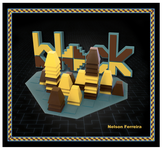
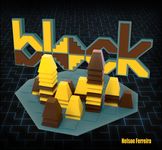
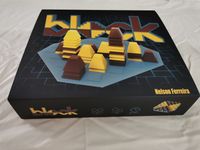
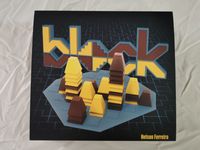
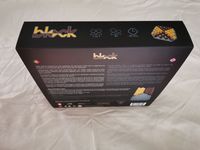
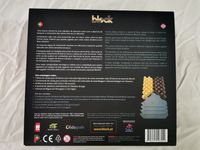
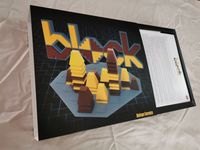
 Descrizione
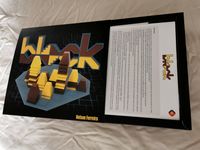
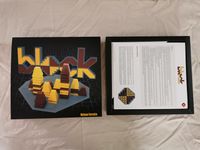
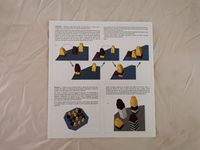
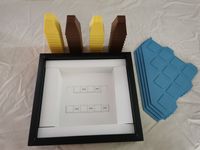
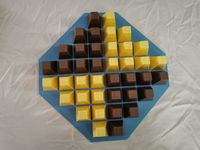
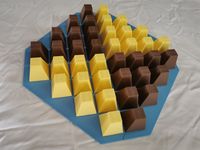
Block describes not the shape of the pieces in this abstract strategy game, but rather what you're trying to do to the opponent: Block her pieces from moving, and you win.
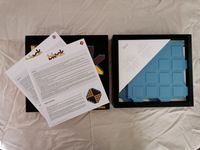
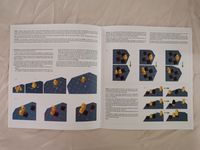
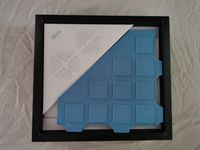
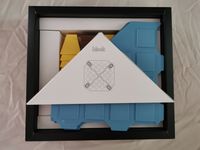
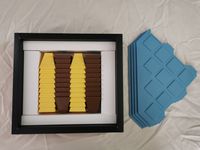
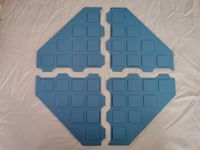
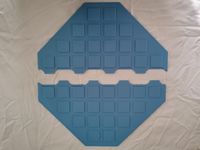
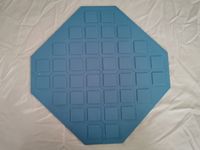
The board starts with forty pieces on it – twenty light and twenty dark, with the pieces grouped ten to a quadrant in alternating colors. On a turn, you move one stack that has your piece or pieces) on top. The stack moves as many spaces as the number of your pieces on top of the stack, and all movement is orthogonal to both the stack's starting location and each intermittent space to which it moves. Thus, a stack moving three spaces can first move to any orthogonally adjacent space, then move to any orthogonally adjacent space that's at a 90º angle to the first direction moved, then move a third time at a 90º angle to the second movement. Stacks cannot pass over other stacks while moving.
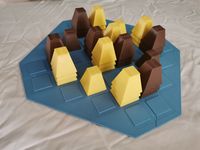
If a stack lands on a like-colored piece, that stack's movement will differ next time it moves; at most four pieces of the same color can be stacked together. If a stack lands on an empty space, the pieces on top must be split between that space and an adjacent space. A stack can land on a stack topped by the opposing color only if the stack moving has more pieces of the same color on top than the stack being moved onto; the stack that's topped is then trapped. If a player tops a stack that has trapped one or more of his pieces, he then frees the trapped pieces by moving the pieces on top to an adjacent space.
The first player who can't move on a turn loses the game.
The board starts with forty pieces on it – twenty light and twenty dark, with the pieces grouped ten to a quadrant in alternating colors. On a turn, you move one stack that has your piece or pieces) on top. The stack moves as many spaces as the number of your pieces on top of the stack, and all movement is orthogonal to both the stack's starting location and each intermittent space to which it moves. Thus, a stack moving three spaces can first move to any orthogonally adjacent space, then move to any orthogonally adjacent space that's at a 90º angle to the first direction moved, then move a third time at a 90º angle to the second movement. Stacks cannot pass over other stacks while moving.
If a stack lands on a like-colored piece, that stack's movement will differ next time it moves; at most four pieces of the same color can be stacked together. If a stack lands on an empty space, the pieces on top must be split between that space and an adjacent space. A stack can land on a stack topped by the opposing color only if the stack moving has more pieces of the same color on top than the stack being moved onto; the stack that's topped is then trapped. If a player tops a stack that has trapped one or more of his pieces, he then frees the trapped pieces by moving the pieces on top to an adjacent space.
The first player who can't move on a turn loses the game.
 Ulteriori Informazioni
| Meccaniche: | Azioni in numero limitato |
| Categorie: | Strategia |
| Nomi alternativi: | |
| BARCODE: | ????????? |
| In 2 wishlist È stato visto 6334 volte | |
Descrizione
Block describes not the shape of the pieces in this abstract strategy game, but rather what you're trying to do to the opponent: Block her pieces from moving, and you win.
The board starts with forty pieces on it – twenty light and twenty dark, with the pieces grouped ten to a quadrant in alternating colors. On a turn, you move one stack that has your piece or pieces) on top. The stack moves as many spaces as the number of your pieces on top of the stack, and all movement is orthogonal to both the stack's starting location and each intermittent space to which it moves. Thus, a stack moving three spaces can first move to any orthogonally adjacent space, then move to any orthogonally adjacent space that's at a 90º angle to the first direction moved, then move a third time at a 90º angle to the second movement. Stacks cannot pass over other stacks while moving.
If a stack lands on a like-colored piece, that stack's movement will differ next time it moves; at most four pieces of the same color can be stacked together. If a stack lands on an empty space, the pieces on top must be split between that space and an adjacent space. A stack can land on a stack topped by the opposing color only if the stack moving has more pieces of the same color on top than the stack being moved onto; the stack that's topped is then trapped. If a player tops a stack that has trapped one or more of his pieces, he then frees the trapped pieces by moving the pieces on top to an adjacent space.
The first player who can't move on a turn loses the game.
The board starts with forty pieces on it – twenty light and twenty dark, with the pieces grouped ten to a quadrant in alternating colors. On a turn, you move one stack that has your piece or pieces) on top. The stack moves as many spaces as the number of your pieces on top of the stack, and all movement is orthogonal to both the stack's starting location and each intermittent space to which it moves. Thus, a stack moving three spaces can first move to any orthogonally adjacent space, then move to any orthogonally adjacent space that's at a 90º angle to the first direction moved, then move a third time at a 90º angle to the second movement. Stacks cannot pass over other stacks while moving.
If a stack lands on a like-colored piece, that stack's movement will differ next time it moves; at most four pieces of the same color can be stacked together. If a stack lands on an empty space, the pieces on top must be split between that space and an adjacent space. A stack can land on a stack topped by the opposing color only if the stack moving has more pieces of the same color on top than the stack being moved onto; the stack that's topped is then trapped. If a player tops a stack that has trapped one or more of his pieces, he then frees the trapped pieces by moving the pieces on top to an adjacent space.
The first player who can't move on a turn loses the game.
Ulteriori Informazioni
| Meccaniche: | Azioni in numero limitato |
| Categorie: | Strategia |
| Nomi alternativi: | |
| BARCODE: | ????????? |
| In 2 wishlist È stato visto 6334 volte | |
Cosa dicono i giocatori
Con quanti giocatori rende di più · 2 voti su BoardGameGeek
- 1 0 0 lo indicano come il meglio, 0 lo consigliano, 0 lo sconsigliano
- 2 2 2 lo indicano come il meglio, 0 lo consigliano, 0 lo sconsigliano
- 3 0 0 lo indicano come il meglio, 0 lo consigliano, 0 lo sconsigliano
- 4 0 0 lo indicano come il meglio, 0 lo consigliano, 0 lo sconsigliano
- 4+ 0 0 lo indicano come il meglio, 0 lo consigliano, 0 lo sconsigliano
Il meglio Consigliato Sconsigliato
Valutazioni degli utenti uplay: Nessuna recensione uplay pubblicata. Puoi essere il primo!
La tua recensione
I commenti sono soggetti a moderazione prima della pubblicazione: niente link, offese o contenuti non pertinenti. Sono ammesse opinioni negative rispettose.
Accedi per recensire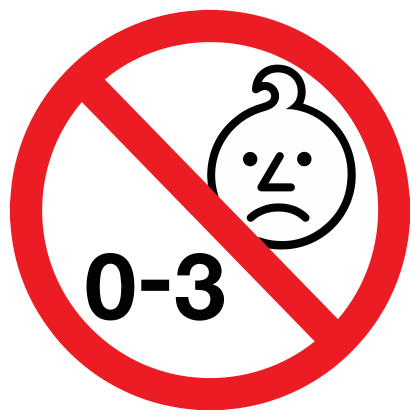
ATTENZIONE! Non adatto ai bambini al di sotto dei 3 anni di età. Contiene piccole parti che potrebbero essere ingerite o inalate.