








Lingua:
Inglese
Francese


|
|
|
|
Il meglio in 2 giocatori
7 voti su 8
Età consigliata dai giocatori: 8+
3 voti su 4
2
10'
8
Indipendente dalla lingua
|
Tiki
Editore: Ôz Editions

 Vuoi vendere la tua copia di questo gioco?

Usa il nostro marketplace utrade!
Tiki
Contattaci
Condividi su
L'articolo non è disponibile, puoi utilizzare il nostro sistema di notifica per sapere quando sarà nuovamente ordinabile.
IMMAGINI SU BGG
Queste foto sono di proprietà di boardgamegeek.com e non si riferiscono specificatamente all'edizione di questa pagina.




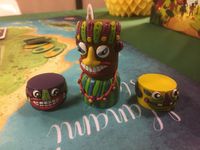
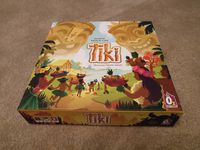
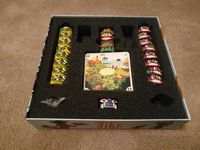
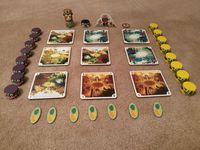
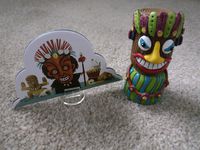
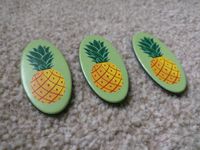
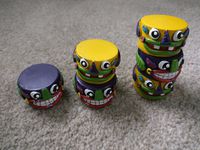
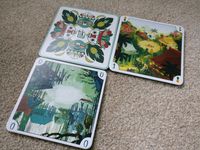
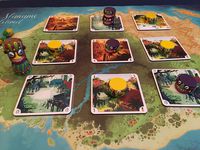
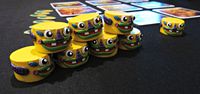

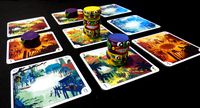
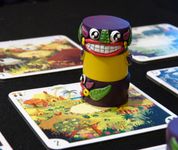
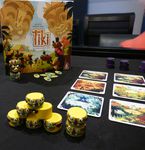
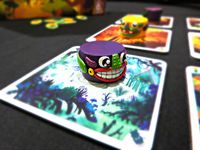
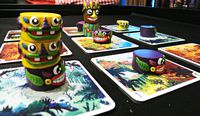
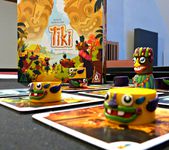
 Descrizione
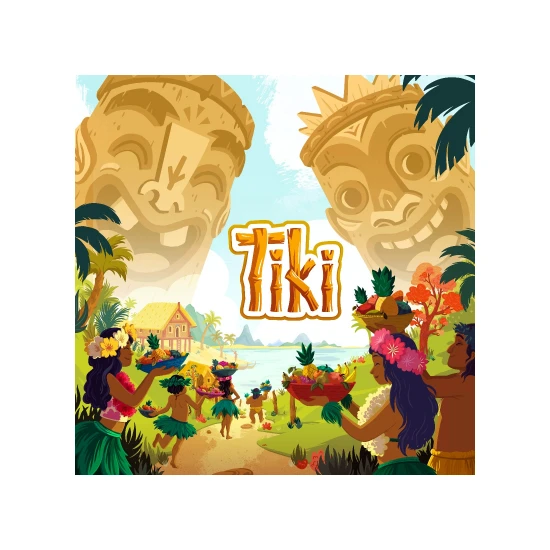
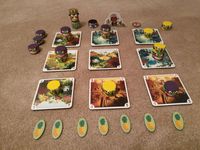
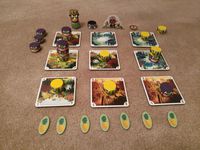
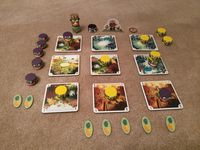
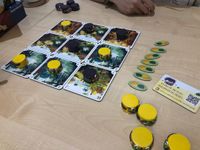
In Tiki, you are a divinity on Manami Island and you love all the delicious fruits that grow there. You prefer nothing more than influencing the living tribes of the island to share their gifts with you. Unfortunately, you aren't the only one. Another divinity shares your passion for these fruits, which leaves you only one choice — you need to show him your power in order to get more fruits than he does before the end of the fruit season.
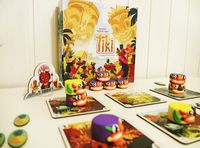
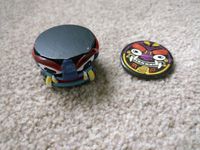
To set up, shuffle the nine village tiles and place them in a 3x3 square with some space between each tile. Players then take turns until the fruit supply exhausted or one of them collects four fruits. On a turn, a player creates a new totem (by placing one of their totem tokens on an empty village tile) or moves a totem that has one of their tokens on top. When you move a totem, you must move the entire totem orthogonally as many spaces as the number of tokens in it. As you move, you drop the bottommost token in each village through which you pass, placing the dropped tokens on top of any totem already located there.
When a totem has three tokens stacked in it, the village it's in is influenced, with the player who owns the top token winning a number of fruits equal to the number on the village tile. After this, remove the tokens in this totem and return them to their owners. If a village has a 0 on it, then the tokens are returned with no one collecting fruit; if a village has -1, then the owner of the top totem removes one of their collected fruits from the game.
As soon as a player has four fruit, they win. If the fruit supply is empty, the game ends and whoever has the most fruit wins; in the event of a tie, continue to play until one player would win (or lose) a fruit to determine the winner.
Once you've played a few times, start using the Shaman rule. The second player places a Shaman between two villages before their first move, and no totem can be moved between these two villages. When a village with value 0 is influenced, the owner of the topmost token can move the Shaman to a new location, if desired.
 Ulteriori Informazioni
| Meccaniche: | Tabelloni modulari |
| Categorie: | Strategia |
| Nomi alternativi: | |
| BARCODE: | ????????? |
| In 1 wishlist È stato visto 2527 volte | |
Descrizione
In Tiki, you are a divinity on Manami Island and you love all the delicious fruits that grow there. You prefer nothing more than influencing the living tribes of the island to share their gifts with you. Unfortunately, you aren't the only one. Another divinity shares your passion for these fruits, which leaves you only one choice — you need to show him your power in order to get more fruits than he does before the end of the fruit season.
To set up, shuffle the nine village tiles and place them in a 3x3 square with some space between each tile. Players then take turns until the fruit supply exhausted or one of them collects four fruits. On a turn, a player creates a new totem (by placing one of their totem tokens on an empty village tile) or moves a totem that has one of their tokens on top. When you move a totem, you must move the entire totem orthogonally as many spaces as the number of tokens in it. As you move, you drop the bottommost token in each village through which you pass, placing the dropped tokens on top of any totem already located there.
When a totem has three tokens stacked in it, the village it's in is influenced, with the player who owns the top token winning a number of fruits equal to the number on the village tile. After this, remove the tokens in this totem and return them to their owners. If a village has a 0 on it, then the tokens are returned with no one collecting fruit; if a village has -1, then the owner of the top totem removes one of their collected fruits from the game.
As soon as a player has four fruit, they win. If the fruit supply is empty, the game ends and whoever has the most fruit wins; in the event of a tie, continue to play until one player would win (or lose) a fruit to determine the winner.
Once you've played a few times, start using the Shaman rule. The second player places a Shaman between two villages before their first move, and no totem can be moved between these two villages. When a village with value 0 is influenced, the owner of the topmost token can move the Shaman to a new location, if desired.
Ulteriori Informazioni
| Meccaniche: | Tabelloni modulari |
| Categorie: | Strategia |
| Nomi alternativi: | |
| BARCODE: | ????????? |
| In 1 wishlist È stato visto 2527 volte | |
Cosa dicono i giocatori
Con quanti giocatori rende di più · 8 voti su BoardGameGeek
- 1 0 0 lo indicano come il meglio, 0 lo consigliano, 7 lo sconsigliano
- 2 7 7 lo indicano come il meglio, 1 lo consigliano, 0 lo sconsigliano
- 2+ 0 0 lo indicano come il meglio, 0 lo consigliano, 7 lo sconsigliano
Il meglio Consigliato Sconsigliato
Valutazioni degli utenti uplay: Nessuna recensione uplay pubblicata. Puoi essere il primo!
La tua recensione
I commenti sono soggetti a moderazione prima della pubblicazione: niente link, offese o contenuti non pertinenti. Sono ammesse opinioni negative rispettose.
Accedi per recensire
ATTENZIONE! Non adatto ai bambini al di sotto dei 3 anni di età. Contiene piccole parti che potrebbero essere ingerite o inalate.