








Sprache:
Englisch
|
|
|
|
2
180'
14
Kein notwendiger Text im Spiel
|
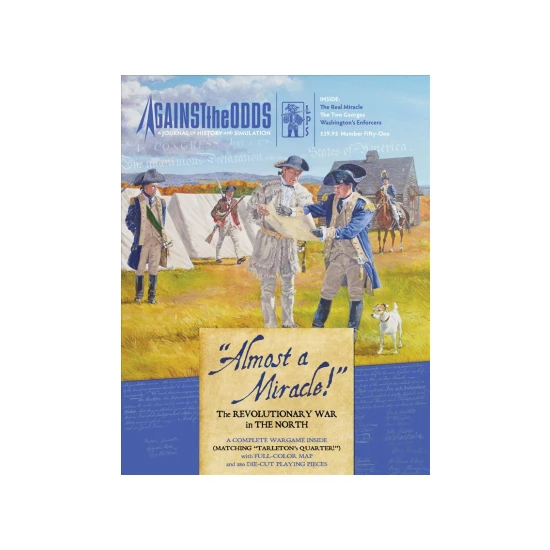
Almost a Miracle! The Revolutionary War in the North
Herausgeber: Against the Odds
 Möchten Sie Ihr Exemplar dieses Spiels verkaufen?

Nutzen Sie unseren Marktplatz utrade!
Almost a Miracle! The Revolutionary War in the North
Kontaktieren Sie uns
Teilen auf
 In einem externen Lager verfügbar.
Versand in etwa 7/21 Tagen
-15%
45,04€
Verkaufspreis
IT
Kostenlos
BILDER AUF BGG
Diese Fotos sind Eigentum von boardgamegeek.com und beziehen sich nicht speziell auf die Ausgabe auf dieser Seite.
 Beschreibung
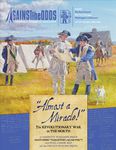
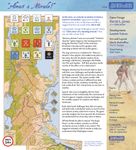
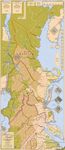
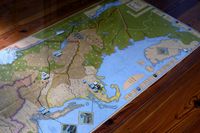
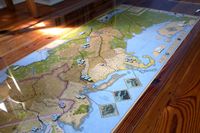
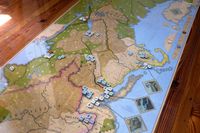
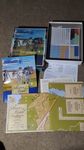
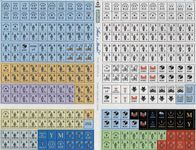
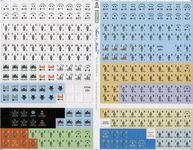
When asked about it, years after it ended, George Washington said that the American Victory was "little short of a standing miracle." Almost a Miracle! uses our successful Tarleton's Quarter! as a game engine starting point to bring the Northern "half" of the American Revolution into play. Will the British be able to impose "the King's Peace" on the northern colonies or will the revolution survive to birth a new nation? The map and victory conditions for Almost a Miracle! show players why battles took place in key areas but also lets players explore those seemingly odd tertiary campaigns, like Halifax, Fort Pitt, and Quebec. Designer David Jones forces both sides to deal with their own challenges. The British consistently failed to "live off the land" and had to buy or ship food to sustain their armies, while the Continentals struggled with purchasing power and transportation. The game handles battles in both large and small scale, as both were critical to the War's outcome, with a system that models 18th Century combat and how it differed from later times, where morale, readiness, leadership, and mere chance all could be "the" critical factor at one time or another, and disease and desertion could be an army's biggest killer. Special rules cover the short enlistments of the Continentals, the uncertainty of French support and entry, prisoner exchanges, and the variable support of Loyalists and Native Americans. Both sides faced challenges they did not expect, and both sides contributed nearly as much to their own failures as they achieved in victory. The game will provide insights into how narrowly the Americans succeeded and how close the British came to their own victory. —decription from the publisher Designed by David Jones, after Mike Joslyn. Graphics by Mark Mahaffey, after Craig Grando. Developed by Lembit Tohver.
Beschreibung
When asked about it, years after it ended, George Washington said that the American Victory was "little short of a standing miracle." Almost a Miracle! uses our successful Tarleton's Quarter! as a game engine starting point to bring the Northern "half" of the American Revolution into play. Will the British be able to impose "the King's Peace" on the northern colonies or will the revolution survive to birth a new nation? The map and victory conditions for Almost a Miracle! show players why battles took place in key areas but also lets players explore those seemingly odd tertiary campaigns, like Halifax, Fort Pitt, and Quebec. Designer David Jones forces both sides to deal with their own challenges. The British consistently failed to "live off the land" and had to buy or ship food to sustain their armies, while the Continentals struggled with purchasing power and transportation. The game handles battles in both large and small scale, as both were critical to the War's outcome, with a system that models 18th Century combat and how it differed from later times, where morale, readiness, leadership, and mere chance all could be "the" critical factor at one time or another, and disease and desertion could be an army's biggest killer. Special rules cover the short enlistments of the Continentals, the uncertainty of French support and entry, prisoner exchanges, and the variable support of Loyalists and Native Americans. Both sides faced challenges they did not expect, and both sides contributed nearly as much to their own failures as they achieved in victory. The game will provide insights into how narrowly the Americans succeeded and how close the British came to their own victory. —decription from the publisher Designed by David Jones, after Mike Joslyn. Graphics by Mark Mahaffey, after Craig Grando. Developed by Lembit Tohver.
Was die Spieler sagen
Bewertungen von uplay-Nutzern: Noch keine uplay-Rezensionen. Schreibe die erste!
Deine Rezension
Kommentare werden vor der Veröffentlichung moderiert: keine Links, Beleidigungen oder sachfremden Inhalte. Respektvolle negative Meinungen sind willkommen.
Zum Bewerten anmelden
VORSICHT! Nicht für Kinder unter 3 Jahren geeignet. Es enthält Kleinteile, die verschluckt oder eingeatmet werden können.