









Sprache:
Englisch
Japanisch


|
|
|
|
2-4
40'
7
Kein notwendiger Text im Spiel
|
Paleolithic
Herausgeber: Shepherd Kit, Inc.
 Möchten Sie Ihr Exemplar dieses Spiels verkaufen?

Nutzen Sie unseren Marktplatz utrade!
Paleolithic
Kontaktieren Sie uns
Teilen auf
Der Artikel ist nicht verfügbar. Sie können die Benachrichtigung nutzen, um benachrichtigt zu werden, wenn er wieder auf Lager ist.
BILDER AUF BGG
Diese Fotos sind Eigentum von boardgamegeek.com und beziehen sich nicht speziell auf die Ausgabe auf dieser Seite.











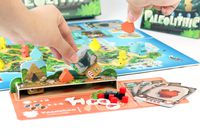

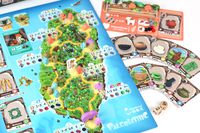
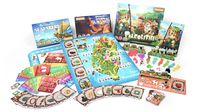
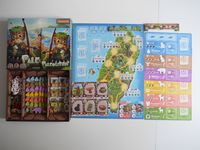


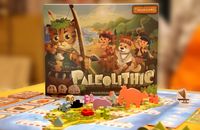
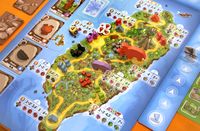
 Beschreibung
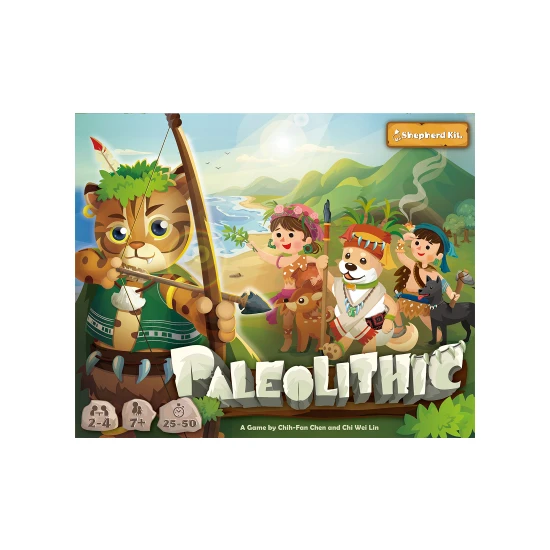
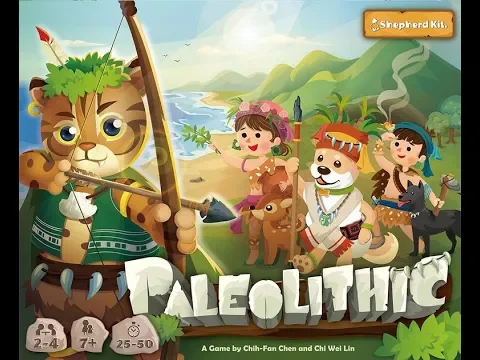
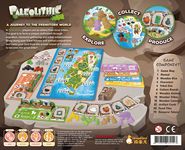
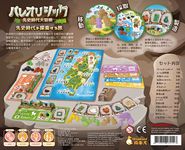
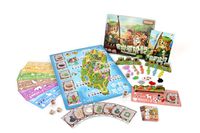
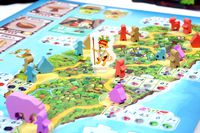
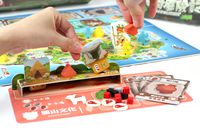
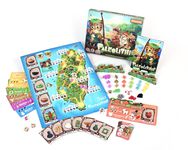
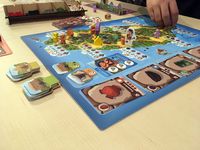
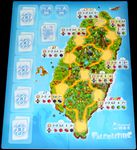
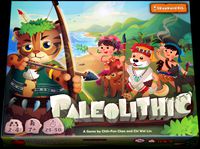
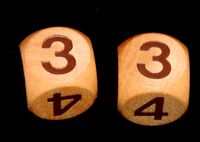
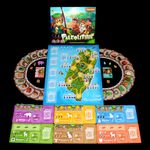
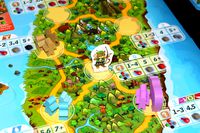
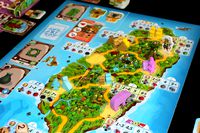
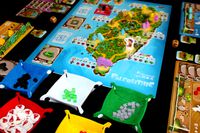
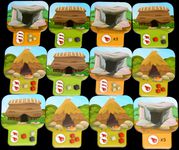
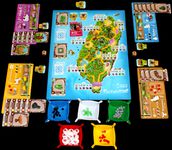
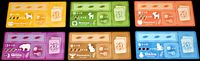
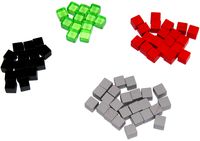
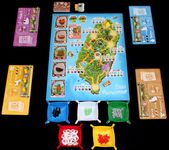
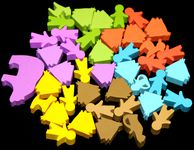
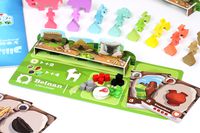
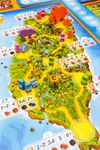
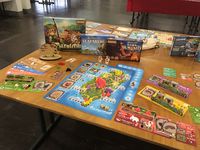
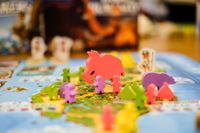
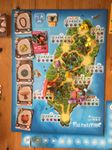
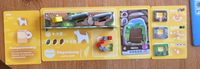
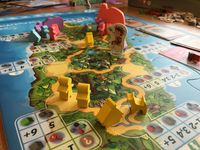
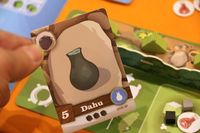
In Paleolithic, players act as elders from local tribes. The goal is to form a unique civilization through migration, resource gathering and tribal establishment. Bring along your tribal fellows and animal companions, and claim your land from the primal island of Formosa to become the great elder! Players will play as tribal elders of the six cultures to lead tribal fellows and animal companions on the journey. The player ending up with the highest score will be the prehistoric Great Elder! Starting a Game: Each player picks a culture in the game. Start with 2 caveman tokens and 1 animal companion and place them according to their starting location. Playing the Game: In each round, players can choose from "Explore" or "Workshop" actions: I. Explore: Step 1. Migration: Move one caveman or animal token to an adjacent ring. You can also choose not to move at all. Step 2. Collection: By rolling a die, any ring occupied by a player's caveman or animal tokens can generate resources based on the "dice points + number of tokens," corresponding to the list of resources next to the occupied ring. II. Workshop: select 1 of the following moves to conduct. 1. Produce Artifacts: Consume the corresponding resources to acquire the card. The score of the artifact is displayed on the card. 2. Build Tribes: Consume resources to acquire a tile, and place a tribal token on the map. Each tribal tile in the game accounts for 3 points at the end of the game; the tribal token can also be counted as the player's token for resource generation. Ending the Game: 1. When a player obtains a total of 8 artifact cards and tribal tiles, the game is over and scores are calculated. 2. Scoring: Each artifact earns points, and each tribal tile accounts for another 3 points. Additional achievement points comes from the artifact combinations shown on each culture board.
 Zusätzliche Informationen
| Mechanik: | Würfeln Gitterbewegung Arbeitsvermittlung |
| Kategorien: | Abenteuer Historisch Tiere Pädagogisch Zivilisation Würfel Pädagogisch Erkundung Historisch |
| Alternative Namen: | |
| BARCODE: | ????????? |
| Dies wurde 2685 Mal gesehen | |
Beschreibung
In Paleolithic, players act as elders from local tribes. The goal is to form a unique civilization through migration, resource gathering and tribal establishment. Bring along your tribal fellows and animal companions, and claim your land from the primal island of Formosa to become the great elder! Players will play as tribal elders of the six cultures to lead tribal fellows and animal companions on the journey. The player ending up with the highest score will be the prehistoric Great Elder! Starting a Game: Each player picks a culture in the game. Start with 2 caveman tokens and 1 animal companion and place them according to their starting location. Playing the Game: In each round, players can choose from "Explore" or "Workshop" actions: I. Explore: Step 1. Migration: Move one caveman or animal token to an adjacent ring. You can also choose not to move at all. Step 2. Collection: By rolling a die, any ring occupied by a player's caveman or animal tokens can generate resources based on the "dice points + number of tokens," corresponding to the list of resources next to the occupied ring. II. Workshop: select 1 of the following moves to conduct. 1. Produce Artifacts: Consume the corresponding resources to acquire the card. The score of the artifact is displayed on the card. 2. Build Tribes: Consume resources to acquire a tile, and place a tribal token on the map. Each tribal tile in the game accounts for 3 points at the end of the game; the tribal token can also be counted as the player's token for resource generation. Ending the Game: 1. When a player obtains a total of 8 artifact cards and tribal tiles, the game is over and scores are calculated. 2. Scoring: Each artifact earns points, and each tribal tile accounts for another 3 points. Additional achievement points comes from the artifact combinations shown on each culture board.
Zusätzliche Informationen
| Mechanik: | Würfeln Gitterbewegung Arbeitsvermittlung |
| Kategorien: | Abenteuer Historisch Tiere Pädagogisch Zivilisation Würfel Pädagogisch Erkundung Historisch |
| Alternative Namen: | |
| BARCODE: | ????????? |
| Dies wurde 2685 Mal gesehen | |
Was die Spieler sagen
Bewertungen von uplay-Nutzern: Noch keine uplay-Rezensionen. Schreibe die erste!
Deine Rezension
Kommentare werden vor der Veröffentlichung moderiert: keine Links, Beleidigungen oder sachfremden Inhalte. Respektvolle negative Meinungen sind willkommen.
Zum Bewerten anmelden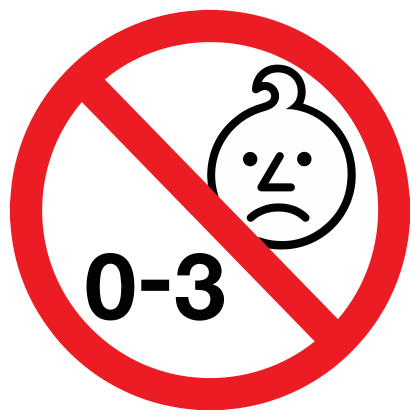
VORSICHT! Nicht für Kinder unter 3 Jahren geeignet. Es enthält Kleinteile, die verschluckt oder eingeatmet werden können.