








Sprache:
Deutsch
Englisch
Französisch
Spanisch
Japanisch





+1
Italienisch
Regeln online

|
|
|
|
3-7
60'
10
Kein notwendiger Text im Spiel
|
Sleuth (Prima Edizione)
Herausgeber: Face 2 Face Games
 Möchten Sie Ihr Exemplar dieses Spiels verkaufen?

Nutzen Sie unseren Marktplatz utrade!
Sleuth (Prima Edizione)
Kontaktieren Sie uns
Teilen auf
Der Artikel ist nicht verfügbar. Sie können die Benachrichtigung nutzen, um benachrichtigt zu werden, wenn er wieder auf Lager ist.
BILDER AUF BGG
Diese Fotos sind Eigentum von boardgamegeek.com und beziehen sich nicht speziell auf die Ausgabe auf dieser Seite.













 Kartenhüllen in diesem Spiel
90 Karten mit einer Breite von 57.0mm und einer Höhe von 89.0mm
2x
(50 Stk)

2x
(50 Stk)

1x
(100 Stk)

1x
(100 Stk)

1x
(100 Stk)

1x
(110 Stk)

2x
(55 Stk)

2x
(75 Stk)

2x
(50 Stk)

2x
(75 Stk)

1x
(100 Stk)

 Beschreibung
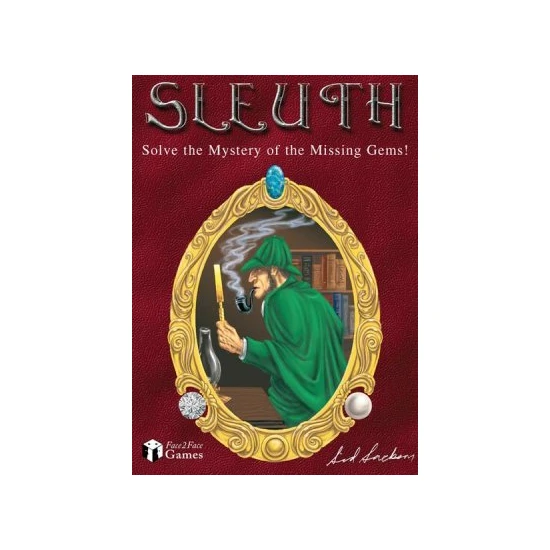
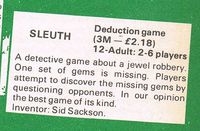
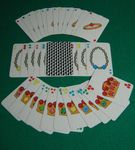
In Sleuth, einem klassischen Deduktionsspiel des Meisterdesigners Sid Sackson, suchen die Spieler nach einem versteckten Edelstein, einer der 36 Edelsteinkarten, die vor Spielbeginn versteckt wurden. Der Rest dieses Edelsteindecks – wobei jede Karte 1-3 Diamanten, Perlen oder Opale in einer von vier Farben zeigt – wird gleichmäßig unter den Spielern verteilt, wobei alle verbleibenden Karten offen ausgelegt werden. So beginnt jeder mit einigen Informationen darüber, was nicht fehlt.
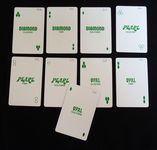
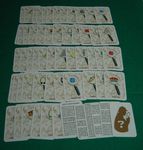
Ein zweites Deck enthält 54 Suchkarten, von denen jede ein oder zwei Elemente zeigt, wie Diamanten, Paare, blaue Opale, rote Perlen oder ein Element Ihrer Wahl. Jeder Spieler erhält vier offene Suchkarten; in einem Zug wählen Sie eine dieser Karten und fragen einen Gegner, wie viele Edelsteinkarten er von dem gezeigten Typ hat. Wenn Sie nach Paaren fragen, muss der Spieler Ihnen sagen, wie viele Paare er hat, aber nicht, welche spezifischen Paare; wenn Sie nach etwas Spezifischerem fragen, z. B. roten Diamanten, zeigt der Spieler allen, wie viele solcher Karten sie hat, während Sie sie geheim ansehen können.
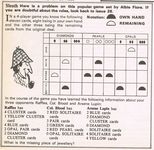
Die Spieler verfolgen Informationen auf einem Notizblock. Sie können die versteckte Edelstein jederzeit erraten oder in Ihrem Zug können Sie eine beliebige Frage stellen, unabhängig davon, welche Suchkarten Sie haben, und dann sofort eine Vermutung anstellen, indem Sie Ihr Blatt markieren und die versteckte Edelsteinkarte überprüfen. Wenn Sie falsch liegen, spielen Sie weiter, können aber nur Fragen beantworten; wenn Sie richtig liegen, gewinnen Sie.
Die Einfachheit der Regeln und Karten verbirgt die Komplexität des Spiels. In einigen Fällen sehen Sie Karten, während Sie in anderen nur die Anzahl der Karten hören, die ein Gegner hat, was die Deduktion erschwert. Jedes Notationssystem, das Sie entwickeln, muss sowohl flexibel als auch zuverlässig sein und negative sowie positive Informationen aufzeichnen, um die Möglichkeiten einzeln abzuhaken...
Ein zweites Deck enthält 54 Suchkarten, von denen jede ein oder zwei Elemente zeigt, wie Diamanten, Paare, blaue Opale, rote Perlen oder ein Element Ihrer Wahl. Jeder Spieler erhält vier offene Suchkarten; in einem Zug wählen Sie eine dieser Karten und fragen einen Gegner, wie viele Edelsteinkarten er von dem gezeigten Typ hat. Wenn Sie nach Paaren fragen, muss der Spieler Ihnen sagen, wie viele Paare er hat, aber nicht, welche spezifischen Paare; wenn Sie nach etwas Spezifischerem fragen, z. B. roten Diamanten, zeigt der Spieler allen, wie viele solcher Karten sie hat, während Sie sie geheim ansehen können.
Die Spieler verfolgen Informationen auf einem Notizblock. Sie können die versteckte Edelstein jederzeit erraten oder in Ihrem Zug können Sie eine beliebige Frage stellen, unabhängig davon, welche Suchkarten Sie haben, und dann sofort eine Vermutung anstellen, indem Sie Ihr Blatt markieren und die versteckte Edelsteinkarte überprüfen. Wenn Sie falsch liegen, spielen Sie weiter, können aber nur Fragen beantworten; wenn Sie richtig liegen, gewinnen Sie.
Die Einfachheit der Regeln und Karten verbirgt die Komplexität des Spiels. In einigen Fällen sehen Sie Karten, während Sie in anderen nur die Anzahl der Karten hören, die ein Gegner hat, was die Deduktion erschwert. Jedes Notationssystem, das Sie entwickeln, muss sowohl flexibel als auch zuverlässig sein und negative sowie positive Informationen aufzeichnen, um die Möglichkeiten einzeln abzuhaken...
 Zusätzliche Informationen
| Mechanik: | Handmanagement |
| Kategorien: | Kartenspiele Abzug |
| Alternative Namen: | Diamantenjagd La Chasse aux Diamants Sleuth Diamantenjagd La Chasse aux Diamants Skattjakt: Ett spel om ädelstenar Sleuth 슬루스 |
| BARCODE: | ????????? |
| In der Wunschliste 1 In 2 Sammlungen Dies wurde 5052 Mal gesehen | |
Beschreibung
In Sleuth, einem klassischen Deduktionsspiel des Meisterdesigners Sid Sackson, suchen die Spieler nach einem versteckten Edelstein, einer der 36 Edelsteinkarten, die vor Spielbeginn versteckt wurden. Der Rest dieses Edelsteindecks – wobei jede Karte 1-3 Diamanten, Perlen oder Opale in einer von vier Farben zeigt – wird gleichmäßig unter den Spielern verteilt, wobei alle verbleibenden Karten offen ausgelegt werden. So beginnt jeder mit einigen Informationen darüber, was nicht fehlt.
Ein zweites Deck enthält 54 Suchkarten, von denen jede ein oder zwei Elemente zeigt, wie Diamanten, Paare, blaue Opale, rote Perlen oder ein Element Ihrer Wahl. Jeder Spieler erhält vier offene Suchkarten; in einem Zug wählen Sie eine dieser Karten und fragen einen Gegner, wie viele Edelsteinkarten er von dem gezeigten Typ hat. Wenn Sie nach Paaren fragen, muss der Spieler Ihnen sagen, wie viele Paare er hat, aber nicht, welche spezifischen Paare; wenn Sie nach etwas Spezifischerem fragen, z. B. roten Diamanten, zeigt der Spieler allen, wie viele solcher Karten sie hat, während Sie sie geheim ansehen können.
Die Spieler verfolgen Informationen auf einem Notizblock. Sie können die versteckte Edelstein jederzeit erraten oder in Ihrem Zug können Sie eine beliebige Frage stellen, unabhängig davon, welche Suchkarten Sie haben, und dann sofort eine Vermutung anstellen, indem Sie Ihr Blatt markieren und die versteckte Edelsteinkarte überprüfen. Wenn Sie falsch liegen, spielen Sie weiter, können aber nur Fragen beantworten; wenn Sie richtig liegen, gewinnen Sie.
Die Einfachheit der Regeln und Karten verbirgt die Komplexität des Spiels. In einigen Fällen sehen Sie Karten, während Sie in anderen nur die Anzahl der Karten hören, die ein Gegner hat, was die Deduktion erschwert. Jedes Notationssystem, das Sie entwickeln, muss sowohl flexibel als auch zuverlässig sein und negative sowie positive Informationen aufzeichnen, um die Möglichkeiten einzeln abzuhaken...
Ein zweites Deck enthält 54 Suchkarten, von denen jede ein oder zwei Elemente zeigt, wie Diamanten, Paare, blaue Opale, rote Perlen oder ein Element Ihrer Wahl. Jeder Spieler erhält vier offene Suchkarten; in einem Zug wählen Sie eine dieser Karten und fragen einen Gegner, wie viele Edelsteinkarten er von dem gezeigten Typ hat. Wenn Sie nach Paaren fragen, muss der Spieler Ihnen sagen, wie viele Paare er hat, aber nicht, welche spezifischen Paare; wenn Sie nach etwas Spezifischerem fragen, z. B. roten Diamanten, zeigt der Spieler allen, wie viele solcher Karten sie hat, während Sie sie geheim ansehen können.
Die Spieler verfolgen Informationen auf einem Notizblock. Sie können die versteckte Edelstein jederzeit erraten oder in Ihrem Zug können Sie eine beliebige Frage stellen, unabhängig davon, welche Suchkarten Sie haben, und dann sofort eine Vermutung anstellen, indem Sie Ihr Blatt markieren und die versteckte Edelsteinkarte überprüfen. Wenn Sie falsch liegen, spielen Sie weiter, können aber nur Fragen beantworten; wenn Sie richtig liegen, gewinnen Sie.
Die Einfachheit der Regeln und Karten verbirgt die Komplexität des Spiels. In einigen Fällen sehen Sie Karten, während Sie in anderen nur die Anzahl der Karten hören, die ein Gegner hat, was die Deduktion erschwert. Jedes Notationssystem, das Sie entwickeln, muss sowohl flexibel als auch zuverlässig sein und negative sowie positive Informationen aufzeichnen, um die Möglichkeiten einzeln abzuhaken...
Kartenhüllen in diesem Spiel
90 Karten mit einer Breite von 57.0mm und einer Höhe von 89.0mm
2x
(50 Stk)
2x
(50 Stk)
1x
(100 Stk)
1x
(100 Stk)
1x
(100 Stk)
1x
(110 Stk)
2x
(55 Stk)
2x
(75 Stk)
2x
(50 Stk)
2x
(75 Stk)
1x
(100 Stk)
Zusätzliche Informationen
| Mechanik: | Handmanagement |
| Kategorien: | Kartenspiele Abzug |
| Alternative Namen: | Diamantenjagd La Chasse aux Diamants Sleuth Diamantenjagd La Chasse aux Diamants Skattjakt: Ett spel om ädelstenar Sleuth 슬루스 |
| BARCODE: | ????????? |
| In der Wunschliste 1 In 2 Sammlungen Dies wurde 5052 Mal gesehen | |

VORSICHT! Nicht für Kinder unter 3 Jahren geeignet. Es enthält Kleinteile, die verschluckt oder eingeatmet werden können.