







|
|
|


2-5
90'
13
No necessary in-game text
|
A Study in Emerald
Publisher: Treefrog Games
 Do you want to sell your copy of this game?

Use our marketplace utrade!
A Study in Emerald
Contact us
Share on
The item is not available, you can use the alert to be notified when it will be back in stock.
PICTURES ON BGG
These photos are the property of boardgamegeek.com and do not refer specifically to the edition on this page.


 Card sleeves in this game
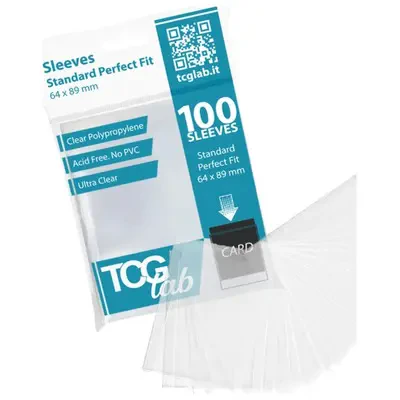
140 cards of 63.0mm width and 89.0mm of height
2x
(100 Pcs)

2x
(100 Pcs)

2x
(100 Pcs)

2x
(100 Pcs)

2x
(100 Pcs)
 Description
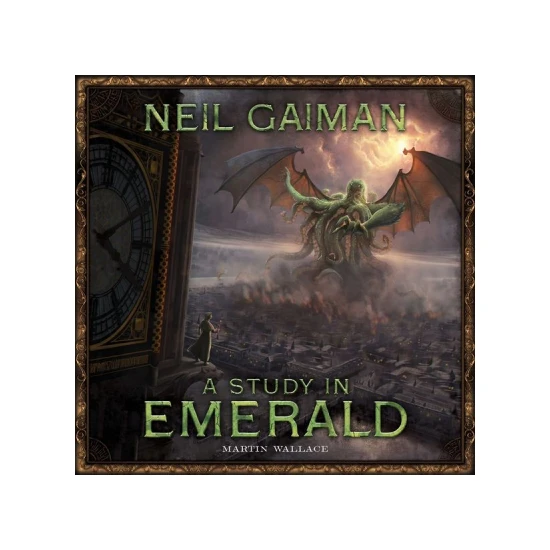
A Study in Emerald is a game for two to five players based on the award-winning short story of the same name by Neil Gaiman. In this stylistic mash-up of Sherlock Holmes and H.P. Lovecraft, the worst has already happened and the world is now ruled by the Old Ones. However, a secret war is being fought to free mankind from their servitude. The game A Study in Emerald fleshes out this core idea by including historical figures from the late nineteenth century, most being persons involved in the anarchist movement of the time.
Deck-building forms the core of the game. You use influence cubes to bid for the right to draft cards and take control of cities. Each player has a secret identity, either a Restorationist fighting against the creatures or a Loyalist attempting to defend the status quo. Which side you are on determines what you score points for. An additional twist is that the performance of other players on the same side as you can stop you from winning if they are doing particularly badly, so you really want to know who is on which side. More specifically, when the game ends – and this can result from multiple causes, such as a marker on the War or Revolution track hitting 15 or the assassination of a Restorationist player agent – then the sides compare their scores; which side has the lowest score automatically loses, then the player with the highest score on the remaining team wins the game.
The game takes around ninety minutes to play and is more complex than most, so more suitable for the experienced gamer.
Deck-building forms the core of the game. You use influence cubes to bid for the right to draft cards and take control of cities. Each player has a secret identity, either a Restorationist fighting against the creatures or a Loyalist attempting to defend the status quo. Which side you are on determines what you score points for. An additional twist is that the performance of other players on the same side as you can stop you from winning if they are doing particularly badly, so you really want to know who is on which side. More specifically, when the game ends – and this can result from multiple causes, such as a marker on the War or Revolution track hitting 15 or the assassination of a Restorationist player agent – then the sides compare their scores; which side has the lowest score automatically loses, then the player with the highest score on the remaining team wins the game.
The game takes around ninety minutes to play and is more complex than most, so more suitable for the experienced gamer.
 Additional information
| Mechanics: | Area Control/Area Influence Auction/Bidding Card Drafting Partnerships |
| Categories: | Horror Themed Themed |
| Alternative names: | A Study in Emerald Uno Studio In Smeraldo |
| BARCODE: | 616909967575 |
| In 17 wishlists In 1 collection This was seen 11711 times | |
Description
A Study in Emerald is a game for two to five players based on the award-winning short story of the same name by Neil Gaiman. In this stylistic mash-up of Sherlock Holmes and H.P. Lovecraft, the worst has already happened and the world is now ruled by the Old Ones. However, a secret war is being fought to free mankind from their servitude. The game A Study in Emerald fleshes out this core idea by including historical figures from the late nineteenth century, most being persons involved in the anarchist movement of the time.
Deck-building forms the core of the game. You use influence cubes to bid for the right to draft cards and take control of cities. Each player has a secret identity, either a Restorationist fighting against the creatures or a Loyalist attempting to defend the status quo. Which side you are on determines what you score points for. An additional twist is that the performance of other players on the same side as you can stop you from winning if they are doing particularly badly, so you really want to know who is on which side. More specifically, when the game ends – and this can result from multiple causes, such as a marker on the War or Revolution track hitting 15 or the assassination of a Restorationist player agent – then the sides compare their scores; which side has the lowest score automatically loses, then the player with the highest score on the remaining team wins the game.
The game takes around ninety minutes to play and is more complex than most, so more suitable for the experienced gamer.
Deck-building forms the core of the game. You use influence cubes to bid for the right to draft cards and take control of cities. Each player has a secret identity, either a Restorationist fighting against the creatures or a Loyalist attempting to defend the status quo. Which side you are on determines what you score points for. An additional twist is that the performance of other players on the same side as you can stop you from winning if they are doing particularly badly, so you really want to know who is on which side. More specifically, when the game ends – and this can result from multiple causes, such as a marker on the War or Revolution track hitting 15 or the assassination of a Restorationist player agent – then the sides compare their scores; which side has the lowest score automatically loses, then the player with the highest score on the remaining team wins the game.
The game takes around ninety minutes to play and is more complex than most, so more suitable for the experienced gamer.
Card sleeves in this game
140 cards of 63.0mm width and 89.0mm of height
2x
(100 Pcs)
2x
(100 Pcs)
2x
(100 Pcs)
2x
(100 Pcs)
2x
(100 Pcs)
Additional information
| Mechanics: | Area Control/Area Influence Auction/Bidding Card Drafting Partnerships |
| Categories: | Horror Themed Themed |
| Alternative names: | A Study in Emerald Uno Studio In Smeraldo |
| BARCODE: | 616909967575 |
| In 17 wishlists In 1 collection This was seen 11711 times | |

CAUTION! Not suitable for children under 3 years of age. It contains small parts which could be swallowed or inhaled.