








Lingua:
Inglese
|
|
|
|
2
180'
14
Indipendente dalla lingua
|
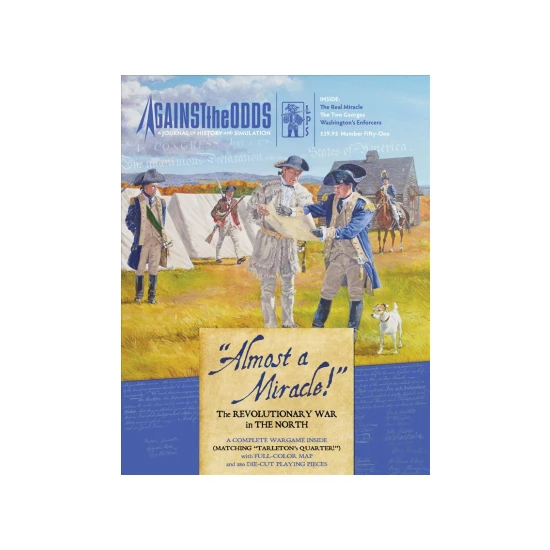
Almost a Miracle! The Revolutionary War in the North
Editore: Against the Odds
 Vuoi vendere la tua copia di questo gioco?

Usa il nostro marketplace utrade!
Almost a Miracle! The Revolutionary War in the North
Contattaci
Condividi su
 Disponibile presso un magazzino esterno.
Spedizione in circa 7/21 giorni
-15%
45,04€
Prezzo Promo
IT
Gratuita
IMMAGINI SU BGG
Queste foto sono di proprietà di boardgamegeek.com e non si riferiscono specificatamente all'edizione di questa pagina.
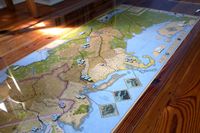
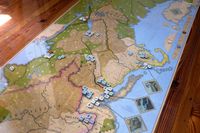
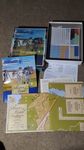
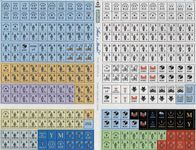
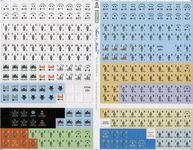
 Descrizione
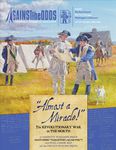
When asked about it, years after it ended, George Washington said that the American Victory was "little short of a standing miracle."
Almost a Miracle! uses our successful Tarleton's Quarter! as a game engine starting point to bring the Northern "half" of the American Revolution into play. Will the British be able to impose "the King's Peace" on the northern colonies or will the revolution survive to birth a new nation?
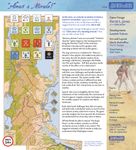
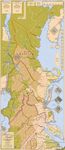
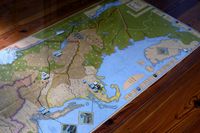
The map and victory conditions for Almost a Miracle! show players why battles took place in key areas but also lets players explore those seemingly odd tertiary campaigns, like Halifax, Fort Pitt, and Quebec.
Designer David Jones forces both sides to deal with their own challenges. The British consistently failed to "live off the land" and had to buy or ship food to sustain their armies, while the Continentals struggled with purchasing power and transportation.
The game handles battles in both large and small scale, as both were critical to the War's outcome, with a system that models 18th Century combat and how it differed from later times, where morale, readiness, leadership, and mere chance all could be "the" critical factor at one time or another, and disease and desertion could be an army's biggest killer.
Special rules cover the short enlistments of the Continentals, the uncertainty of French support and entry, prisoner exchanges, and the variable support of Loyalists and Native Americans. Both sides faced challenges they did not expect, and both sides contributed nearly as much to their own failures as they achieved in victory. The game will provide insights into how narrowly the Americans succeeded and how close the British came to their own victory.
—decription from the publisher
Designed by David Jones, after Mike Joslyn.
Graphics by Mark Mahaffey, after Craig Grando.
Developed by Lembit Tohver.
Descrizione
When asked about it, years after it ended, George Washington said that the American Victory was "little short of a standing miracle."
Almost a Miracle! uses our successful Tarleton's Quarter! as a game engine starting point to bring the Northern "half" of the American Revolution into play. Will the British be able to impose "the King's Peace" on the northern colonies or will the revolution survive to birth a new nation?
The map and victory conditions for Almost a Miracle! show players why battles took place in key areas but also lets players explore those seemingly odd tertiary campaigns, like Halifax, Fort Pitt, and Quebec.
Designer David Jones forces both sides to deal with their own challenges. The British consistently failed to "live off the land" and had to buy or ship food to sustain their armies, while the Continentals struggled with purchasing power and transportation.
The game handles battles in both large and small scale, as both were critical to the War's outcome, with a system that models 18th Century combat and how it differed from later times, where morale, readiness, leadership, and mere chance all could be "the" critical factor at one time or another, and disease and desertion could be an army's biggest killer.
Special rules cover the short enlistments of the Continentals, the uncertainty of French support and entry, prisoner exchanges, and the variable support of Loyalists and Native Americans. Both sides faced challenges they did not expect, and both sides contributed nearly as much to their own failures as they achieved in victory. The game will provide insights into how narrowly the Americans succeeded and how close the British came to their own victory.
—decription from the publisher
Designed by David Jones, after Mike Joslyn.
Graphics by Mark Mahaffey, after Craig Grando.
Developed by Lembit Tohver.
Cosa dicono i giocatori
Valutazioni degli utenti uplay: Nessuna recensione uplay pubblicata. Puoi essere il primo!
La tua recensione
I commenti sono soggetti a moderazione prima della pubblicazione: niente link, offese o contenuti non pertinenti. Sono ammesse opinioni negative rispettose.
Accedi per recensire
ATTENZIONE! Non adatto ai bambini al di sotto dei 3 anni di età. Contiene piccole parti che potrebbero essere ingerite o inalate.