







Lingua:
Inglese
|
|
|
|
Il meglio in 2 giocatori
6 voti su 9
Età consigliata dai giocatori: 12+
2 voti su 3
2
30'
Utilizzo del testo nel gioco moderato
|
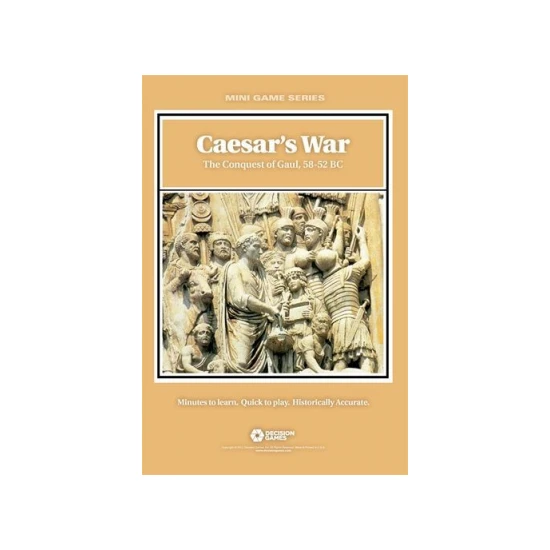
Caesar's War: The Conquest of Gaul, 58-52 BC
Editore: Decision Games (I)

 Vuoi vendere la tua copia di questo gioco?

Usa il nostro marketplace utrade!
Caesar's War: The Conquest of Gaul, 58-52 BC
Contattaci
Condividi su
L'articolo non è disponibile, puoi utilizzare il nostro sistema di notifica per sapere quando sarà nuovamente ordinabile.
IMMAGINI SU BGG
Queste foto sono di proprietà di boardgamegeek.com e non si riferiscono specificatamente all'edizione di questa pagina.
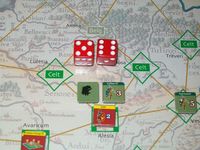
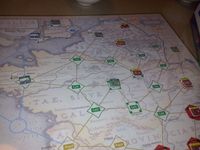
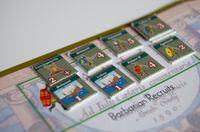
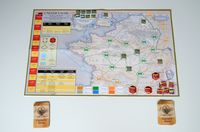

 Descrizione
From DecisionGames.com:
The Conquest of Gaul, 58-52 BC
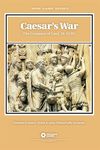
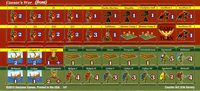
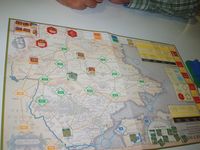
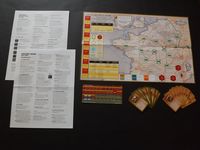
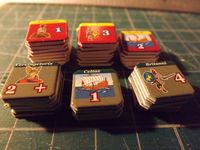
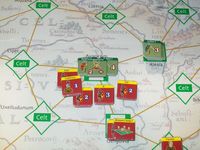
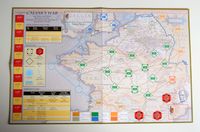
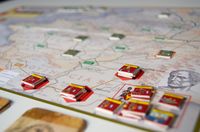
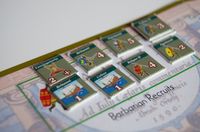
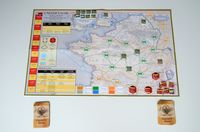
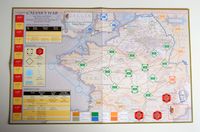
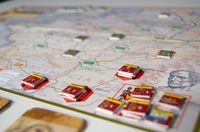
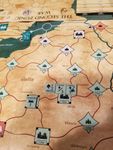
March with Julius Caesar and his legions in the conquest of Gaul, 58-52 BC. This is a two player game. One commands the Romans, the other the Gauls as well as allied Brittanic and Germanic tribes. The game pieces include: legions, auxiliaries, fleets and tribal war bands. The map stretches from the Roman frontier across the three parts of Gaul to the Rhine, as well as across the Northern Sea into Britannia.
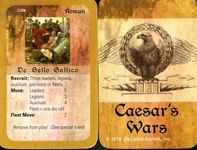
In Caesar’s War each player has a unique deck of Campaign Cards. They generate recruits for the armies, movement abilities, special combat bonuses and historic events. Some of the Roman cards include: Legions on the March, Unrest in the Ranks, and British Campaign. Some of the Gallic cards include: Helvetian Migration, German Invasion, and Uprising of Gallic Tribes.
Combat is resolved using a quasi-tactical procedure. Each side has unique advantages, with Roman discipline pitted against Gallic ferocity. There are special rules for camps, sieges, morale, and great leaders such as Vercingetorix and Caesar himself. Having the right commander at the right battle can mean the difference between laurels and disaster.
Descrizione
From DecisionGames.com:
The Conquest of Gaul, 58-52 BC
March with Julius Caesar and his legions in the conquest of Gaul, 58-52 BC. This is a two player game. One commands the Romans, the other the Gauls as well as allied Brittanic and Germanic tribes. The game pieces include: legions, auxiliaries, fleets and tribal war bands. The map stretches from the Roman frontier across the three parts of Gaul to the Rhine, as well as across the Northern Sea into Britannia.
In Caesar’s War each player has a unique deck of Campaign Cards. They generate recruits for the armies, movement abilities, special combat bonuses and historic events. Some of the Roman cards include: Legions on the March, Unrest in the Ranks, and British Campaign. Some of the Gallic cards include: Helvetian Migration, German Invasion, and Uprising of Gallic Tribes.
Combat is resolved using a quasi-tactical procedure. Each side has unique advantages, with Roman discipline pitted against Gallic ferocity. There are special rules for camps, sieges, morale, and great leaders such as Vercingetorix and Caesar himself. Having the right commander at the right battle can mean the difference between laurels and disaster.
Cosa dicono i giocatori
Con quanti giocatori rende di più · 9 voti su BoardGameGeek
- 1 1 1 lo indicano come il meglio, 5 lo consigliano, 0 lo sconsigliano
- 2 6 6 lo indicano come il meglio, 3 lo consigliano, 0 lo sconsigliano
- 2+ 0 0 lo indicano come il meglio, 0 lo consigliano, 4 lo sconsigliano
Il meglio Consigliato Sconsigliato
Valutazioni degli utenti uplay: Nessuna recensione uplay pubblicata. Puoi essere il primo!
La tua recensione
I commenti sono soggetti a moderazione prima della pubblicazione: niente link, offese o contenuti non pertinenti. Sono ammesse opinioni negative rispettose.
Accedi per recensire
ATTENZIONE! Non adatto ai bambini al di sotto dei 3 anni di età. Contiene piccole parti che potrebbero essere ingerite o inalate.