









Język:
język-UK

|
|
|
|
2-6
20'
10
Niezależny od języka
|
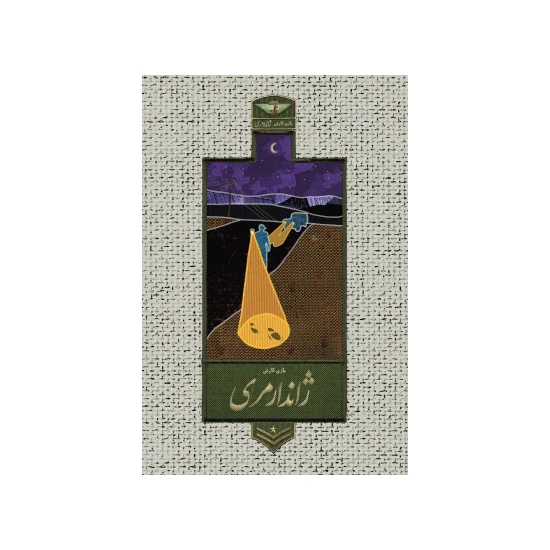
Gendarmery
Wydawca: RealityGame
 Czy chcesz sprzedać swój egzemplarz tej gry?

Skorzystaj z naszego rynku utrade!
Gendarmery
Skontaktuj się z nami
udostępnij
Artykuł nie jest dostępny. Możesz skorzystać z naszego systemu powiadomień e-mailowych, aby dowiedzieć się, kiedy będzie można go ponownie zamówić.
ZDJĘCIA NA BGG
bggpicszastrzeżenie


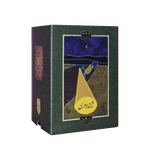
 Opis
Opis
A new criminal case has complicated everything, and the Chief has ordered you and your fellow police officers to solve it ASAP and arrest the main culprit. You must collect evidence in order to make arrests, whether you intend to capture the leader or another suspect.
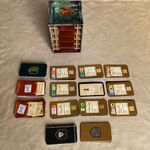
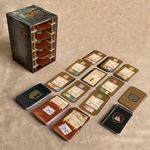
To set up ژاندارمری (Gendarmery), create a "wall" of suspect cards in a 3x3 grid that leaves the center empty. Each suspect card features an illustration as well as that individual's characteristics. Underneath each suspect card is a face-down interrogation card that features an arrow pointing in one of the eight compass points or (near the bottom of the deck) a medal. Place one interrogation card face up in the center of the grid; the arrow on this card identifies the main suspect. Additionally, you lay out two face-up decks of evidence cards and a face-down "door" deck of action cards; the "janitor", for example, lets you take a card from a player's hand and put it in someone else's hand.
On a turn, you take one of four actions:
Take an evidence card from the top of a deck and add it to your hand.
Archive 1-2 cards from your hand, removing them from play.
Reveal the top door card from the deck and carry out its action to hinder someone else or help yourself.
Report evidence to capture a suspect.
To report, you reveal all of the evidence card in your hand. If the combination of symbols that you reveal are present on exactly one suspect card on the wall, you catalog those evidence cards and that suspect. (If your symbols match two or more suspects, you've wasted the Chief's time and your turn ends.) If that suspect was not the main suspect, place that suspect's interrogation card under the central card, then place a new face-down interrogation card and a new suspect card in the empty space.
If that suspect was the main suspect, then you collect that suspect card and all of the interrogation cards in the center of the grid; you then reveal the interrogation card that was under that suspect. If the card is a medal or an arrow that points to an empty space in the grid, the game ends. Whoever has collected the most cards wins.
To set up ژاندارمری (Gendarmery), create a "wall" of suspect cards in a 3x3 grid that leaves the center empty. Each suspect card features an illustration as well as that individual's characteristics. Underneath each suspect card is a face-down interrogation card that features an arrow pointing in one of the eight compass points or (near the bottom of the deck) a medal. Place one interrogation card face up in the center of the grid; the arrow on this card identifies the main suspect. Additionally, you lay out two face-up decks of evidence cards and a face-down "door" deck of action cards; the "janitor", for example, lets you take a card from a player's hand and put it in someone else's hand.
On a turn, you take one of four actions:
Take an evidence card from the top of a deck and add it to your hand.
Archive 1-2 cards from your hand, removing them from play.
Reveal the top door card from the deck and carry out its action to hinder someone else or help yourself.
Report evidence to capture a suspect.
To report, you reveal all of the evidence card in your hand. If the combination of symbols that you reveal are present on exactly one suspect card on the wall, you catalog those evidence cards and that suspect. (If your symbols match two or more suspects, you've wasted the Chief's time and your turn ends.) If that suspect was not the main suspect, place that suspect's interrogation card under the central card, then place a new face-down interrogation card and a new suspect card in the empty space.
If that suspect was the main suspect, then you collect that suspect card and all of the interrogation cards in the center of the grid; you then reveal the interrogation card that was under that suspect. If the card is a medal or an arrow that points to an empty space in the grid, the game ends. Whoever has collected the most cards wins.
 Dalsze informacje
| Mechanika: | Losowanie kart Kolekcja zbiorów obiektów Zajęte |
| Kategorie: | Gry karciane |
| Alternatywne nazwy: | |
| BARCODE: | 6261074600037 |
| Obejrzano go 1605__TOK_1__ razy | |
Opis
A new criminal case has complicated everything, and the Chief has ordered you and your fellow police officers to solve it ASAP and arrest the main culprit. You must collect evidence in order to make arrests, whether you intend to capture the leader or another suspect.
To set up ژاندارمری (Gendarmery), create a "wall" of suspect cards in a 3x3 grid that leaves the center empty. Each suspect card features an illustration as well as that individual's characteristics. Underneath each suspect card is a face-down interrogation card that features an arrow pointing in one of the eight compass points or (near the bottom of the deck) a medal. Place one interrogation card face up in the center of the grid; the arrow on this card identifies the main suspect. Additionally, you lay out two face-up decks of evidence cards and a face-down "door" deck of action cards; the "janitor", for example, lets you take a card from a player's hand and put it in someone else's hand.
On a turn, you take one of four actions:
Take an evidence card from the top of a deck and add it to your hand.
Archive 1-2 cards from your hand, removing them from play.
Reveal the top door card from the deck and carry out its action to hinder someone else or help yourself.
Report evidence to capture a suspect.
To report, you reveal all of the evidence card in your hand. If the combination of symbols that you reveal are present on exactly one suspect card on the wall, you catalog those evidence cards and that suspect. (If your symbols match two or more suspects, you've wasted the Chief's time and your turn ends.) If that suspect was not the main suspect, place that suspect's interrogation card under the central card, then place a new face-down interrogation card and a new suspect card in the empty space.
If that suspect was the main suspect, then you collect that suspect card and all of the interrogation cards in the center of the grid; you then reveal the interrogation card that was under that suspect. If the card is a medal or an arrow that points to an empty space in the grid, the game ends. Whoever has collected the most cards wins.
To set up ژاندارمری (Gendarmery), create a "wall" of suspect cards in a 3x3 grid that leaves the center empty. Each suspect card features an illustration as well as that individual's characteristics. Underneath each suspect card is a face-down interrogation card that features an arrow pointing in one of the eight compass points or (near the bottom of the deck) a medal. Place one interrogation card face up in the center of the grid; the arrow on this card identifies the main suspect. Additionally, you lay out two face-up decks of evidence cards and a face-down "door" deck of action cards; the "janitor", for example, lets you take a card from a player's hand and put it in someone else's hand.
On a turn, you take one of four actions:
Take an evidence card from the top of a deck and add it to your hand.
Archive 1-2 cards from your hand, removing them from play.
Reveal the top door card from the deck and carry out its action to hinder someone else or help yourself.
Report evidence to capture a suspect.
To report, you reveal all of the evidence card in your hand. If the combination of symbols that you reveal are present on exactly one suspect card on the wall, you catalog those evidence cards and that suspect. (If your symbols match two or more suspects, you've wasted the Chief's time and your turn ends.) If that suspect was not the main suspect, place that suspect's interrogation card under the central card, then place a new face-down interrogation card and a new suspect card in the empty space.
If that suspect was the main suspect, then you collect that suspect card and all of the interrogation cards in the center of the grid; you then reveal the interrogation card that was under that suspect. If the card is a medal or an arrow that points to an empty space in the grid, the game ends. Whoever has collected the most cards wins.
Dalsze informacje
| Mechanika: | Losowanie kart Kolekcja zbiorów obiektów Zajęte |
| Kategorie: | Gry karciane |
| Alternatywne nazwy: | |
| BARCODE: | 6261074600037 |
| Obejrzano go 1605__TOK_1__ razy | |
Co mówią gracze
Oceny użytkowników uplay: Nie ma jeszcze recenzji uplay. Napisz pierwszą!
Twoja recenzja
Komentarze są moderowane przed publikacją: bez linków, obelg i treści nie na temat. Kulturalne negatywne opinie są dozwolone.
Zaloguj się, aby napisać recenzję
UWAGA! Nie nadaje się dla dzieci poniżej 3 roku życia. Zawiera małe części, które mogą zostać połknięte lub wdychane.