









Język:
język-UK
język-DE
język-FR



|
|
|
|
Najlepiej w 2 graczy
225 z 236 głosów
Wiek zalecany przez graczy: 8+
35 z 121 głosów
2
60'
8
Nenhum texto necessário no jogo
|
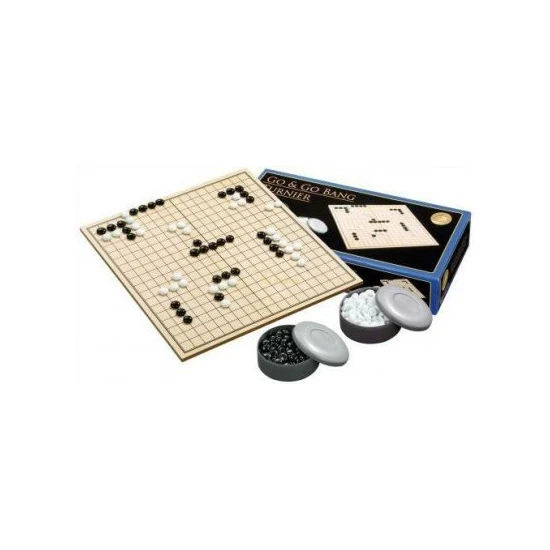
Go & Go Tournament
Wydawca: Philos
 Czy chcesz sprzedać swój egzemplarz tej gry?

Skorzystaj z naszego rynku utrade!
Go & Go Tournament
Skontaktuj się z nami
udostępnij
Artykuł nie jest dostępny. Możesz skorzystać z naszego systemu powiadomień e-mailowych, aby dowiedzieć się, kiedy będzie można go ponownie zamówić.
ZDJĘCIA NA BGG
bggpicszastrzeżenie
























 Opis
Opis
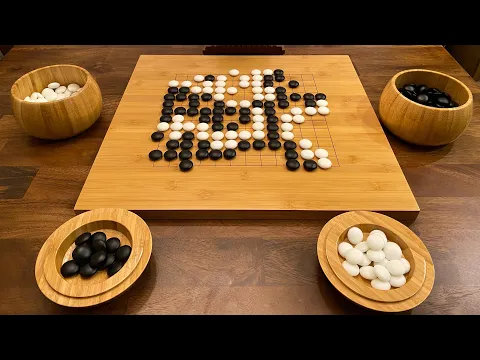
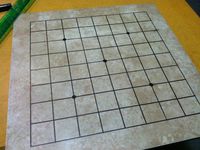
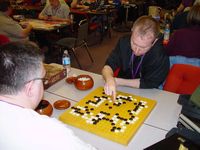
By all appearances, it's just two players taking turns laying stones on a 19×19 (or smaller) grid of intersections. But once its basic rules are understood, Go shows its staggering depth. One can see why many people say it's one of the most elegant brain-burning abstract games in history, with players trying to claim territory by walling off sections of the board and surrounding each other's stones. The game doesn't end until the board fills up, or, more often, when both players agree to end it, at which time whoever controls the most territory wins. The earliest mention of Go (围棋 (wéi qí)- "surrounding game") appears in the "Analects" of Confucius (551-479 BC), while the earliest physical evidence is a 17×17 Go board discovered in 1952 in a tomb of the former Han dynasty (206 BC- 9 AD). There is a tangle of conflicting popular and scholarly anecdotes attributing its invention to two Chinese emperors, an imperial vassal and court astrologers. One story has it that Go was invented by the legendary Emperor Yao (ruled 2357-2256 BC) as an amusement for his idiot son. A second claims that the Emperor Shun (ruled 2255-2205 BC) created the game in hopes of improving his weak-minded son's mental prowess. A third says the person named Wu, a vassal of the Emperor Jie (ruled 1818-1766 BC), invented Go (as well as games of cards). Finally, a fourth story suggests that Go was developed by court astrologers during the Zhou dynasty (1045-255 BC). A Go set, consisting of a very general-purpose grid and colored stones, can also be used to play a variety of other abstract strategy games, such as Connect6, Go-Moku, Pente, and others.
 Dalsze informacje
| Mechanika: | Ekspansja terytorialna |
| Kategorie: | Strategia |
| Alternatywne nazwy: | Atari Go Baduk Go Gó Go & Go Bang Turnier Go + Gobang Go und Gobang Igo NEGOCIACION Orient Original Go Paduk Patol Peg Travel Go Game Smart Go The Game of Go The Go Pack The Oriental Game of Go Wei Qi Weichi Weiqi yi yih Вэйци Го Падук 囲碁 围棋 圍棋 弈 碁 바둑 Atari Go Baduk Cờ Vây Go Go & Go Bang Turnier Go & Gobang Go + Gobang Go A Game of Oriental Strategy Go Gobang Go und Gobang Go, Das Brettspiel Ostasiens GoToGo Igo Jang Stone II Jeu de Go Magnetic Chess Magnetic GO Mikado: The Game of Go Negociation Orient Original Go Paduk Patol Peg Travel Go Game Smart Go The Game of Go The Go Pack The Oriental Game of Go Wei Qi Weichi Weiqi yi yih Yunzi Go Stone set Вэйци Го Падук 囲碁 围棋 圍棋 弈 碁 바둑 신의한수 |
| BARCODE: | 4014156032101 |
| Na liście życzeń 2__TOK_1__ Obejrzano go 16712__TOK_1__ razy | |
Opis
By all appearances, it's just two players taking turns laying stones on a 19×19 (or smaller) grid of intersections. But once its basic rules are understood, Go shows its staggering depth. One can see why many people say it's one of the most elegant brain-burning abstract games in history, with players trying to claim territory by walling off sections of the board and surrounding each other's stones. The game doesn't end until the board fills up, or, more often, when both players agree to end it, at which time whoever controls the most territory wins. The earliest mention of Go (围棋 (wéi qí)- "surrounding game") appears in the "Analects" of Confucius (551-479 BC), while the earliest physical evidence is a 17×17 Go board discovered in 1952 in a tomb of the former Han dynasty (206 BC- 9 AD). There is a tangle of conflicting popular and scholarly anecdotes attributing its invention to two Chinese emperors, an imperial vassal and court astrologers. One story has it that Go was invented by the legendary Emperor Yao (ruled 2357-2256 BC) as an amusement for his idiot son. A second claims that the Emperor Shun (ruled 2255-2205 BC) created the game in hopes of improving his weak-minded son's mental prowess. A third says the person named Wu, a vassal of the Emperor Jie (ruled 1818-1766 BC), invented Go (as well as games of cards). Finally, a fourth story suggests that Go was developed by court astrologers during the Zhou dynasty (1045-255 BC). A Go set, consisting of a very general-purpose grid and colored stones, can also be used to play a variety of other abstract strategy games, such as Connect6, Go-Moku, Pente, and others.
Dalsze informacje
| Mechanika: | Ekspansja terytorialna |
| Kategorie: | Strategia |
| Alternatywne nazwy: | Atari Go Baduk Go Gó Go & Go Bang Turnier Go + Gobang Go und Gobang Igo NEGOCIACION Orient Original Go Paduk Patol Peg Travel Go Game Smart Go The Game of Go The Go Pack The Oriental Game of Go Wei Qi Weichi Weiqi yi yih Вэйци Го Падук 囲碁 围棋 圍棋 弈 碁 바둑 Atari Go Baduk Cờ Vây Go Go & Go Bang Turnier Go & Gobang Go + Gobang Go A Game of Oriental Strategy Go Gobang Go und Gobang Go, Das Brettspiel Ostasiens GoToGo Igo Jang Stone II Jeu de Go Magnetic Chess Magnetic GO Mikado: The Game of Go Negociation Orient Original Go Paduk Patol Peg Travel Go Game Smart Go The Game of Go The Go Pack The Oriental Game of Go Wei Qi Weichi Weiqi yi yih Yunzi Go Stone set Вэйци Го Падук 囲碁 围棋 圍棋 弈 碁 바둑 신의한수 |
| BARCODE: | 4014156032101 |
| Na liście życzeń 2__TOK_1__ Obejrzano go 16712__TOK_1__ razy | |
Co mówią gracze
Przy ilu graczach sprawdza się najlepiej · 236 głosów na BoardGameGeek
- 1 1 1 uważa, że jest najlepsza, 27 poleca, 148 odradza
- 2 225 225 uważa, że jest najlepsza, 11 poleca, 0 odradza
- 2+ 2 2 uważa, że jest najlepsza, 24 poleca, 150 odradza
Najlepiej Consigliato Niepolecane
Oceny użytkowników uplay: Nie ma jeszcze recenzji uplay. Napisz pierwszą!
Twoja recenzja
Komentarze są moderowane przed publikacją: bez linków, obelg i treści nie na temat. Kulturalne negatywne opinie są dozwolone.
Zaloguj się, aby napisać recenzję
UWAGA! Nie nadaje się dla dzieci poniżej 3 roku życia. Zawiera małe części, które mogą zostać połknięte lub wdychane.