







Język:
język-UK

|
|
|
|
1-2
240'
14
Niezależny od języka
|
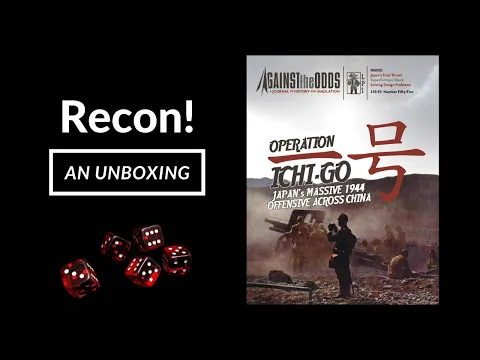
Operation Ichi-Go: Japan's Massive 1944 Offensive Across China
Wydawca: Against the Odds
 Czy chcesz sprzedać swój egzemplarz tej gry?

Skorzystaj z naszego rynku utrade!
Operation Ichi-Go: Japan's Massive 1944 Offensive Across China
Skontaktuj się z nami
udostępnij
Artykuł nie jest dostępny. Możesz skorzystać z naszego systemu powiadomień e-mailowych, aby dowiedzieć się, kiedy będzie można go ponownie zamówić.
ZDJĘCIA NA BGG
bggpicszastrzeżenie


 Opis
Opis
In mid-1944, despite their rapidly deteriorating position, the Japanese launched a massive offensive in China. They had three objectives: Open a land and rail route across China to their southern conquests in Indochina and the Dutch East Indies (and bypass the US submarine blockade along the Chinese seacoast), and; Eliminate all the US bomber bases in China from which B-29s were targeting the home islands, and; At a minimum, severely degrade Nationalist Chinese capabilities and best case, maybe even knock the Nationalists out of the war. Operation Ichi-Go (“Number One”) was the largest ground offensive in Japanese history, with 500,000 troops, 800 tanks and massive logistics and artillery support. They used their tanks in armored divisions – the only time in the war they deployed such concentrations. Ironically, Japanese armies reached the goals that they set, but US airpower prevented them from using their land route to any great extent, and US victories in the Pacific gave the US plenty of other airbases to attack the Japanese mainland. However, the offensive made a huge difference to postwar Asia. The Nationalists lost important territory, including scarce industrial capacity and rice-growing areas vital to their economy. They also lost military prestige and an enormous number of troops, perhaps as many as 750,000 casualties, weakening their ability to fight the Communists. And fatally, in order to do the offensive, the Japanese emptied Manchuria, leaving defenses against the Soviets there very weak, and from areas in China where they had been containing Communist guerrillas, creating a vacuum that the Communists quickly filled. This two-player game has one side commanding the Japanese, and the other the Nationalist Chinese. A “what if” option allows for the exploration of the potentials of a massive US invasion on the Chinese coast (Operation "Causeway"), one of the many approaches the US considered before finally deciding to invade the Philippines instead. There is also a set of full solitaire game rules inside (by Steven Cunliffe) where the active player (as Japan) competes against the Nationalist Chinese side run by the game system. The game features nine monthly turns; units of maneuver are IJA (and US) divisions, with individual Chinese units varying in organizational size from divisions up to army groups. Most Chinese units are "untried" and only reveal their true value at the moment of combat.
 Dalsze informacje
| Mechanika: | |
| Kategorie: | Wojna |
| Alternatywne nazwy: | |
| BARCODE: | ????????? |
| Na liście życzeń 1__TOK_1__ Obejrzano go 2302__TOK_1__ razy | |
Opis
In mid-1944, despite their rapidly deteriorating position, the Japanese launched a massive offensive in China. They had three objectives: Open a land and rail route across China to their southern conquests in Indochina and the Dutch East Indies (and bypass the US submarine blockade along the Chinese seacoast), and; Eliminate all the US bomber bases in China from which B-29s were targeting the home islands, and; At a minimum, severely degrade Nationalist Chinese capabilities and best case, maybe even knock the Nationalists out of the war. Operation Ichi-Go (“Number One”) was the largest ground offensive in Japanese history, with 500,000 troops, 800 tanks and massive logistics and artillery support. They used their tanks in armored divisions – the only time in the war they deployed such concentrations. Ironically, Japanese armies reached the goals that they set, but US airpower prevented them from using their land route to any great extent, and US victories in the Pacific gave the US plenty of other airbases to attack the Japanese mainland. However, the offensive made a huge difference to postwar Asia. The Nationalists lost important territory, including scarce industrial capacity and rice-growing areas vital to their economy. They also lost military prestige and an enormous number of troops, perhaps as many as 750,000 casualties, weakening their ability to fight the Communists. And fatally, in order to do the offensive, the Japanese emptied Manchuria, leaving defenses against the Soviets there very weak, and from areas in China where they had been containing Communist guerrillas, creating a vacuum that the Communists quickly filled. This two-player game has one side commanding the Japanese, and the other the Nationalist Chinese. A “what if” option allows for the exploration of the potentials of a massive US invasion on the Chinese coast (Operation "Causeway"), one of the many approaches the US considered before finally deciding to invade the Philippines instead. There is also a set of full solitaire game rules inside (by Steven Cunliffe) where the active player (as Japan) competes against the Nationalist Chinese side run by the game system. The game features nine monthly turns; units of maneuver are IJA (and US) divisions, with individual Chinese units varying in organizational size from divisions up to army groups. Most Chinese units are "untried" and only reveal their true value at the moment of combat.
Dalsze informacje
| Mechanika: | |
| Kategorie: | Wojna |
| Alternatywne nazwy: | |
| BARCODE: | ????????? |
| Na liście życzeń 1__TOK_1__ Obejrzano go 2302__TOK_1__ razy | |
Co mówią gracze
Oceny użytkowników uplay: Nie ma jeszcze recenzji uplay. Napisz pierwszą!
Twoja recenzja
Komentarze są moderowane przed publikacją: bez linków, obelg i treści nie na temat. Kulturalne negatywne opinie są dozwolone.
Zaloguj się, aby napisać recenzję
UWAGA! Nie nadaje się dla dzieci poniżej 3 roku życia. Zawiera małe części, które mogą zostać połknięte lub wdychane.