







Język:
język-UK


|
|
|
|
Najlepiej w 2 graczy
1 z 1 głosów
Wiek zalecany przez graczy: 6+
1 z 1 głosów
2-4
35'
8
Niezależny od języka
|
Search for Gnomes
Wydawca: Simployt Games
 Czy chcesz sprzedać swój egzemplarz tej gry?

Skorzystaj z naszego rynku utrade!
Search for Gnomes
Skontaktuj się z nami
udostępnij
Artykuł nie jest dostępny. Możesz skorzystać z naszego systemu powiadomień e-mailowych, aby dowiedzieć się, kiedy będzie można go ponownie zamówić.
ZDJĘCIA NA BGG
bggpicszastrzeżenie








 Opis
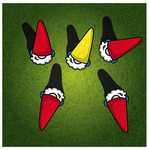
Players attempt to remember as many gnomes as possible in about 15 seconds time.
Each round every player tries to find the right amount of gnomes for each mission played.
After 6 rounds (2 player game) or 4 rounds (4 player game) the player with the most points wins.
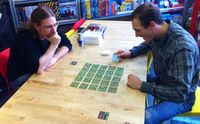
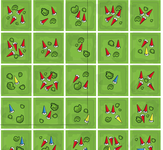
The start player shuffles the 20 mission tiles placing them face down on the table. The start player then shuffles the 25 forest tiles to place them face up in a 5 x 5 grid visible for everyone on the table.
The game starts, everyone tries to remember as many gnomes and colors on the 5 x 5 grid on the table. After 15 seconds (you need a watch) everyone together turns the 25 tiles face down.
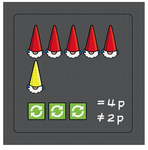
The start player takes 1 mission tile (for everyone to see) and tries to complete the requested mission tile.
The next player turns a mission and does the same...
The bidding round starts when every player has played 1 mission card.
BIDDING ROUND STARTS
The start player starts bidding on the remaining tiles on the table.
Example: player 1 (start player) bids that he can find 4 red gnomes. Player 2 bids higher 6 red gnomes. Player 1 raises the bid 12 red gnomes. Player 2 stops bidding.
Player 1 starts turning the remaining tiles on the table, he may not stop turning tiles until he finds the 12 red gnomes!!! When he finds exactly 12 red gnomes he earns 3 extra points,
but when he finds more than 12 red gnomes he loses as many points as tiles revealed this bidding round.
NEXT ROUND
The next player is now the start player, he shuffles all the forest tiles and he makes a new visible roster. Played mission cards are removed from the game. Play with the remaining mission cards for the next round.
Ps: the rules of course are more detailed than this...
 Dalsze informacje
| Mechanika: | Pamięć |
| Kategorie: | Blefy Akcja i zręczność Gry imprezowe |
| Alternatywne nazwy: | |
| BARCODE: | NOEAN_11115 |
| Na liście życzeń 1__TOK_1__ Obejrzano go 4384__TOK_1__ razy | |
Opis
Players attempt to remember as many gnomes as possible in about 15 seconds time.
Each round every player tries to find the right amount of gnomes for each mission played.
After 6 rounds (2 player game) or 4 rounds (4 player game) the player with the most points wins.
The start player shuffles the 20 mission tiles placing them face down on the table. The start player then shuffles the 25 forest tiles to place them face up in a 5 x 5 grid visible for everyone on the table.
The game starts, everyone tries to remember as many gnomes and colors on the 5 x 5 grid on the table. After 15 seconds (you need a watch) everyone together turns the 25 tiles face down.
The start player takes 1 mission tile (for everyone to see) and tries to complete the requested mission tile.
The next player turns a mission and does the same...
The bidding round starts when every player has played 1 mission card.
BIDDING ROUND STARTS
The start player starts bidding on the remaining tiles on the table.
Example: player 1 (start player) bids that he can find 4 red gnomes. Player 2 bids higher 6 red gnomes. Player 1 raises the bid 12 red gnomes. Player 2 stops bidding.
Player 1 starts turning the remaining tiles on the table, he may not stop turning tiles until he finds the 12 red gnomes!!! When he finds exactly 12 red gnomes he earns 3 extra points,
but when he finds more than 12 red gnomes he loses as many points as tiles revealed this bidding round.
NEXT ROUND
The next player is now the start player, he shuffles all the forest tiles and he makes a new visible roster. Played mission cards are removed from the game. Play with the remaining mission cards for the next round.
Ps: the rules of course are more detailed than this...
Each round every player tries to find the right amount of gnomes for each mission played.
After 6 rounds (2 player game) or 4 rounds (4 player game) the player with the most points wins.
The start player shuffles the 20 mission tiles placing them face down on the table. The start player then shuffles the 25 forest tiles to place them face up in a 5 x 5 grid visible for everyone on the table.
The game starts, everyone tries to remember as many gnomes and colors on the 5 x 5 grid on the table. After 15 seconds (you need a watch) everyone together turns the 25 tiles face down.
The start player takes 1 mission tile (for everyone to see) and tries to complete the requested mission tile.
The next player turns a mission and does the same...
The bidding round starts when every player has played 1 mission card.
BIDDING ROUND STARTS
The start player starts bidding on the remaining tiles on the table.
Example: player 1 (start player) bids that he can find 4 red gnomes. Player 2 bids higher 6 red gnomes. Player 1 raises the bid 12 red gnomes. Player 2 stops bidding.
Player 1 starts turning the remaining tiles on the table, he may not stop turning tiles until he finds the 12 red gnomes!!! When he finds exactly 12 red gnomes he earns 3 extra points,
but when he finds more than 12 red gnomes he loses as many points as tiles revealed this bidding round.
NEXT ROUND
The next player is now the start player, he shuffles all the forest tiles and he makes a new visible roster. Played mission cards are removed from the game. Play with the remaining mission cards for the next round.
Ps: the rules of course are more detailed than this...
Dalsze informacje
| Mechanika: | Pamięć |
| Kategorie: | Blefy Akcja i zręczność Gry imprezowe |
| Alternatywne nazwy: | |
| BARCODE: | NOEAN_11115 |
| Na liście życzeń 1__TOK_1__ Obejrzano go 4384__TOK_1__ razy | |
Co mówią gracze
Przy ilu graczach sprawdza się najlepiej · 1 głosów na BoardGameGeek
- 1 0 0 uważa, że jest najlepsza, 0 poleca, 0 odradza
- 2 1 1 uważa, że jest najlepsza, 0 poleca, 0 odradza
- 3 1 1 uważa, że jest najlepsza, 0 poleca, 0 odradza
- 4 1 1 uważa, że jest najlepsza, 0 poleca, 0 odradza
- 4+ 0 0 uważa, że jest najlepsza, 0 poleca, 0 odradza
Najlepiej Consigliato Niepolecane
Oceny użytkowników uplay: Nie ma jeszcze recenzji uplay. Napisz pierwszą!
Twoja recenzja
Komentarze są moderowane przed publikacją: bez linków, obelg i treści nie na temat. Kulturalne negatywne opinie są dozwolone.
Zaloguj się, aby napisać recenzję
UWAGA! Nie nadaje się dla dzieci poniżej 3 roku życia. Zawiera małe części, które mogą zostać połknięte lub wdychane.