







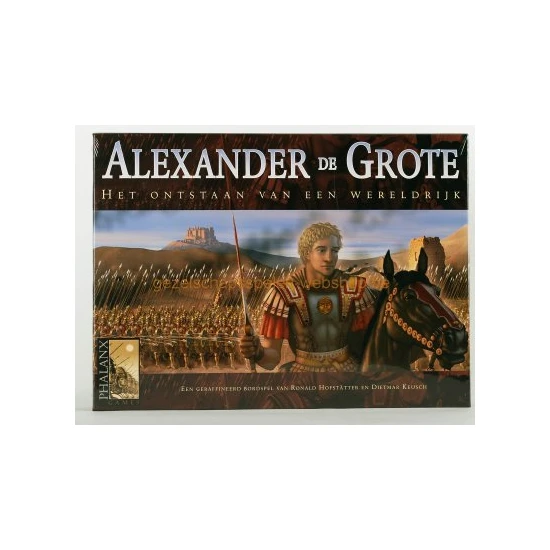
|
|
|

2-5
75'
10
Aucun texte nécessaire dans le jeu
|
Alexander De Grote
Éditeur: Phalanx Games
 Voulez-vous vendre votre copie de ce jeu ?

Utilisez notre marché utrade !
Alexander De Grote
Contactez-nous
Partager sur
L'article n'est pas disponible, vous pouvez utiliser l'alerte pour être averti lorsqu'il sera de nouveau en stock.
PHOTOS SUR BGG
Ces photos sont la propriété de boardgamegeek.com et ne font pas spécifiquement référence à l'édition présentée sur cette page.


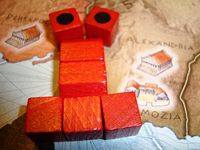


 Descriptif
Un jeu de Phalanx Games sur les campagnes d'Alexandre le Grand.
Les joueurs devront conquérir des provinces, fonder de nouvelles villes et construire des temples, prouvant qu'ils sont dignes de devenir les héritiers d'Alexandre le Grand. Excellente qualité des composants, avec des pièces en bois et des éléments très robustes.
Contenu de la boîte :
Les joueurs devront conquérir des provinces, fonder de nouvelles villes et construire des temples, prouvant qu'ils sont dignes de devenir les héritiers d'Alexandre le Grand. Excellente qualité des composants, avec des pièces en bois et des éléments très robustes.
Contenu de la boîte :
- 1 plateau de jeu
- 10 pions en bois (2 par couleur/joueur)
- 75 Ressources (cubes, 15 par couleur/joueur)
- 50 Temples (10 par couleur/joueur)
- 40 Villes (8 par couleur/joueur)
- 5 tableaux de référence
- 5 Écrans
- 1 schéma récapitulatif
- 1 manuel
 Informations supplémentaires
| Mécanique: | Contrôle de zone/Influence de zone |
| Catégories: | Historique Bâtiment de la ville |
| Noms alternatifs: | Alexander De Grote Alexander der Große Alexander der Grosse Alexander the Great Alexander De Grote Alexander der Große Alexander der Grosse Alexander the Great |
| BARCODE: | ????????? |
| Dans les collections 4 Cela a été vu 4877 fois | |
Descriptif
Un jeu de Phalanx Games sur les campagnes d'Alexandre le Grand.
Les joueurs devront conquérir des provinces, fonder de nouvelles villes et construire des temples, prouvant qu'ils sont dignes de devenir les héritiers d'Alexandre le Grand. Excellente qualité des composants, avec des pièces en bois et des éléments très robustes.
Contenu de la boîte :
Les joueurs devront conquérir des provinces, fonder de nouvelles villes et construire des temples, prouvant qu'ils sont dignes de devenir les héritiers d'Alexandre le Grand. Excellente qualité des composants, avec des pièces en bois et des éléments très robustes.
Contenu de la boîte :
- 1 plateau de jeu
- 10 pions en bois (2 par couleur/joueur)
- 75 Ressources (cubes, 15 par couleur/joueur)
- 50 Temples (10 par couleur/joueur)
- 40 Villes (8 par couleur/joueur)
- 5 tableaux de référence
- 5 Écrans
- 1 schéma récapitulatif
- 1 manuel
Informations supplémentaires
| Mécanique: | Contrôle de zone/Influence de zone |
| Catégories: | Historique Bâtiment de la ville |
| Noms alternatifs: | Alexander De Grote Alexander der Große Alexander der Grosse Alexander the Great Alexander De Grote Alexander der Große Alexander der Grosse Alexander the Great |
| BARCODE: | ????????? |
| Dans les collections 4 Cela a été vu 4877 fois | |

ATTENTION ! Ne convient pas aux enfants de moins de 3 ans. Il contient de petites pièces qui pourraient être avalées ou inhalées.