









Langue:
Anglais


|
|
|
|
Idéal à 2 joueurs
4 votes sur 4
Âge conseillé par les joueurs : 16+
1 votes sur 1
1-2
60'
12
Aucun texte nécessaire dans le jeu
|
Chalons: The Fate of Europe
Éditeur: Decision Games (I)
 Voulez-vous vendre votre copie de ce jeu ?

Utilisez notre marché utrade !
Chalons: The Fate of Europe
Contactez-nous
Partager sur
L'article n'est pas disponible, vous pouvez utiliser l'alerte pour être averti lorsqu'il sera de nouveau en stock.
PHOTOS SUR BGG
Ces photos sont la propriété de boardgamegeek.com et ne font pas spécifiquement référence à l'édition présentée sur cette page.


 Descriptif
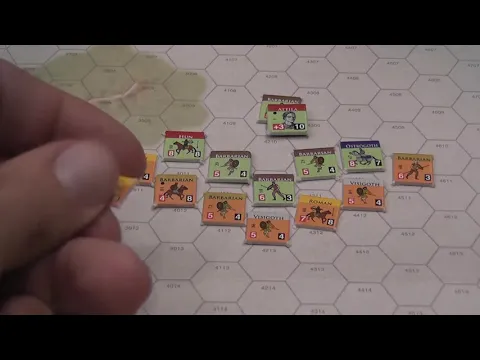
Throughout the mid-5th century AD, Attila's Huns terrorized Europe. The skill of the Hun horsemen, particularly their accuracy with the composite bow while mounted, made them a veritable shock army. They continued to bring victory after victory to Attila, making him the master of Central Europe. After years of conquest, oppression and extortion, however, Attila's recent invasion of Western Europe would be challenged: a remnant Roman army, under the command of Flavius Aetius, was sent to stop him on a field known as the Catalaunian Plain, near the village of Chalons. The Battle of Chalons would decide the fate of Europe.
Chalons utilizes the tried-and-true Battles of the Ancient World system, providing a simple yet accurate portrayal of ancient warfare. The combat system is intuitive, including all of the details that characterized warfare in the era of sword and shield. Various units may simply be swordsmen, while others may be archers or javelin throwers, horsemen, etc. The system includes rules for leaders, charges, melee, diversionary attacks, demoralization and more. A group of barbarians, for example, may be ordered to charge an enemy phalanx that had already hurled their javelins. As the barbarians near the phalanx, however, they may be ambushed by enemy ballistas hidden behind the ranks and waiting to disrupt just such a charge.
In Chalons the traditional design of the classic Combat Results Table emphasizes playability while also simulating the true strictures of ancient warfare. Famous leaders, such as Attila, also influence combat, replicating the importance of their presence during battle. Winning will depend on deployment, maneuver and opportunity, as well as the strengths and weaknesses of each particular army.
Contents:
17 x 22" (43 x 56 cm) terrain map
100 die-cut counters
One Standard Rules booklet for this series
One Exclusive Rules booklet for this title
 Informations supplémentaires
| Mécanique: | Hex et compteur Simulations |
| Catégories: | Historique Guerre |
| Noms alternatifs: | |
| BARCODE: | 95109016014 |
| Dans la liste de souhaits 1 Cela a été vu 1804 fois | |
Descriptif
Throughout the mid-5th century AD, Attila's Huns terrorized Europe. The skill of the Hun horsemen, particularly their accuracy with the composite bow while mounted, made them a veritable shock army. They continued to bring victory after victory to Attila, making him the master of Central Europe. After years of conquest, oppression and extortion, however, Attila's recent invasion of Western Europe would be challenged: a remnant Roman army, under the command of Flavius Aetius, was sent to stop him on a field known as the Catalaunian Plain, near the village of Chalons. The Battle of Chalons would decide the fate of Europe.
Chalons utilizes the tried-and-true Battles of the Ancient World system, providing a simple yet accurate portrayal of ancient warfare. The combat system is intuitive, including all of the details that characterized warfare in the era of sword and shield. Various units may simply be swordsmen, while others may be archers or javelin throwers, horsemen, etc. The system includes rules for leaders, charges, melee, diversionary attacks, demoralization and more. A group of barbarians, for example, may be ordered to charge an enemy phalanx that had already hurled their javelins. As the barbarians near the phalanx, however, they may be ambushed by enemy ballistas hidden behind the ranks and waiting to disrupt just such a charge.
In Chalons the traditional design of the classic Combat Results Table emphasizes playability while also simulating the true strictures of ancient warfare. Famous leaders, such as Attila, also influence combat, replicating the importance of their presence during battle. Winning will depend on deployment, maneuver and opportunity, as well as the strengths and weaknesses of each particular army.
Contents:
17 x 22" (43 x 56 cm) terrain map
100 die-cut counters
One Standard Rules booklet for this series
One Exclusive Rules booklet for this title
Informations supplémentaires
| Mécanique: | Hex et compteur Simulations |
| Catégories: | Historique Guerre |
| Noms alternatifs: | |
| BARCODE: | 95109016014 |
| Dans la liste de souhaits 1 Cela a été vu 1804 fois | |
Ce que disent les joueurs
À combien de joueurs il est le meilleur · 4 votes sur BoardGameGeek
- 1 0 0 le trouvent idéal, 4 le recommandent, 0 le déconseillent
- 2 4 4 le trouvent idéal, 0 le recommandent, 0 le déconseillent
- 2+ 0 0 le trouvent idéal, 1 le recommandent, 1 le déconseillent
Idéal Conseillé Déconseillé
Avis des utilisateurs uplay: Aucun avis uplay publié. Soyez le premier !
Votre avis
Les commentaires sont modérés avant publication : pas de liens, insultes ou contenus hors sujet. Les avis négatifs respectueux sont acceptés.
Connectez-vous pour donner votre avis
ATTENTION ! Ne convient pas aux enfants de moins de 3 ans. Il contient de petites pièces qui pourraient être avalées ou inhalées.