









Langue:
Allemand


|
|
|
|
2-6
20'
6
Kein notwendiger Text im Spiel
|
Zogen
Éditeur: Oink Games
 Voulez-vous vendre votre copie de ce jeu ?

Utilisez notre marché utrade !
Zogen
Contactez-nous
Partager sur
 In einem externen Lager verfügbar.
Versand in etwa 7/15 Tagen
Prix de détail 19,99€
16,99€
-15%Prix de vente
Expédition IT
4,49€
PHOTOS SUR BGG
Ces photos sont la propriété de boardgamegeek.com et ne font pas spécifiquement référence à l'édition présentée sur cette page.





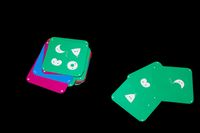

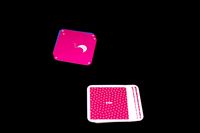
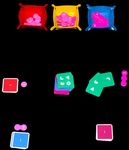





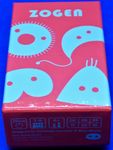
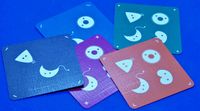



 Descriptif
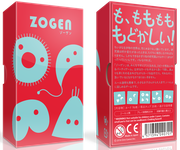
In Zogen, a.k.a. ゾーゲン, the player researchers want to rid themselves of their microorganism cards as quickly as they can, but they can do so only by observing the current lab environment and watching the one thing that changes, then "recording" it by playing their card.
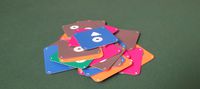
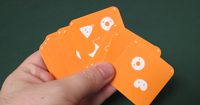
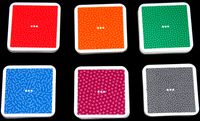
In more detail, each player starts with a hand of sixteen cards, with each card showing 0-4 types of microorganisms, which are named "Maru", "Tsuki", "Yama", and "Siri". The start player for the round places one of their cards face up on the table, then everyone plays at once, trying to lay down a card that differs from the initial card by exactly one microorganism, whether one more or one less.
Thus, if a card shows "Maru" and "Tsuki", you can lay down a card that shows either "Maru" or "Tsuki" or a card that shows "Maru" and "Tsuki" along with one of the previously missing microorganisms. You must say the name of the microorganism that is added or removed when you play a card, then everyone must match the card that you just played.
When a player has only three cards in hand, the round ends and players score points based on their rank in terms of how many cards they hold. Whoever has the most points after you've played the agreed-upon number of rounds wins.
 Informations supplémentaires
| Mécanique: | Reconnaissance de formes |
| Catégories: | Jeux de cartes En temps réel |
| Noms alternatifs: | |
| BARCODE: | 4571394090985 |
| L'article se trouve dans le panier 1 Cela a été vu 4037 fois | |
Descriptif
In Zogen, a.k.a. ゾーゲン, the player researchers want to rid themselves of their microorganism cards as quickly as they can, but they can do so only by observing the current lab environment and watching the one thing that changes, then "recording" it by playing their card.
In more detail, each player starts with a hand of sixteen cards, with each card showing 0-4 types of microorganisms, which are named "Maru", "Tsuki", "Yama", and "Siri". The start player for the round places one of their cards face up on the table, then everyone plays at once, trying to lay down a card that differs from the initial card by exactly one microorganism, whether one more or one less.
Thus, if a card shows "Maru" and "Tsuki", you can lay down a card that shows either "Maru" or "Tsuki" or a card that shows "Maru" and "Tsuki" along with one of the previously missing microorganisms. You must say the name of the microorganism that is added or removed when you play a card, then everyone must match the card that you just played.
When a player has only three cards in hand, the round ends and players score points based on their rank in terms of how many cards they hold. Whoever has the most points after you've played the agreed-upon number of rounds wins.
In more detail, each player starts with a hand of sixteen cards, with each card showing 0-4 types of microorganisms, which are named "Maru", "Tsuki", "Yama", and "Siri". The start player for the round places one of their cards face up on the table, then everyone plays at once, trying to lay down a card that differs from the initial card by exactly one microorganism, whether one more or one less.
Thus, if a card shows "Maru" and "Tsuki", you can lay down a card that shows either "Maru" or "Tsuki" or a card that shows "Maru" and "Tsuki" along with one of the previously missing microorganisms. You must say the name of the microorganism that is added or removed when you play a card, then everyone must match the card that you just played.
When a player has only three cards in hand, the round ends and players score points based on their rank in terms of how many cards they hold. Whoever has the most points after you've played the agreed-upon number of rounds wins.
Informations supplémentaires
| Mécanique: | Reconnaissance de formes |
| Catégories: | Jeux de cartes En temps réel |
| Noms alternatifs: | |
| BARCODE: | 4571394090985 |
| L'article se trouve dans le panier 1 Cela a été vu 4037 fois | |
 Fréquemment achetés ensemble

 Autres versions

Ce que disent les joueurs
Avis des utilisateurs uplay: Aucun avis uplay publié. Soyez le premier !
Votre avis
Les commentaires sont modérés avant publication : pas de liens, insultes ou contenus hors sujet. Les avis négatifs respectueux sont acceptés.
Connectez-vous pour donner votre avis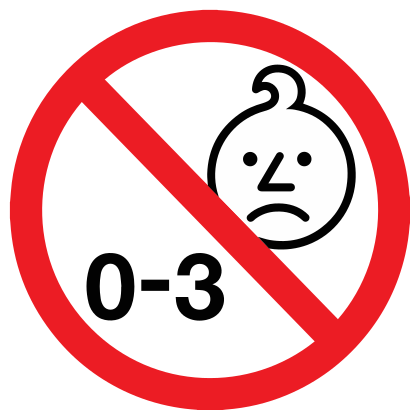
ATTENTION ! Ne convient pas aux enfants de moins de 3 ans. Il contient de petites pièces qui pourraient être avalées ou inhalées.