







Idioma:
Inglês


|
|
|
|
Melhor com 2 jogadores
1 votos de 1
Idade recomendada pelos jogadores: 6+
1 votos de 1
2-4
35'
8
Kein notwendiger Text im Spiel
|
Search for Gnomes
Editora: Simployt Games
 Quer vender sua cópia deste jogo?

Use nosso mercado utrade!
Search for Gnomes
Contate-nos
Compartilhar em
O item não está disponível, você pode usar o alerta para ser avisado quando ele estiver novamente em estoque.
FOTOS NO BGG
Estas fotos são propriedade de boardgamegeek.com e não se referem especificamente à edição desta página.








 Descrição
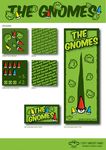
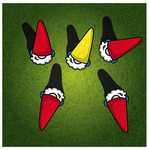
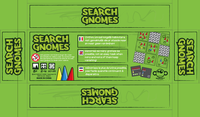
Players attempt to remember as many gnomes as possible in about 15 seconds time.
Each round every player tries to find the right amount of gnomes for each mission played.
After 6 rounds (2 player game) or 4 rounds (4 player game) the player with the most points wins.
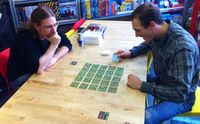
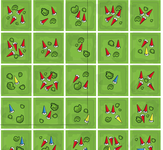
The start player shuffles the 20 mission tiles placing them face down on the table. The start player then shuffles the 25 forest tiles to place them face up in a 5 x 5 grid visible for everyone on the table.
The game starts, everyone tries to remember as many gnomes and colors on the 5 x 5 grid on the table. After 15 seconds (you need a watch) everyone together turns the 25 tiles face down.
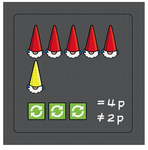
The start player takes 1 mission tile (for everyone to see) and tries to complete the requested mission tile.
The next player turns a mission and does the same...
The bidding round starts when every player has played 1 mission card.
BIDDING ROUND STARTS
The start player starts bidding on the remaining tiles on the table.
Example: player 1 (start player) bids that he can find 4 red gnomes. Player 2 bids higher 6 red gnomes. Player 1 raises the bid 12 red gnomes. Player 2 stops bidding.
Player 1 starts turning the remaining tiles on the table, he may not stop turning tiles until he finds the 12 red gnomes!!! When he finds exactly 12 red gnomes he earns 3 extra points,
but when he finds more than 12 red gnomes he loses as many points as tiles revealed this bidding round.
NEXT ROUND
The next player is now the start player, he shuffles all the forest tiles and he makes a new visible roster. Played mission cards are removed from the game. Play with the remaining mission cards for the next round.
Ps: the rules of course are more detailed than this...
 Informações adicionais
| Mecânica: | Memória |
| Categorias: | Blefe Ação e Destreza Jogo de festa |
| Nomes alternativos: | |
| BARCODE: | NOEAN_11115 |
| Na lista de desejos de 1 Isso foi visto 4384 vezes | |
Descrição
Players attempt to remember as many gnomes as possible in about 15 seconds time.
Each round every player tries to find the right amount of gnomes for each mission played.
After 6 rounds (2 player game) or 4 rounds (4 player game) the player with the most points wins.
The start player shuffles the 20 mission tiles placing them face down on the table. The start player then shuffles the 25 forest tiles to place them face up in a 5 x 5 grid visible for everyone on the table.
The game starts, everyone tries to remember as many gnomes and colors on the 5 x 5 grid on the table. After 15 seconds (you need a watch) everyone together turns the 25 tiles face down.
The start player takes 1 mission tile (for everyone to see) and tries to complete the requested mission tile.
The next player turns a mission and does the same...
The bidding round starts when every player has played 1 mission card.
BIDDING ROUND STARTS
The start player starts bidding on the remaining tiles on the table.
Example: player 1 (start player) bids that he can find 4 red gnomes. Player 2 bids higher 6 red gnomes. Player 1 raises the bid 12 red gnomes. Player 2 stops bidding.
Player 1 starts turning the remaining tiles on the table, he may not stop turning tiles until he finds the 12 red gnomes!!! When he finds exactly 12 red gnomes he earns 3 extra points,
but when he finds more than 12 red gnomes he loses as many points as tiles revealed this bidding round.
NEXT ROUND
The next player is now the start player, he shuffles all the forest tiles and he makes a new visible roster. Played mission cards are removed from the game. Play with the remaining mission cards for the next round.
Ps: the rules of course are more detailed than this...
Each round every player tries to find the right amount of gnomes for each mission played.
After 6 rounds (2 player game) or 4 rounds (4 player game) the player with the most points wins.
The start player shuffles the 20 mission tiles placing them face down on the table. The start player then shuffles the 25 forest tiles to place them face up in a 5 x 5 grid visible for everyone on the table.
The game starts, everyone tries to remember as many gnomes and colors on the 5 x 5 grid on the table. After 15 seconds (you need a watch) everyone together turns the 25 tiles face down.
The start player takes 1 mission tile (for everyone to see) and tries to complete the requested mission tile.
The next player turns a mission and does the same...
The bidding round starts when every player has played 1 mission card.
BIDDING ROUND STARTS
The start player starts bidding on the remaining tiles on the table.
Example: player 1 (start player) bids that he can find 4 red gnomes. Player 2 bids higher 6 red gnomes. Player 1 raises the bid 12 red gnomes. Player 2 stops bidding.
Player 1 starts turning the remaining tiles on the table, he may not stop turning tiles until he finds the 12 red gnomes!!! When he finds exactly 12 red gnomes he earns 3 extra points,
but when he finds more than 12 red gnomes he loses as many points as tiles revealed this bidding round.
NEXT ROUND
The next player is now the start player, he shuffles all the forest tiles and he makes a new visible roster. Played mission cards are removed from the game. Play with the remaining mission cards for the next round.
Ps: the rules of course are more detailed than this...
Informações adicionais
| Mecânica: | Memória |
| Categorias: | Blefe Ação e Destreza Jogo de festa |
| Nomes alternativos: | |
| BARCODE: | NOEAN_11115 |
| Na lista de desejos de 1 Isso foi visto 4384 vezes | |
O que dizem os jogadores
Com quantos jogadores funciona melhor · 1 votos no BoardGameGeek
- 1 0 0 consideram-no o melhor, 0 recomendam-no, 0 desaconselham-no
- 2 1 1 consideram-no o melhor, 0 recomendam-no, 0 desaconselham-no
- 3 1 1 consideram-no o melhor, 0 recomendam-no, 0 desaconselham-no
- 4 1 1 consideram-no o melhor, 0 recomendam-no, 0 desaconselham-no
- 4+ 0 0 consideram-no o melhor, 0 recomendam-no, 0 desaconselham-no
O melhor Sugerido Não recomendado
Avaliações dos utilizadores uplay: Ainda não há avaliações uplay. Seja o primeiro!
A sua avaliação
Os comentários são moderados antes da publicação: sem links, insultos ou conteúdo irrelevante. São aceites opiniões negativas respeitosas.
Inicie sessão para avaliar
CUIDADO! Não é adequado para crianças menores de 3 anos. Contém peças pequenas que podem ser engolidas ou inaladas.