








Idioma:
Inglês
Alemão
Japonês



|
|
|
|
2-5
30'
10
Niezależny od języka
|
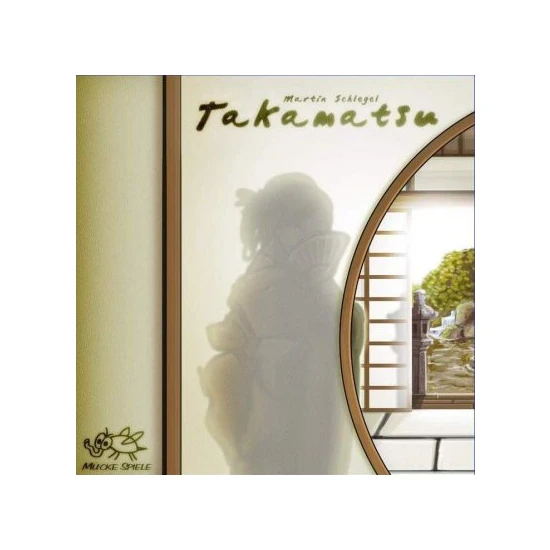
Takamatsu
Editora: Mücke Spiele
 Quer vender sua cópia deste jogo?

Use nosso mercado utrade!
Takamatsu
Contate-nos
Compartilhar em
O item não está disponível, você pode usar o alerta para ser avisado quando ele estiver novamente em estoque.
FOTOS NO BGG
Estas fotos são propriedade de boardgamegeek.com e não se referem especificamente à edição desta página.




 Mangas de cartas neste jogo
23 cartões de 45.0mm largura e 90.0mm de altura
1x
(100 Peças)

1x
(100 Peças)

 Descrição
Há emoção na capital, pois o Shogun Tokugawa Ieyasu deseja atribuir o Han de Takamatsu a um desafio. Os daimyos concorrentes dirigem seus samurais pelo palácio seguindo regras simples e rapidamente percebem que podem usar os samurais dos outros daimyos para seus próprios fins.
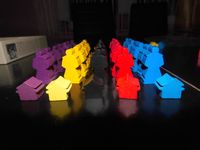
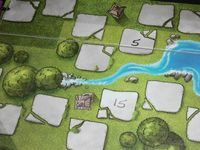
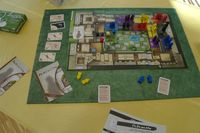
Takamatsu é um jogo de conflito e cooperação, onde os jogadores tentam colocar (ou não colocar!) seus samurais em seus próprios quartos. O palácio consiste em dois caminhos circulares que se fundem em um ponto e depois se separam novamente. Os jogadores têm de 5 a 7 samurais que são divididos entre dois quartos codificados por cores no início do jogo, e uma fila de cartas de pontuação - algumas viradas para baixo - é disposta ao lado do tabuleiro.
Em uma vez, você escolhe um quarto que contém pelo menos um de seus samurais, então move um certo número de samurais neste quarto no sentido horário a partir deste espaço. Se o quarto contém apenas um samurai, você pode movê-lo um espaço; se contém dois, você pode mover ambos dois espaços ou apenas um um espaço - mas se um samurai adversário estiver com você, você deve mover ambos exatamente dois espaços. Quando um quarto tem três ou mais samurais, ele deve deixar pelo menos um para trás (enquanto ainda precisa levar pelo menos um samurai adversário, se houver). Quando um samurai termina seu movimento em um quarto da mesma cor, o daimyo desse samurai coleta a carta de pontuação mais alta, com múltiplas pontuações sendo possíveis em uma vez. Para cada carta de pontuação aberta coletada, o jogador ajusta imediatamente seu marcador de pontuação - o que pode fazer você retroceder na pista, então às vezes você quer escoltar outro samurai para seu lugar em vez de levá-lo para o seu.
Quando um jogador atinge vinte pontos, os jogadores terminam a rodada e, em seguida, somam suas cartas de pontuação ocultas, se houver. O jogador com mais pontos vence! (Com dois jogadores, cada daimyo controla duas cores de samurais e deve mover um samurai adversário quando possível. Depois que uma pagoda atinge o limite de vinte pontos, os jogadores somam suas duas pontuações para determinar um vencedor.)
Takamatsu é um jogo de conflito e cooperação, onde os jogadores tentam colocar (ou não colocar!) seus samurais em seus próprios quartos. O palácio consiste em dois caminhos circulares que se fundem em um ponto e depois se separam novamente. Os jogadores têm de 5 a 7 samurais que são divididos entre dois quartos codificados por cores no início do jogo, e uma fila de cartas de pontuação - algumas viradas para baixo - é disposta ao lado do tabuleiro.
Em uma vez, você escolhe um quarto que contém pelo menos um de seus samurais, então move um certo número de samurais neste quarto no sentido horário a partir deste espaço. Se o quarto contém apenas um samurai, você pode movê-lo um espaço; se contém dois, você pode mover ambos dois espaços ou apenas um um espaço - mas se um samurai adversário estiver com você, você deve mover ambos exatamente dois espaços. Quando um quarto tem três ou mais samurais, ele deve deixar pelo menos um para trás (enquanto ainda precisa levar pelo menos um samurai adversário, se houver). Quando um samurai termina seu movimento em um quarto da mesma cor, o daimyo desse samurai coleta a carta de pontuação mais alta, com múltiplas pontuações sendo possíveis em uma vez. Para cada carta de pontuação aberta coletada, o jogador ajusta imediatamente seu marcador de pontuação - o que pode fazer você retroceder na pista, então às vezes você quer escoltar outro samurai para seu lugar em vez de levá-lo para o seu.
Quando um jogador atinge vinte pontos, os jogadores terminam a rodada e, em seguida, somam suas cartas de pontuação ocultas, se houver. O jogador com mais pontos vence! (Com dois jogadores, cada daimyo controla duas cores de samurais e deve mover um samurai adversário quando possível. Depois que uma pagoda atinge o limite de vinte pontos, os jogadores somam suas duas pontuações para determinar um vencedor.)
 Informações adicionais
| Mecânica: | Colocação de Trabalhador |
| Categorias: | Ação e Destreza |
| Nomes alternativos: | |
| BARCODE: | 4280000153852 |
| Em 22 listas de desejos Em 6 coleções Isso foi visto 8290 vezes | |
Descrição
Há emoção na capital, pois o Shogun Tokugawa Ieyasu deseja atribuir o Han de Takamatsu a um desafio. Os daimyos concorrentes dirigem seus samurais pelo palácio seguindo regras simples e rapidamente percebem que podem usar os samurais dos outros daimyos para seus próprios fins.
Takamatsu é um jogo de conflito e cooperação, onde os jogadores tentam colocar (ou não colocar!) seus samurais em seus próprios quartos. O palácio consiste em dois caminhos circulares que se fundem em um ponto e depois se separam novamente. Os jogadores têm de 5 a 7 samurais que são divididos entre dois quartos codificados por cores no início do jogo, e uma fila de cartas de pontuação - algumas viradas para baixo - é disposta ao lado do tabuleiro.
Em uma vez, você escolhe um quarto que contém pelo menos um de seus samurais, então move um certo número de samurais neste quarto no sentido horário a partir deste espaço. Se o quarto contém apenas um samurai, você pode movê-lo um espaço; se contém dois, você pode mover ambos dois espaços ou apenas um um espaço - mas se um samurai adversário estiver com você, você deve mover ambos exatamente dois espaços. Quando um quarto tem três ou mais samurais, ele deve deixar pelo menos um para trás (enquanto ainda precisa levar pelo menos um samurai adversário, se houver). Quando um samurai termina seu movimento em um quarto da mesma cor, o daimyo desse samurai coleta a carta de pontuação mais alta, com múltiplas pontuações sendo possíveis em uma vez. Para cada carta de pontuação aberta coletada, o jogador ajusta imediatamente seu marcador de pontuação - o que pode fazer você retroceder na pista, então às vezes você quer escoltar outro samurai para seu lugar em vez de levá-lo para o seu.
Quando um jogador atinge vinte pontos, os jogadores terminam a rodada e, em seguida, somam suas cartas de pontuação ocultas, se houver. O jogador com mais pontos vence! (Com dois jogadores, cada daimyo controla duas cores de samurais e deve mover um samurai adversário quando possível. Depois que uma pagoda atinge o limite de vinte pontos, os jogadores somam suas duas pontuações para determinar um vencedor.)
Takamatsu é um jogo de conflito e cooperação, onde os jogadores tentam colocar (ou não colocar!) seus samurais em seus próprios quartos. O palácio consiste em dois caminhos circulares que se fundem em um ponto e depois se separam novamente. Os jogadores têm de 5 a 7 samurais que são divididos entre dois quartos codificados por cores no início do jogo, e uma fila de cartas de pontuação - algumas viradas para baixo - é disposta ao lado do tabuleiro.
Em uma vez, você escolhe um quarto que contém pelo menos um de seus samurais, então move um certo número de samurais neste quarto no sentido horário a partir deste espaço. Se o quarto contém apenas um samurai, você pode movê-lo um espaço; se contém dois, você pode mover ambos dois espaços ou apenas um um espaço - mas se um samurai adversário estiver com você, você deve mover ambos exatamente dois espaços. Quando um quarto tem três ou mais samurais, ele deve deixar pelo menos um para trás (enquanto ainda precisa levar pelo menos um samurai adversário, se houver). Quando um samurai termina seu movimento em um quarto da mesma cor, o daimyo desse samurai coleta a carta de pontuação mais alta, com múltiplas pontuações sendo possíveis em uma vez. Para cada carta de pontuação aberta coletada, o jogador ajusta imediatamente seu marcador de pontuação - o que pode fazer você retroceder na pista, então às vezes você quer escoltar outro samurai para seu lugar em vez de levá-lo para o seu.
Quando um jogador atinge vinte pontos, os jogadores terminam a rodada e, em seguida, somam suas cartas de pontuação ocultas, se houver. O jogador com mais pontos vence! (Com dois jogadores, cada daimyo controla duas cores de samurais e deve mover um samurai adversário quando possível. Depois que uma pagoda atinge o limite de vinte pontos, os jogadores somam suas duas pontuações para determinar um vencedor.)
Mangas de cartas neste jogo
23 cartões de 45.0mm largura e 90.0mm de altura
1x
(100 Peças)
1x
(100 Peças)
Informações adicionais
| Mecânica: | Colocação de Trabalhador |
| Categorias: | Ação e Destreza |
| Nomes alternativos: | |
| BARCODE: | 4280000153852 |
| Em 22 listas de desejos Em 6 coleções Isso foi visto 8290 vezes | |
 Frequentemente comprados juntos



CUIDADO! Não é adequado para crianças menores de 3 anos. Contém peças pequenas que podem ser engolidas ou inaladas.