








Language:
German
Italian
rules online


|
|
|
|
Best with 3 players
6 of 16 votes
Player-recommended age: 8+
2 of 5 votes
2-6
45'
8
No necessary in-game text
|
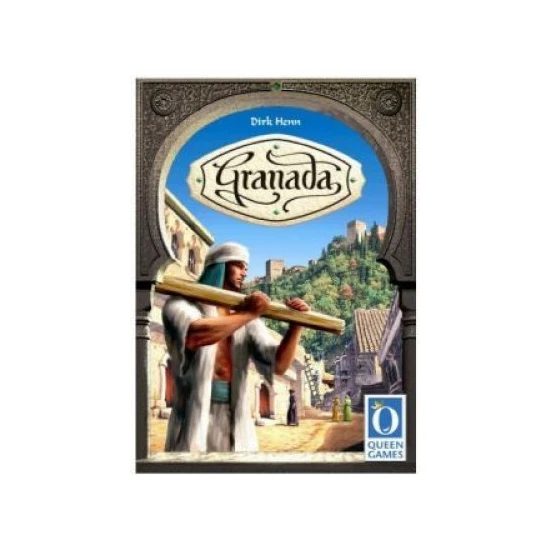
Granada
Publisher: Queen Games
 Do you want to sell your copy of this game?

Use our marketplace utrade!
Granada
Contact us
Share on
The item is not available, you can use the alert to be notified when it will be back in stock.
PICTURES ON BGG
These photos are the property of boardgamegeek.com and do not refer specifically to the edition on this page.











 Card sleeves in this game
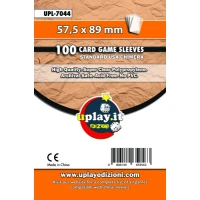
110 cards of 57.0mm width and 89.0mm of height
3x
(50 Pcs)

3x
(50 Pcs)

2x
(100 Pcs)

2x
(100 Pcs)

2x
(100 Pcs)
1x
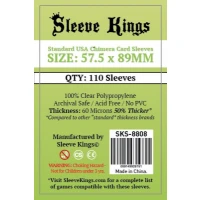
(110 Pcs)
2x
(55 Pcs)

2x
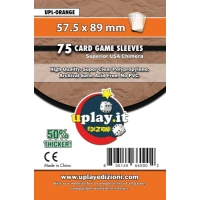
(75 Pcs)
3x
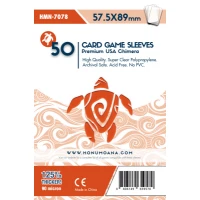
(50 Pcs)
2x
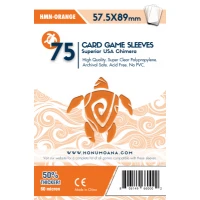
(75 Pcs)
2x
(100 Pcs)
 Description
Granada – many artisans, traders and entire families have settled at the foot of the Sierra Nevada because the Palace of Alhambra promises all people work, contracts and above all prosperity. Granada is a new member of the Alhambra family with a more challenging character: in this standalone game the players develop the city of Granada next to Sierra Nevada, where the famous Alhambra stands, by buying building tiles to construct the city which will earn the most victory points. Building tiles now have two sides and there are new building types for which the value is set during the game. Play is the same: buy a building tile, take money or remodel. The differences: new building types, building values are dynamic, two-sided tiles, and moats instead of walls. There are 9 building types in Granada. Unlike Alhambra, the buildings do not have a set value. Instead, building value is determined by the count of that type of building in all players' cities times a multiplier. As in Alhambra, there are 3 scoring rounds during which each building type is examined and points awarded for the player with the majority of that type of building. In the first scoring round, only the player with the most tiles of a particular building type scores for that building type. In the second scoring round, the top 2 players score, and in the final round, the top 3 score. There are no ties in Granada: points are never divided. Another difference in Granada is that the tiles are two-sided: on one side an even-numbered building of some type, on the other a different, odd-numbered building valued exactly one higher. The last difference between Alhambra and Granada, moats instead of walls, is really just a difference in artwork. During each scoring round, each player scores points for her longest continuous moat surrounding her city. The rules are the same regarding tile placement: must be able to trace an unbroken path back to the city's center, moat can touch moat, etc.
 Additional information
| Mechanics: | Commodity Speculation Set Collection Tile Placement |
| Categories: | City Building Renaissance |
| Alternative names: | |
| BARCODE: | 4010350605714 |
| In 3 wishlists In 4 collections This was seen 14592 times | |
Description
Granada – many artisans, traders and entire families have settled at the foot of the Sierra Nevada because the Palace of Alhambra promises all people work, contracts and above all prosperity. Granada is a new member of the Alhambra family with a more challenging character: in this standalone game the players develop the city of Granada next to Sierra Nevada, where the famous Alhambra stands, by buying building tiles to construct the city which will earn the most victory points. Building tiles now have two sides and there are new building types for which the value is set during the game. Play is the same: buy a building tile, take money or remodel. The differences: new building types, building values are dynamic, two-sided tiles, and moats instead of walls. There are 9 building types in Granada. Unlike Alhambra, the buildings do not have a set value. Instead, building value is determined by the count of that type of building in all players' cities times a multiplier. As in Alhambra, there are 3 scoring rounds during which each building type is examined and points awarded for the player with the majority of that type of building. In the first scoring round, only the player with the most tiles of a particular building type scores for that building type. In the second scoring round, the top 2 players score, and in the final round, the top 3 score. There are no ties in Granada: points are never divided. Another difference in Granada is that the tiles are two-sided: on one side an even-numbered building of some type, on the other a different, odd-numbered building valued exactly one higher. The last difference between Alhambra and Granada, moats instead of walls, is really just a difference in artwork. During each scoring round, each player scores points for her longest continuous moat surrounding her city. The rules are the same regarding tile placement: must be able to trace an unbroken path back to the city's center, moat can touch moat, etc.
Card sleeves in this game
110 cards of 57.0mm width and 89.0mm of height
3x
(50 Pcs)
3x
(50 Pcs)
2x
(100 Pcs)
2x
(100 Pcs)
2x
(100 Pcs)
1x
(110 Pcs)
2x
(55 Pcs)
2x
(75 Pcs)
3x
(50 Pcs)
2x
(75 Pcs)
2x
(100 Pcs)
Additional information
| Mechanics: | Commodity Speculation Set Collection Tile Placement |
| Categories: | City Building Renaissance |
| Alternative names: | |
| BARCODE: | 4010350605714 |
| In 3 wishlists In 4 collections This was seen 14592 times | |
What players say
How many players it plays best with · 16 votes on BoardGameGeek
- 1 0 0 say it plays best, 0 recommend it, 5 do not recommend it
- 2 1 1 say it plays best, 7 recommend it, 4 do not recommend it
- 3 6 6 say it plays best, 4 recommend it, 0 do not recommend it
- 4 5 5 say it plays best, 2 recommend it, 0 do not recommend it
- 5 1 1 say it plays best, 5 recommend it, 2 do not recommend it
- 6 1 1 say it plays best, 0 recommend it, 4 do not recommend it
- 6+ 0 0 say it plays best, 0 recommend it, 3 do not recommend it
Best Suggested Not recommended
uplay user ratings: No uplay reviews yet. Be the first!
Your review
Comments are moderated before publication: no links, insults or unrelated content. Respectful negative opinions are welcome.
Sign in to review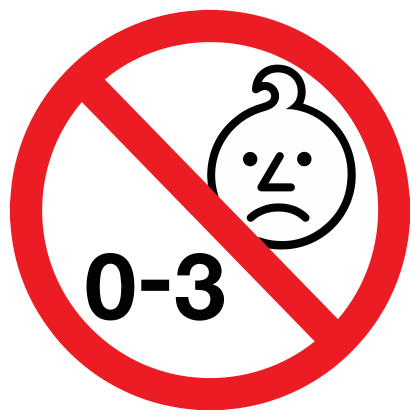
CAUTION! Not suitable for children under 3 years of age. It contains small parts which could be swallowed or inhaled.