








Language:
English
German
French




|
|
|
|
Best with 3 players
26 of 50 votes
Player-recommended age: 12+
2 of 5 votes
2-4
90'
14
No necessary in-game text
|
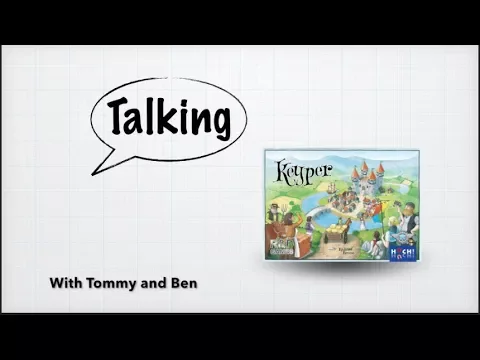
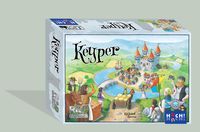
Keyper
Publisher: R&D Games
 Do you want to sell your copy of this game?

Use our marketplace utrade!
Keyper
Contact us
Share on
The item is not available, you can use the alert to be notified when it will be back in stock.
PICTURES ON BGG
These photos are the property of boardgamegeek.com and do not refer specifically to the edition on this page.



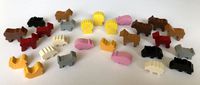
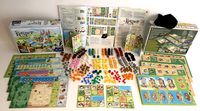
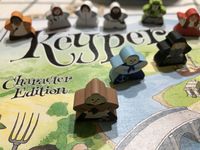
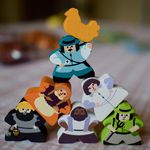
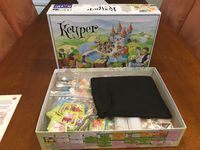
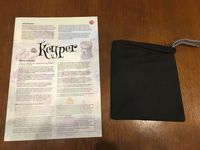
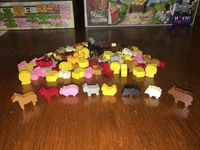
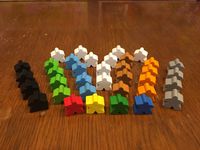
 Description
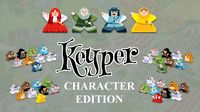
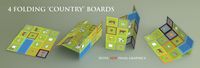
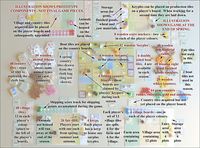
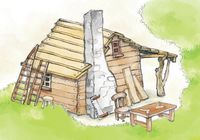
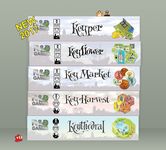
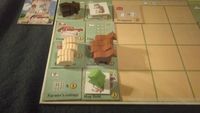
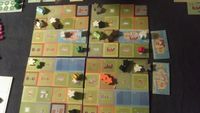
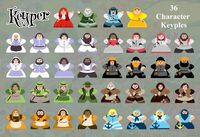
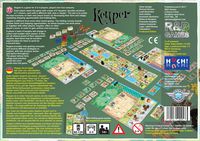
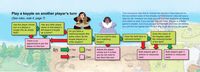
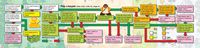
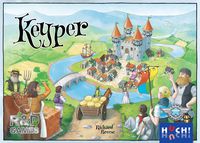
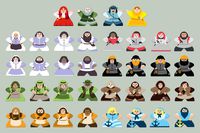
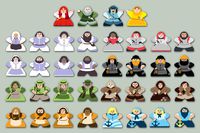
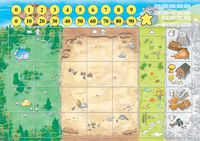
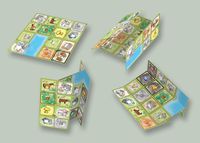
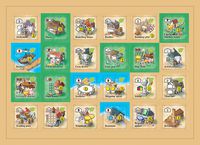
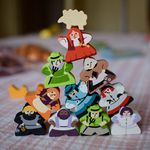
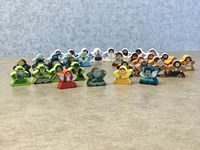
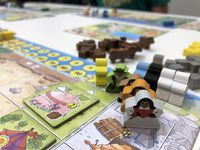
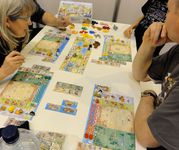
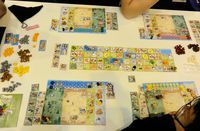
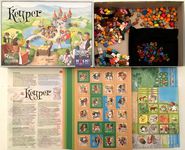
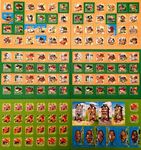
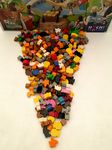
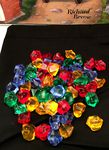
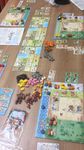
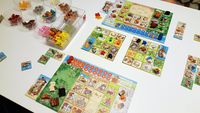
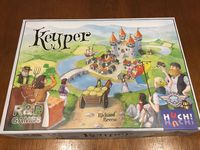
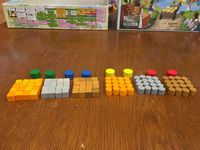
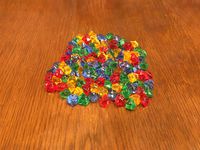
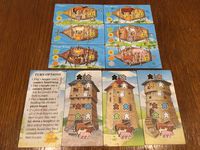
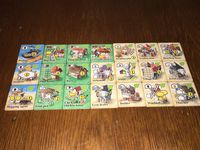
Keyper is a game with high player interaction for two to four players played over four rounds. Each round represents a season: spring, summer, autumn and finally winter. Each player starts the game with their own village board, a mini keyp board, 12 village tiles, a keyper (waving meeple) in their player color, and a team of eight multi-colored keyples, including two white keyples. Each differently colored keyple is a specialist in one activity: the brown keyper is a woodsman, the black keyple is a miner, the orange keyple a clay worker, etc. The white keyples are generalists who can represent any other color. Keyper is a worker placement game. What makes Keyper special is that when one player places a keyple on a country board, another player can join them with a matching colored keyple on the first player's turn to the benefit of both players. In this way some players are likely to have played all their keyples before others. All keyples have the potential to work twice. If a player has played all of their keyples, but another player still has some, then on their turn the player with no remaining keyples can lay down one or more keyples on the country board they have claimed or in their village board to secure additional resources or actions. It can therefore be doubly beneficial to co-operate with your fellow players, although Keyper is not a co-operative game in the usual sense of the term. The country boards are also noteworthy in that they can be manipulated and folded at the beginning of summer, autumn and winter to show one of four different permutations of fields for that season. A player will choose the one to suit their strategy, often hoping that another player will complement their choice. Certain fields on the country boards are available only in certain seasons, e.g., raw materials can be upgraded to finished goods only in spring and summer after which you can only convert using tiles in your own village. Gem mining occurs only in autumn and winter. A player's strategy is likely to be influenced by which (seeded) spring country tiles they acquire and by the particular colored keyples they have available in the later seasons. Different combinations will encourage a player to develop their farm or village, help with their shipping or mining activities, and prepare for the seasonal fairs. Players constantly need to evaluate whether or not to join other players, when to claim a country board, whether to play on their own or another player's country board, when to use their own village, and whether to create a large or small team of keyples for the following season. The winner is the player to gain the most points, usually through pursuing at least a couple of the different strategies. In addition to the theme and mechanisms, Keyper has similar traits to the earlier Key games: Game actions are positive and constructive, not destructive; player interaction is through the game mechanisms not direct, and like Keyflower, the previous game in the series, there is a lot of player interaction.
 Additional information
| Mechanics: | Area Control/Area Influence Set Collection Tile Placement Worker Placement |
| Categories: | City Building Economic Farming Medieval |
| Alternative names: | |
| BARCODE: | 5060156400258 |
| In 18 wishlists In 5 collections This was seen 8848 times | |
Description
Keyper is a game with high player interaction for two to four players played over four rounds. Each round represents a season: spring, summer, autumn and finally winter. Each player starts the game with their own village board, a mini keyp board, 12 village tiles, a keyper (waving meeple) in their player color, and a team of eight multi-colored keyples, including two white keyples. Each differently colored keyple is a specialist in one activity: the brown keyper is a woodsman, the black keyple is a miner, the orange keyple a clay worker, etc. The white keyples are generalists who can represent any other color. Keyper is a worker placement game. What makes Keyper special is that when one player places a keyple on a country board, another player can join them with a matching colored keyple on the first player's turn to the benefit of both players. In this way some players are likely to have played all their keyples before others. All keyples have the potential to work twice. If a player has played all of their keyples, but another player still has some, then on their turn the player with no remaining keyples can lay down one or more keyples on the country board they have claimed or in their village board to secure additional resources or actions. It can therefore be doubly beneficial to co-operate with your fellow players, although Keyper is not a co-operative game in the usual sense of the term. The country boards are also noteworthy in that they can be manipulated and folded at the beginning of summer, autumn and winter to show one of four different permutations of fields for that season. A player will choose the one to suit their strategy, often hoping that another player will complement their choice. Certain fields on the country boards are available only in certain seasons, e.g., raw materials can be upgraded to finished goods only in spring and summer after which you can only convert using tiles in your own village. Gem mining occurs only in autumn and winter. A player's strategy is likely to be influenced by which (seeded) spring country tiles they acquire and by the particular colored keyples they have available in the later seasons. Different combinations will encourage a player to develop their farm or village, help with their shipping or mining activities, and prepare for the seasonal fairs. Players constantly need to evaluate whether or not to join other players, when to claim a country board, whether to play on their own or another player's country board, when to use their own village, and whether to create a large or small team of keyples for the following season. The winner is the player to gain the most points, usually through pursuing at least a couple of the different strategies. In addition to the theme and mechanisms, Keyper has similar traits to the earlier Key games: Game actions are positive and constructive, not destructive; player interaction is through the game mechanisms not direct, and like Keyflower, the previous game in the series, there is a lot of player interaction.
Additional information
| Mechanics: | Area Control/Area Influence Set Collection Tile Placement Worker Placement |
| Categories: | City Building Economic Farming Medieval |
| Alternative names: | |
| BARCODE: | 5060156400258 |
| In 18 wishlists In 5 collections This was seen 8848 times | |



What players say · data and reviews published by users of BoardGameGeek
How many players it plays best with · 50 votes on BoardGameGeek
- 1 0 0 say it plays best, 0 recommend it, 15 do not recommend it
- 2 18 18 say it plays best, 12 recommend it, 8 do not recommend it
- 3 26 26 say it plays best, 15 recommend it, 0 do not recommend it
- 4 10 10 say it plays best, 20 recommend it, 10 do not recommend it
- 4+ 0 0 say it plays best, 0 recommend it, 12 do not recommend it
Best Suggested Not recommended
CAUTION! Not suitable for children under 3 years of age. It contains small parts which could be swallowed or inhaled.