





Your first comic does not have to explain the entire language of comics or represent a whole tradition. It needs to give you a reason to return to the page. To find one, start with a familiar kind of narrative promise: a strange investigation, a menacing journey, a relationship, a laugh. “Comics” describes the medium, not the reader's tastes.
Then decide how much of your future time you want to commit. You might want a self-contained read or the first step into a series. The distinction needs to be clear before you buy: a volume that introduces a world can work well without wrapping everything up, but it will not necessarily satisfy someone who wants to reach a conclusion in the same book.
What do you need?
- You want to try comics without planning to read a long series
- Look for a volume explicitly described as standalone: BAO presents Mystery Society as a one-shot.
- You are drawn to expeditions, mysteries and monstrous creatures
- Manifest Destiny: Flora e Fauna opens a series, with a fantastical, horror-infused vision of the frontier.
- You know a creator from another work
- Follow their name, then check their role: the writing and artwork may be by different people.
- You are choosing for a young reader
- Check the content and intended audience before judging by the cover's style; a colourful page can tell an adult story.
The suggestions explained

Mystery Society
An investigation into the occult without starting a long collection
See price and buyMystery Society is an option for those who enjoy fantastical stories built around a group of characters and a clear mission. BAO presents it as a standalone volume, a useful point if you want to try comics without immediately committing to a series. I would choose it for a reader intrigued by the combination of investigation and bizarre creations, or for someone who wants to discover a work by Fiona Staples with Steve Niles. Before buying, look at the description with the tone you want in mind: the promised pleasure is joining an unusual team, not receiving a rational guide to paranormal phenomena.
The trade-off to know
It is not the most targeted recommendation for someone who wants realism or a mystery built exclusively on clues the reader can verify. If, instead, you want a story to follow across several volumes and a longer exploration, the first volume of a series offers a different commitment.

Manifest Destiny Volume 1 - Flora E Fauna
The first step in an adventure where the frontier hides monsters
See price and buyManifest Destiny: Flora e Fauna brings together a recognisable expedition and a fantastical threat. I would suggest it to someone who enjoys setting off with a group into unknown territory and discovering that their expectations are not enough to make sense of it. Volume 1 provides an entry point to the series, so choosing it means accepting that the journey continues beyond this book. The reference to Lewis and Clark can be a hook for readers who enjoy historical adventure, provided they want a detour into horror. You do not need to know the entire series to decide whether this is the premise you want to explore.
The trade-off to know
The historical setting does not make it a factual account, and the monstrous element is not merely decorative. I would not give it to a young reader just because of its exploration theme. Anyone who wants a commitment limited to one volume can turn to Mystery Society.

Chi Ha Paura Dei Draghi? - Panini 9l Novellini
For a story of loneliness that opens a door to the fantastical
See price and buyChi Ha Paura dei Draghi? follows Wendell, a boy who seeks refuge in books and is dared to enter an abandoned amusement park. I would consider it when the reason for starting a comic is to recognise an emotion, even before choosing a universe to explore. The listing identifies it as a single-volume work, a useful reference for anyone who wants to try a self-contained read.
The trade-off to know
The presence of a boy and fantastical elements is not enough to establish what age it is suitable for. The difficult relationship with his stepfather and loneliness are part of the premise: consider the reader's sensitivities.

Flat 1 starts with Heisuke and his young cousin Aki, who is reserved at first and begins to grow attached to him through the time they spend together. I would choose it for an introduction to comics centred on everyday relationships. What draws you in is how two people grow closer, not which enemy they must defeat or what cosmic mystery the world conceals.
The trade-off to know
It is the first volume of a series, not a collection described as complete. If you want to reach the ending in a single purchase or are looking for plenty of action, this narrative promise may not match your expectations.
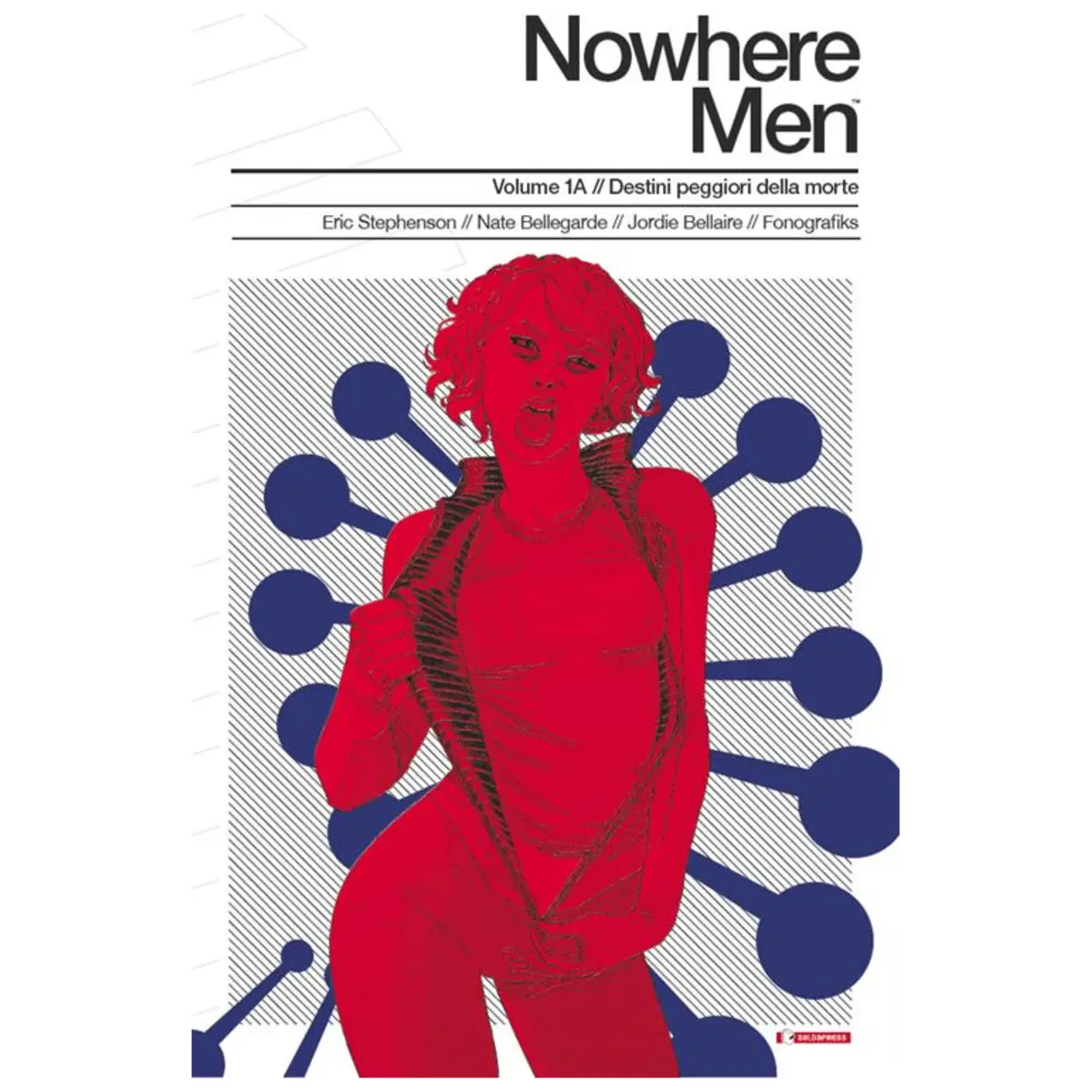
Nowhere Men Vol. 1/a introduces the members of World Corp., a group of researchers celebrated for dramatically accelerating progress, before something goes wrong. I would choose it for someone looking for a science-fiction premise about the consequences of inventions and the public role of those who create them. It is a different narrative entry point from the expedition in Manifest Destiny or the investigation in Mystery Society.
The trade-off to know
Keep the 1/a designation when identifying the copy: do not infer from the number that it contains the entire series, or that a listing marked 1/b is automatically the next chapter. Check the contents of the different versions.
A fantastical investigation or an unsettling expedition
Mystery Society starts with a group of out-of-the-ordinary investigators and a case involving Edgar Allan Poe's skull. It is an option for those who want to encounter the occult through a team and a mission. I would not choose it with the promise of a rigorous deductive mystery: the description also emphasises the characters and fantastical creations. The reader needs to want that kind of freedom.
Manifest Destiny, by contrast, uses Lewis and Clark to imagine an expedition facing monstrous threats. The historical connection should not be mistaken for a factual reconstruction. I would suggest it to someone interested in seeing a frontier turn into a landscape of horror. The first volume is the start of a journey: you can use it to decide whether you want to continue, without buying the follow-up volumes straight away.
How to use a preview without spoiling the story
Look at a few opening pages, not a collection of the most spectacular moments. Notice whether you naturally follow the order of the panels, whether the dialogue makes you want to keep reading and whether the artwork intrigues you even when there is no obvious action. This is not a test of competence: it is a way to recognise the pacing you enjoy. A preview selected by the publisher is more useful than a single promotional image.
If the page looks dense, try reading it as a sequence first, then linger over the details. Some people enjoy spending time with the artwork; others want to move quickly through events. These habits can change, but for your first purchase it makes sense to follow the curiosity you already have. Do not choose a work solely because it is described as a must-read.
A creator offers a more precise lead than a character
A famous character is often handled by very different creators across different eras and projects. The character's name alone does not promise the same kind of reading experience. Following an artist also requires a distinction: Fiona Staples provides the artwork for Mystery Society, while Steve Niles writes the script. If you know the artist from another work, you have a concrete connection, without automatically expecting identical themes and structure.
To get started, a creative duo and a clearly identifiable volume make choosing easier than a vast chronology. You do not need to know every previous appearance of a hero if the publisher identifies a standalone entry point. Conversely, a new cover or a number 1 may simply mark the start of another publishing line: always check what story the volume tells and which chapters it collects.
A trial purchase should remain a trial
If you choose a series, buy the first volume because you want to read it, not because you have already decided to fill the shelf. After reading it, ask yourself what held your attention: the characters' voices, the world, the artwork, the desire to find out what happens. That reason, rather than the number of volumes left, should guide whether you continue.
When giving it as a gift, avoid suggesting that the recipient has to enjoy it. Explain why you connected it with their tastes and leave room for discovery. If they are mainly looking for everyday stories or realistic relationships, the two fantastical suggestions in this guide do not become suitable just because they offer a clear entry point: the theme matters more than the convenience of the publishing format.
Questions before buying
Is a standalone volume always easier than a series?
No. A standalone story limits the links to other works you need to follow, not the complexity of its language or themes. Use the preview to assess the pacing, dialogue and artwork.
Do I need to know the history of comics before I start?
No. Start with a story that interests you. Connections with creators and earlier works can be discoveries you make later, rather than a prerequisite for every read.
Is it better to start with a colour comic?
Colour is an expressive choice, not a difficulty level. What matters is whether the page makes you want to read it and whether the story's tone matches what you are looking for.
Found your direction?
Explore the product pages to compare editions and choose the one for you.
Explore Comics