





A card game can be highly interactive even without dealing damage to an opponent. All it takes is for their purchase to bring the end closer, for them to claim a shared opportunity, or for them to activate a phase you can take advantage of too. When choosing a game to keep playing together, I would look for exactly this: how you read the other player, and how satisfying it is to improve that reading from one game to the next.
Dominion and Race for the Galaxy are two useful points of comparison. Both ask you to build combinations, but the first develops the deck you draw from, while the second builds up permanent cards on the table and uses shared phases. I would recommend them to two players keen to learn a system, not just to anyone looking for a small box to fill a few minutes.
What do you need?
- You want to see clearly what you have added to your deck
- Dominion puts purchases at the heart of your plan and lets you replay the same setup.
- You enjoy predicting which actions your opponent will need
- Race for the Galaxy ties your planning to the phases selected by each of you.
- One of you struggles with lots of unfamiliar icons
- I would start with Dominion, reading through the effects of the cards chosen for that game together.
- You want the same experience without having to pay much attention
- These games require an understanding of the system: choose them for a focused challenge, without expecting a pastime you can play on autopilot.
The suggestions explained

Dominion: Nasce un Regno (Seconda Edizione)
For two players who enjoy comparing deck-building plans
Edition language: Italian
See price and buyI would choose Dominion, in the Italian Second Edition offered here, for two people who want to see different strategies emerge from the same starting options. Buying a card changes what you can draw, while the other player's purchases signal how quickly they are trying to end the game. Replaying a setup lets you try an alternative plan and work out whether the previous problem was the idea or the point at which you pursued it. The contest does not always involve a direct attack: often it is a race for efficiency and conversion into points. It is a complete package for anyone who wants a rematch that changes their thinking, even using the same cards.
The trade-off to know
You need many piles on the table, and the selected effects determine how aggressive the interaction will be. If you want predicting the other player's actions to be built into the structure of every round, Race for the Galaxy is a more targeted choice. In both games, knowing the system gives you a real experience-based advantage.
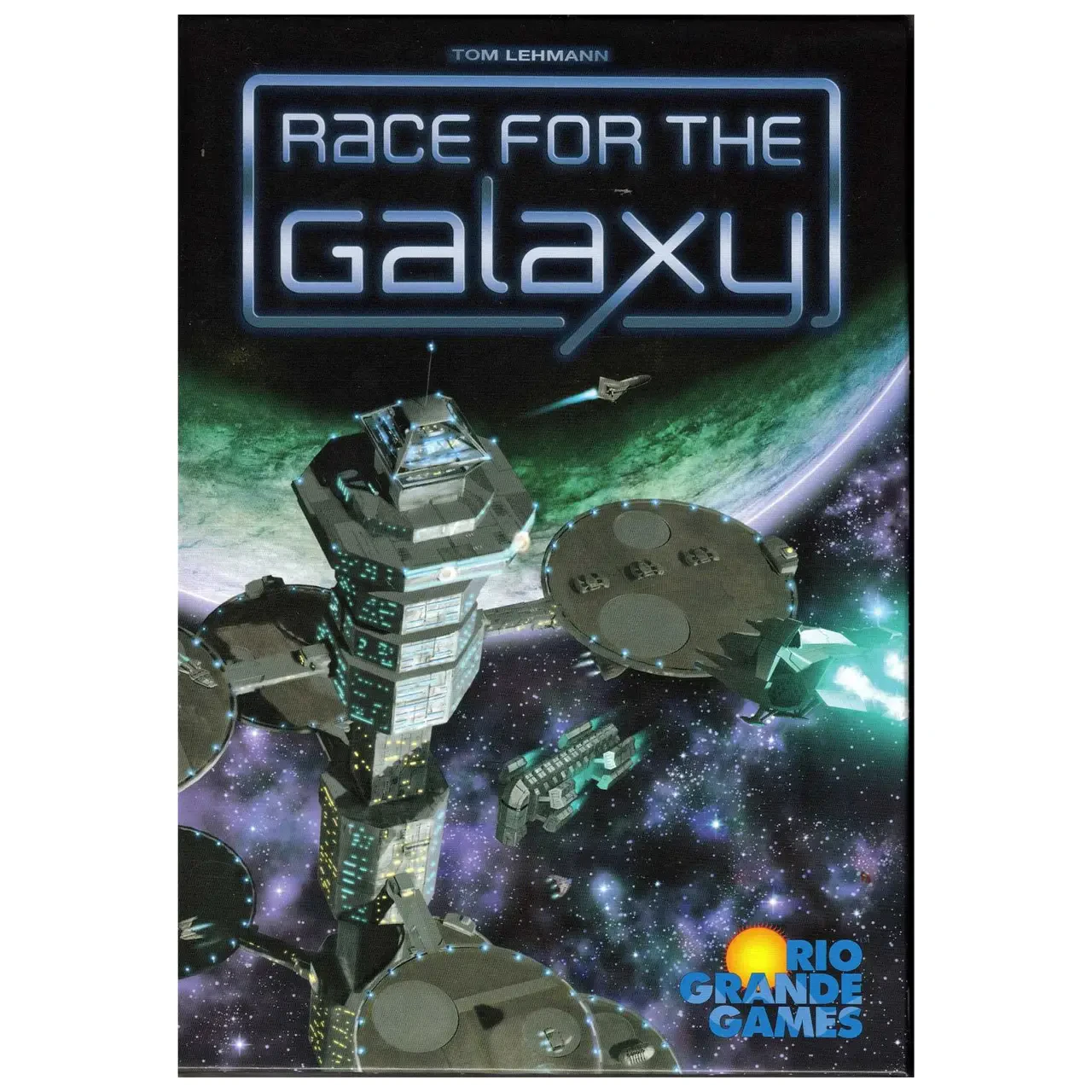
Race for the Galaxy (EDIZIONE INGLESE)
For anticipating the phases your opponent will want to activate
Edition language: English
See price and buyThe English edition of Race for the Galaxy is my recommendation for two players who want to build a system while keeping an eye on their opponent's. Phase selection creates shared opportunities: understanding what the other player needs can help you make better use of your own choice. The multi-use cards also keep your hand under pressure, because what you spend to build is no longer a future option. I would choose it if you are both willing to learn the icons at the outset and want to explore the same language in depth. The expert two-player mode adds choices, but the rulebook itself suggests learning with the normal rules first.
The trade-off to know
With this edition, you will need to read the cards and rulebook in English. Your first game can be demanding even though the components are mostly cards. Do not expect the stated playing time to include the time needed to understand the symbols. If you want to see the effects of your purchases through an evolving deck, Dominion offers a different, more explicit route.

Jaipur (NUOVA EDIZIONE ITALIANA)
For buying and selling while watching the shared market
Edition language: Italian
See price and buyJaipur, in the new Italian edition, gives two merchants access to the same opportunities. You collect and exchange goods, then decide when to sell them; camels also let you take more cards from the market. I would choose it for two players who want to judge the timing of trades and weigh immediate gains against the chance of a bigger deal, without having to build a collection before playing.
The trade-off to know
You need a clearly laid-out market and space for the trade tokens. The competition is over deals, not destroying your opponent's cards: if you want to attack your rival's defences directly, Radlands offers an objective closer to what you are looking for.

RADLANDS (EDIZIONE ITALIANA)
For defending three camps and attacking your opponent's
Edition language: Italian
See price and buyRadlands offers a duel in which water powers characters, events and abilities. You both draw from the same deck, but you must choose which cards to play and which to discard for an immediate effect. I would suggest it to two players looking for direct pressure, who want to learn to protect resources and camps while creating an opening in their opponent's defences.
The trade-off to know
The objective is to destroy all three of your opponent's camps: conflict is not a minor element. You need to read the card abilities and keep the play area organised; it is not the most suitable choice if all you want is to develop alongside each other.

Schotten Totten (EDIZIONE INGLESE)
For contesting a border with card combinations
Edition language: English
See price and buySchotten Totten focuses the clash on the stones marking the boundary between two territories. You send out clan members and try to establish the strongest combination at points along the border: I would consider it for anyone who prefers pitting visible formations against one another to developing an economic engine. It is specifically for two, with a territorial objective that is easy to explain before getting into the details.
The trade-off to know
The selected box is the English edition. You need space to keep the border and the cards in play visible: measure the playing area if you have a small table in mind. Do not confuse it with Schotten Totten 2, which is a separate product.
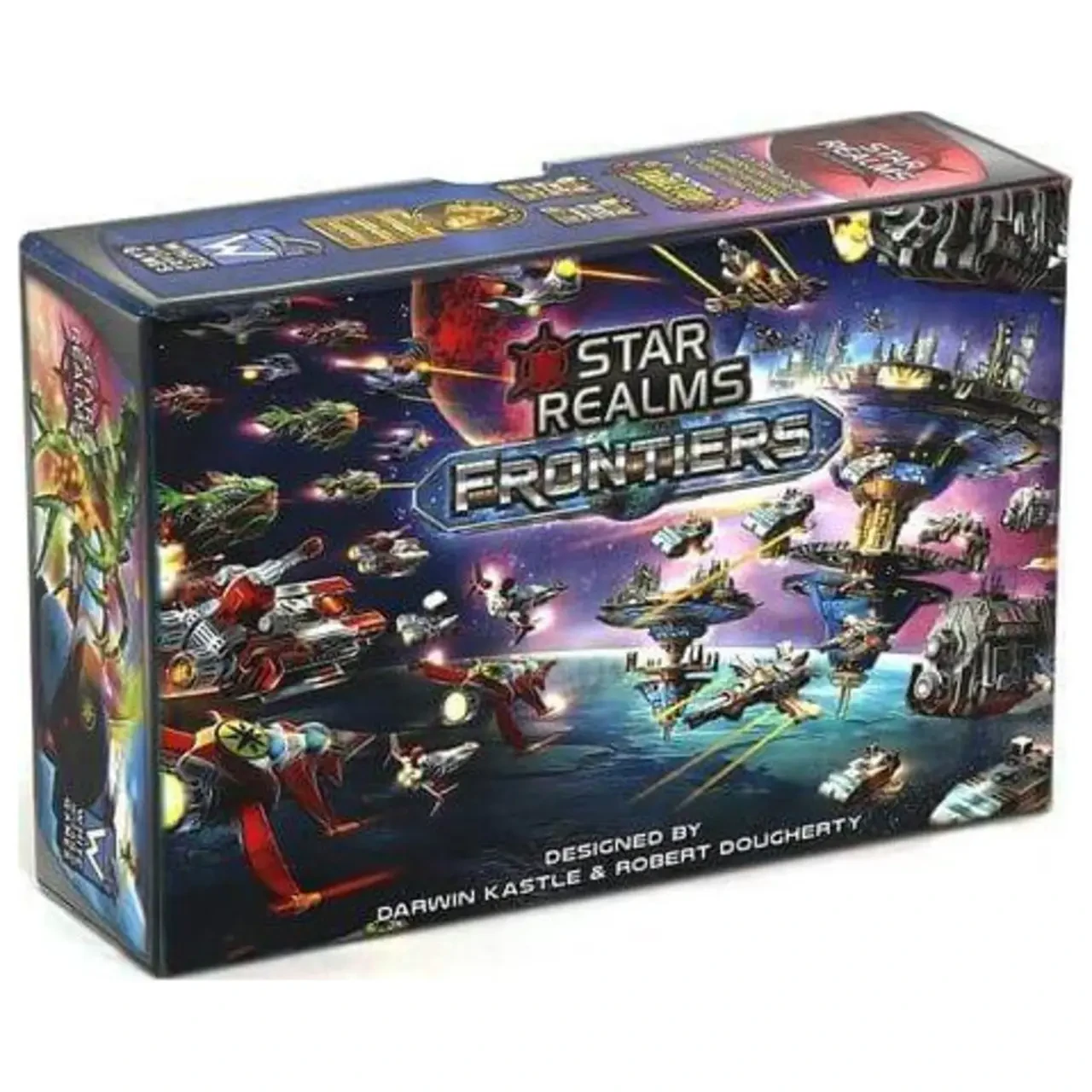
Star Realms: Frontiers
For building up a fleet that attacks the other player
Edition language: English
See price and buyStar Realms: Frontiers is standalone and combines deck-building with combat. You buy ships and bases from the market, then use the cards that enter your deck to fund more purchases or attack. I would choose it for two players who enjoy the deck development in Dominion but want to use their own development more directly against their opponent. The English edition also offers setups beyond the two-player contest.
The trade-off to know
You do not need another Star Realms set for this box, but the cards and rulebook are in English. The market, bases and score trackers take up table space; the ability to combine sets is not a reason to buy more before getting to know this one.
Dominion: knowing when to stop improving
Early on, it is natural to want to buy cards that make your turns more effective. The challenge is knowing when that investment will stop paying off, because your opponent is already turning their development into points. With two players, the picture is clearer: there is only one opponent whose purchases and pace you need to read. I would recommend it to anyone who finds this race between preparation and results interesting.
The supply piles are finite, and depleting them can trigger the end of the game according to the rules. So it is not enough to ask, “Which card is best for me?” You also need to consider how much time will be left to use it. Buying a card that will return to your hand too late may be less useful than buying for points straight away. This is not a universal winning formula: it is the kind of thinking the game invites you to explore.
Race: the other player's action can be your opportunity
In Race for the Galaxy, only the phases selected by the players take place, and those phases become available to both; whoever selected them receives a bonus. If you correctly predict what your opponent will do, you can use your own choice to address another need while still taking advantage of the opportunity they open up. If you get it wrong, your plan may have to wait. It is indirect interaction, but very tangible.
This is why watching your opponent's tableau is useful even when no one is attacking you. Look at what they have already built and which opportunities they might want to activate. At the same time, the cards in your hand are also how you pay for much of what you build: keeping every option open prevents you from carrying some of them out. I would suggest it to anyone who enjoys considered trade-offs and judging timing, rather than someone looking for verbal confrontation.
Advanced mode comes after you understand the language
The Race for the Galaxy rulebook recommends starting with the normal rules when playing as a pair and introducing expert mode later, in which each player selects two action cards. That is a useful distinction: starting with everything at once does not show that the game has depth; it simply increases the number of decisions you need to understand at the same time. First, the symbols, costs and difference between choosing a phase and taking part in it need to be clear.
In Dominion too, replaying the same initial card selection can teach you more than changing it every time you meet. A second game lets you assess an alternative idea without first having to read a new set of effects. If there is a large gap in experience, try a guided practice run, then play a game without help: suggesting every purchase during the game prevents the less experienced player from developing their own reading of it.
A short playing time does not mean a simple objective
Race for the Galaxy can end when a player reaches twelve cards in their play area, but that does not mean they automatically win: the result depends on points. Distinguishing the player setting the pace from the one actually in the lead is an interesting part of the contest. For two players who want to analyse their decisions, the post-game questions also include, “Should I have ended it at that point?”
Dominion creates a similar tension through conversion into points and the depletion of piles, but with a different experience of drawing and shuffling. I would choose based on which form of control you want to explore in greater depth. Neither needs an expansion to be worth playing multiple times; an addition makes sense when you want new possibilities, not as a way to skip learning the ones already there.
Questions before buying
Do I need to learn the advanced mode in Race for the Galaxy straight away?
No. The rulebook recommends that newcomers playing as a pair use the normal rules, then move on to selecting two actions once the system is familiar.
If I do not attack the other player directly, am I playing on my own?
Not necessarily. In Dominion, the pace of purchases and the shared piles matter; in Race, your opponent's choices determine which phases you can take advantage of. Interaction comes through these decisions.
Is one box enough for both of us?
Yes, the base games recommended here are standalone and include the components for both players. There is no need for each player to buy a separate deck or copy.
Found your direction?
Explore the product pages to compare editions and choose the one for you.
Explore Card games