





First identify its permanent spot and measure the width, depth and height clearance. Then check which configuration the published dimensions refer to: a model may be measured closed, open or with parts side by side. To avoid mistakes, write those three measurements on a sheet of paper and assign each to the correct direction. Depth is often the one that is underestimated.
Add a second question: do you only want to display the model, or pick it up often to play? A build that fits perfectly between two books can be awkward to take out. The space you need also includes room to move your hands and access the parts you want to use, without having to take half the shelf apart every time.
What do you need?
- You have a shallow shelf
- Assess the full footprint of the base and any protruding parts, not just the visible front.
- You want to play with the interiors
- Check the model in its open position and leave room to reach the rooms and characters.
- You build on a table you need to clear every evening
- Decide where to move the unfinished build and how to store the pieces you have not used yet.
- Your collection is growing quickly
- Plan rotation and storage before filling every shelf with models that are hard to move.
The suggestions explained
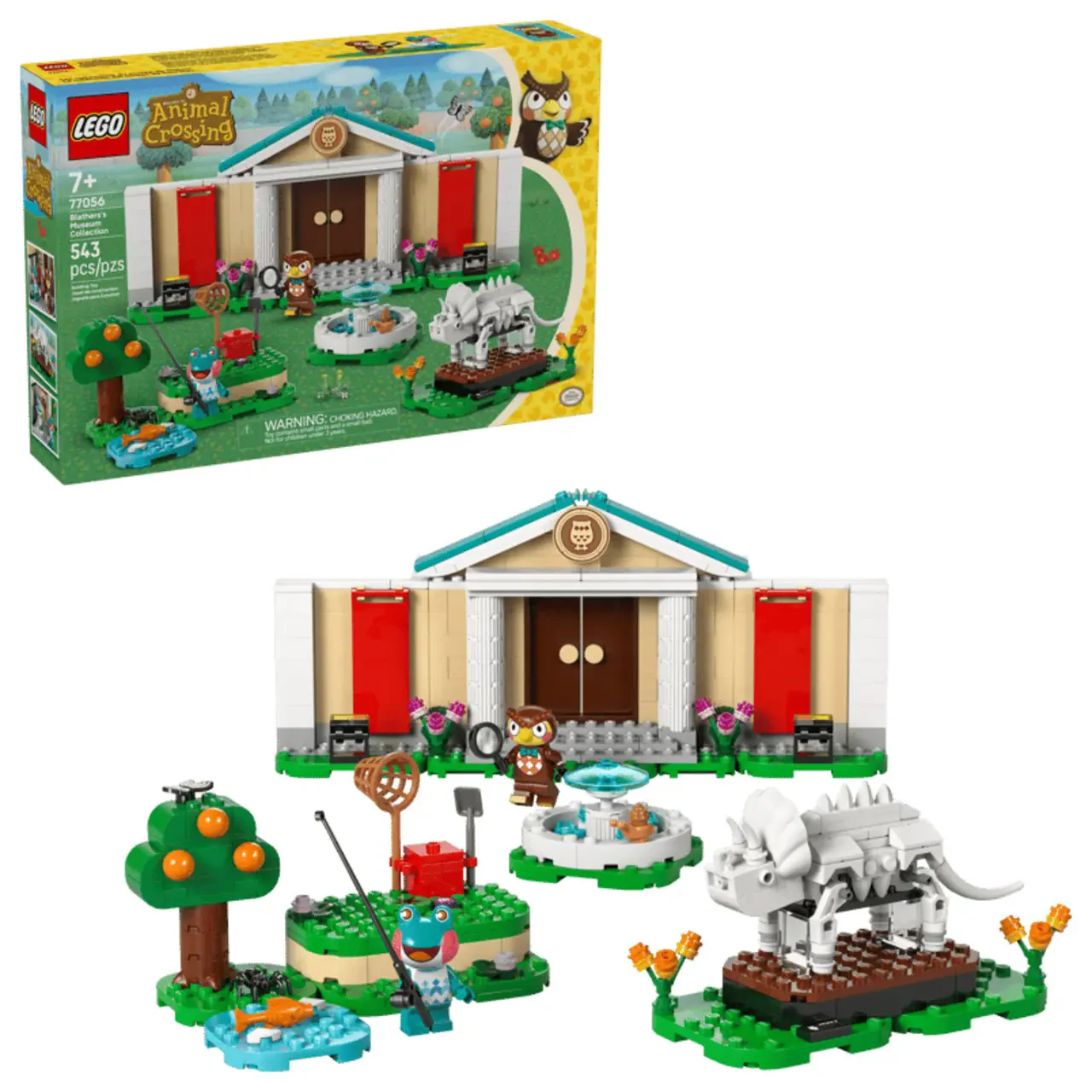
Animal Crossing - La Collezione del Museo di Blatero (77056)
To understand why room to open the model matters
See price and buyLa collezione del museo di Blatero 77056 is an option to consider as a setting you can reach into. The walls can be rearranged, so I'd choose it if you have a space where you can alternate between display and play without always having to sacrifice the interiors. The official dimensions of the open model with its fountain help you test the space before buying. My editorial recommendation is this: better a museum that is a little less crowded by other objects, which you can reach and reorganise, than a scene squeezed onto a shelf where the features become difficult to use.
The trade-off to know
If you want an object with a fixed footprint that does not require space in front, a model designed mainly for display may be more suitable. Do not treat the published measurement as a guarantee for any configuration you choose: moving modules and accessories can change the actual space it takes up.

LEGO Star Wars Busto di Yoda
For a spot that favours a vertical arrangement
Edition language: Italian
See price and buyThe Busto di Yoda 75438 is a candidate worth comparing when shelf depth is the main limit and you have room vertically. Its form on a stand makes its display purpose clear: you can choose an orientation that presents it clearly from your usual viewing point. I'd consider it for a shelf where it will not be hidden behind books or taller objects in front. Before buying, use the three official dimensions for a test: a compact base does not remove the need to get hold of it and move it comfortably.
The trade-off to know
A shelf with limited height clearance may rule it out even if width and depth are sufficient. If you want to arrange characters and build a horizontal scene, the bust does not fulfil that wish. Choose it for how it will be displayed, not just because it has a small footprint.
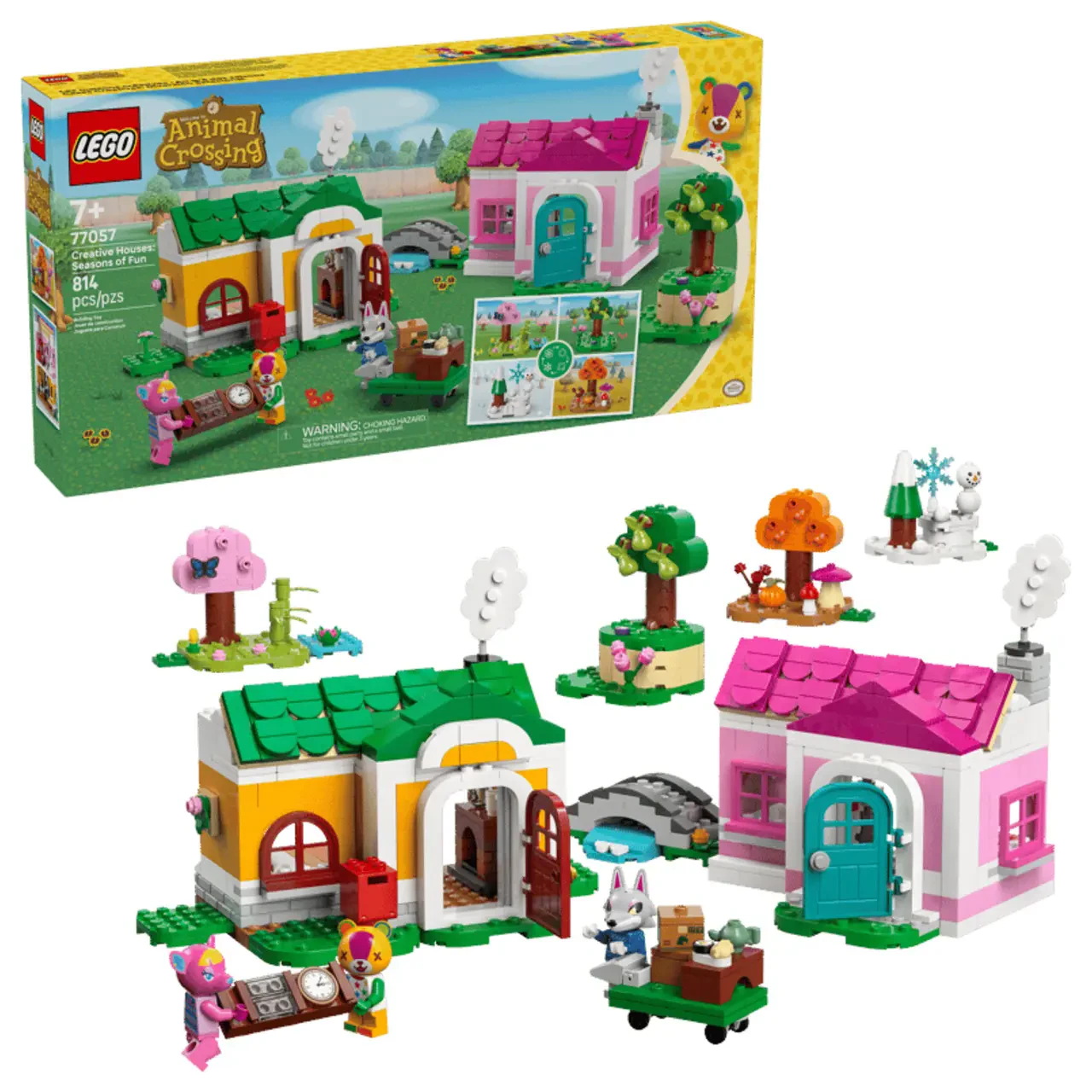
LEGO Animal Crossing - Case Creative: Le Quattro Stagioni (77057)
To compare a wide layout with a two-level one
Edition language: Italian
See price and buyCase Creative: Le Quattro Stagioni lets you place the two homes side by side or stack them. This is useful when you want to think about space through different configurations: you can compare a horizontal arrangement with a vertical one before deciding on the permanent spot. I'd consider the volume taken up by the houses separately from the space needed for furniture, characters and seasonal components.
The trade-off to know
Being able to stack the houses does not guarantee that the set will fit on any shelf. You need the measurements of the chosen configuration and a place for the elements you are not using in that arrangement.

One Piece - Il Nascondiglio del Dottor Hiluluk
A reminder that the open model takes up a different amount of space
See price and buyIl Nascondiglio del Dottor Hiluluk encloses its interiors in a hinged mountain. I'd use it as a concrete point of comparison for anyone thinking of measuring only the front: opening up the landscape gives access to the experiment table, furniture and other details. A spot that holds the closed mountain may therefore not be the right place to play with it without moving it.
The trade-off to know
The product listing describes how it opens, but that alone is not enough to establish how much clear space to leave at the sides. Check the footprint in the instructions and allow for a play surface separate from the spot where it rests.

LEGO Jurassic World - Dinosauro Bebè: Pteranodonte
For a figure whose space requirements depend on its pose
See price and buyThe movable wings and limbs of the Pteranodonte make its pose part of the display decision. Before assigning it a spot between two objects, I'd check the pose I want to see every day and the one needed to pick it up. It is a useful example of a model whose apparent width and actual space requirements can change without adding a single piece.
The trade-off to know
Do not assume it is compact because of the word Bebè or its 373 pieces. The spread of the wings and the stability of the chosen pose matter more than a general comparison of brick counts.

75119 - Lego Star Wars Action Figure - Sergent Jyn Erso
To start with a stated height and check the rest
See price and buyThe buildable Jyn Erso figure is listed as 24 cm tall. That gives you a concrete first check of the height clearance, to which I'd add space for the rifle, limbs and poses. I'd choose it for someone who prefers an upright character to a building, but I would check the full configuration: a swinging arm and detachable accessories also invite you to move the model.
The trade-off to know
The 24 cm measurement does not apply to every pose and does not describe width or depth. A recess only just taller than the figure can be awkward if you want to reach the wheel or take it out often.
Understanding the configuration behind the measurement
For the museo di Blatero, set 77056, LEGO gives dimensions of approximately 11 cm high, 25 cm wide and 17 cm deep for the open model with the outdoor fountain. The qualification matters: it is a defined configuration, not a size limit that applies to every possible arrangement of the parts. The hinged walls let you change how you access the interiors. If you want to use it as a play scene, also allow for space in front to move the minifigures around.
For the Busto di Yoda 75438, the official dimensions are 21 cm high, 10 cm wide and 9 cm deep. Here, height clearance becomes the constraint. Comparing the two models shows why the word small says little: a low, wide scene and an upright bust may have opposite requirements, even though both remain compact compared with a large build.
Trying it out before you have the model
A paper outline of the base helps you check the available surface area. For height, you can stand an object of the corresponding height alongside it, without placing it on the model. Look at the spot from where you will usually view the build: some details may disappear behind other objects or end up too high. The measurements help it fit, but the arrangement helps make it pleasing to look at.
If the model has opening sections or movable modules, imagine two configurations: the one in which it rests and the one in which you use it. Do not fill the space needed to move from one to the other with other objects. For a complex build, also consider how you will get hold of it to move it: a stable, accessible support point matters more than a precise fit between pieces of furniture.
The build needs more space than the finished model
While building, you need room for the growing model, the instructions and the pieces for the steps you are working on. There is no need to spread the entire contents of the box across the table. Open the bags in the specified order, when they are numbered, and use shallow containers for the parts you are looking for. That way, taking a break does not mean sorting everything again each time.
If the table needs to be cleared again, plan for a stable surface onto which you can transfer the unfinished build, checking that it can support the project. For finished models, think ahead about whether you will store them assembled, in modules or disassembled. Keeping the set number and instructions with the pieces makes future rebuilding easier. Leaving everything on display is not the only way to enjoy a collection: rotating the sets can give each one more visibility.
Questions before buying
Can I use the box dimensions to estimate the finished set?
No. The packaging contains pieces, bags and instructions; its proportions do not describe those of the model. Look for the dimensions of the built set and read which configuration they refer to.
How much clearance should I leave around it?
There is no single amount of clearance. You need room to get hold of the model, open the movable parts and see the details that interest you. Simulate the action you will perform most often, such as taking it off the shelf or accessing the interiors.
Does a reconfigurable set take up less space?
It may adapt better, but each arrangement takes up a different amount of space. Placing modules side by side or stacking them shifts the constraint between width and height. Measure the configuration you actually want to use, without assuming that every arrangement fits into the same volume.
Found your direction?
Explore the product pages to compare editions and choose the one for you.
Explore LEGO