









Idioma:
Inglês
Alemão
Francês



|
|
|
|
Melhor com 2 jogadores
225 votos de 236
Idade recomendada pelos jogadores: 8+
35 votos de 121
2
60'
8
Nenhum texto necessário no jogo
|
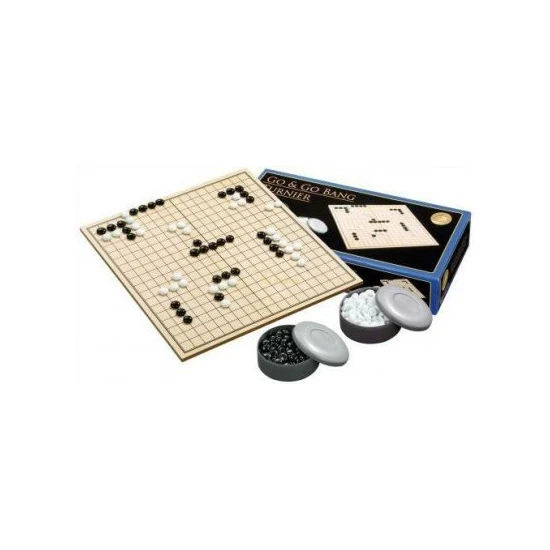
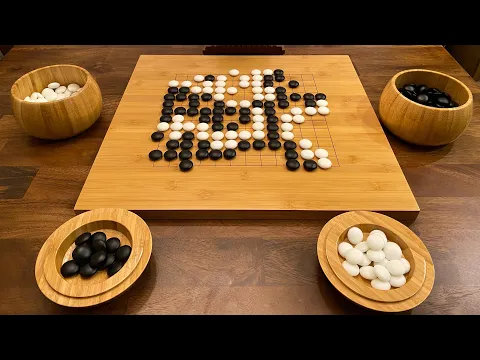
Go & Go Tournament
Editora: Philos
 Quer vender sua cópia deste jogo?

Use nosso mercado utrade!
Go & Go Tournament
Contate-nos
Compartilhar em
O item não está disponível, você pode usar o alerta para ser avisado quando ele estiver novamente em estoque.
FOTOS NO BGG
Estas fotos são propriedade de boardgamegeek.com e não se referem especificamente à edição desta página.
























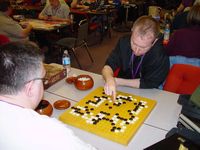
 Descrição
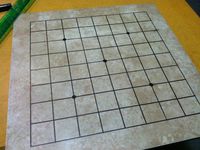
By all appearances, it's just two players taking turns laying stones on a 19×19 (or smaller) grid of intersections. But once its basic rules are understood, Go shows its staggering depth. One can see why many people say it's one of the most elegant brain-burning abstract games in history, with players trying to claim territory by walling off sections of the board and surrounding each other's stones. The game doesn't end until the board fills up, or, more often, when both players agree to end it, at which time whoever controls the most territory wins. The earliest mention of Go (围棋 (wéi qí)- "surrounding game") appears in the "Analects" of Confucius (551-479 BC), while the earliest physical evidence is a 17×17 Go board discovered in 1952 in a tomb of the former Han dynasty (206 BC- 9 AD). There is a tangle of conflicting popular and scholarly anecdotes attributing its invention to two Chinese emperors, an imperial vassal and court astrologers. One story has it that Go was invented by the legendary Emperor Yao (ruled 2357-2256 BC) as an amusement for his idiot son. A second claims that the Emperor Shun (ruled 2255-2205 BC) created the game in hopes of improving his weak-minded son's mental prowess. A third says the person named Wu, a vassal of the Emperor Jie (ruled 1818-1766 BC), invented Go (as well as games of cards). Finally, a fourth story suggests that Go was developed by court astrologers during the Zhou dynasty (1045-255 BC). A Go set, consisting of a very general-purpose grid and colored stones, can also be used to play a variety of other abstract strategy games, such as Connect6, Go-Moku, Pente, and others.
 Informações adicionais
| Mecânica: | Cercamento de Área |
| Categorias: | Estratégia |
| Nomes alternativos: | Atari Go Baduk Go Gó Go & Go Bang Turnier Go + Gobang Go und Gobang Igo NEGOCIACION Orient Original Go Paduk Patol Peg Travel Go Game Smart Go The Game of Go The Go Pack The Oriental Game of Go Wei Qi Weichi Weiqi yi yih Вэйци Го Падук 囲碁 围棋 圍棋 弈 碁 바둑 Atari Go Baduk Cờ Vây Go Go & Go Bang Turnier Go & Gobang Go + Gobang Go A Game of Oriental Strategy Go Gobang Go und Gobang Go, Das Brettspiel Ostasiens GoToGo Igo Jang Stone II Jeu de Go Magnetic Chess Magnetic GO Mikado: The Game of Go Negociation Orient Original Go Paduk Patol Peg Travel Go Game Smart Go The Game of Go The Go Pack The Oriental Game of Go Wei Qi Weichi Weiqi yi yih Yunzi Go Stone set Вэйци Го Падук 囲碁 围棋 圍棋 弈 碁 바둑 신의한수 |
| BARCODE: | 4014156032101 |
| Em 2 listas de desejos Isso foi visto 16734 vezes | |
Descrição
By all appearances, it's just two players taking turns laying stones on a 19×19 (or smaller) grid of intersections. But once its basic rules are understood, Go shows its staggering depth. One can see why many people say it's one of the most elegant brain-burning abstract games in history, with players trying to claim territory by walling off sections of the board and surrounding each other's stones. The game doesn't end until the board fills up, or, more often, when both players agree to end it, at which time whoever controls the most territory wins. The earliest mention of Go (围棋 (wéi qí)- "surrounding game") appears in the "Analects" of Confucius (551-479 BC), while the earliest physical evidence is a 17×17 Go board discovered in 1952 in a tomb of the former Han dynasty (206 BC- 9 AD). There is a tangle of conflicting popular and scholarly anecdotes attributing its invention to two Chinese emperors, an imperial vassal and court astrologers. One story has it that Go was invented by the legendary Emperor Yao (ruled 2357-2256 BC) as an amusement for his idiot son. A second claims that the Emperor Shun (ruled 2255-2205 BC) created the game in hopes of improving his weak-minded son's mental prowess. A third says the person named Wu, a vassal of the Emperor Jie (ruled 1818-1766 BC), invented Go (as well as games of cards). Finally, a fourth story suggests that Go was developed by court astrologers during the Zhou dynasty (1045-255 BC). A Go set, consisting of a very general-purpose grid and colored stones, can also be used to play a variety of other abstract strategy games, such as Connect6, Go-Moku, Pente, and others.
Informações adicionais
| Mecânica: | Cercamento de Área |
| Categorias: | Estratégia |
| Nomes alternativos: | Atari Go Baduk Go Gó Go & Go Bang Turnier Go + Gobang Go und Gobang Igo NEGOCIACION Orient Original Go Paduk Patol Peg Travel Go Game Smart Go The Game of Go The Go Pack The Oriental Game of Go Wei Qi Weichi Weiqi yi yih Вэйци Го Падук 囲碁 围棋 圍棋 弈 碁 바둑 Atari Go Baduk Cờ Vây Go Go & Go Bang Turnier Go & Gobang Go + Gobang Go A Game of Oriental Strategy Go Gobang Go und Gobang Go, Das Brettspiel Ostasiens GoToGo Igo Jang Stone II Jeu de Go Magnetic Chess Magnetic GO Mikado: The Game of Go Negociation Orient Original Go Paduk Patol Peg Travel Go Game Smart Go The Game of Go The Go Pack The Oriental Game of Go Wei Qi Weichi Weiqi yi yih Yunzi Go Stone set Вэйци Го Падук 囲碁 围棋 圍棋 弈 碁 바둑 신의한수 |
| BARCODE: | 4014156032101 |
| Em 2 listas de desejos Isso foi visto 16734 vezes | |
O que dizem os jogadores
Com quantos jogadores funciona melhor · 236 votos no BoardGameGeek
- 1 1 1 consideram-no o melhor, 27 recomendam-no, 148 desaconselham-no
- 2 225 225 consideram-no o melhor, 11 recomendam-no, 0 desaconselham-no
- 2+ 2 2 consideram-no o melhor, 24 recomendam-no, 150 desaconselham-no
O melhor Sugerido Não recomendado
Avaliações dos utilizadores uplay: Ainda não há avaliações uplay. Seja o primeiro!
A sua avaliação
Os comentários são moderados antes da publicação: sem links, insultos ou conteúdo irrelevante. São aceites opiniões negativas respeitosas.
Inicie sessão para avaliar
CUIDADO! Não é adequado para crianças menores de 3 anos. Contém peças pequenas que podem ser engolidas ou inaladas.