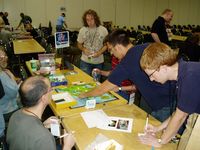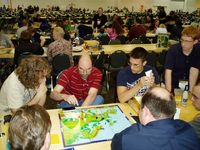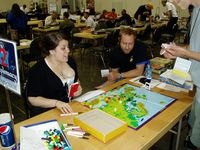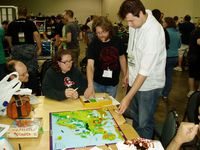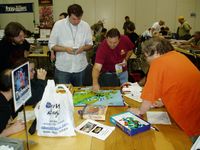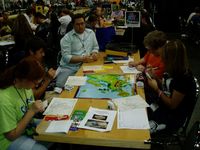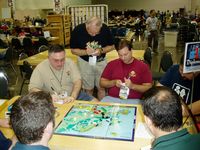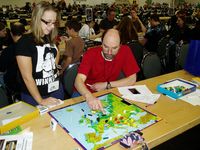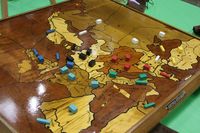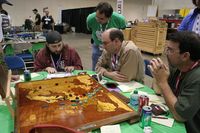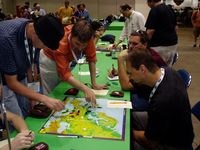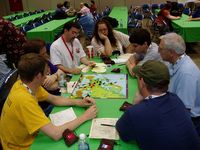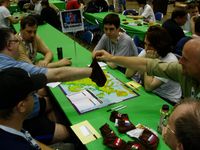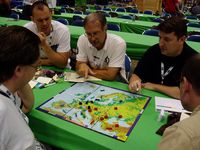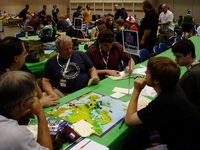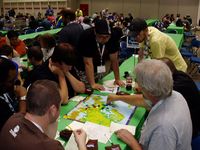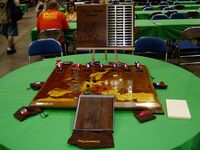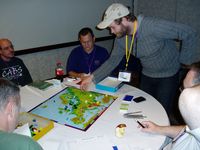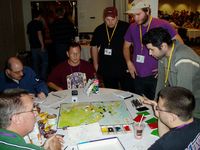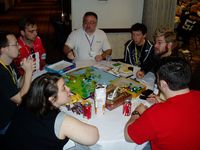
First of all – it’s just a game. Remember this. No dices at all, so if you’re unlucky with dices, this is the game for you. Diplomacy is just about your negotiation skills with other people and your ability to see when your ally is telling you a lie and your enemy tells you the truth. There are 7 players in a game, so normally 1 winner and 6 losers. Just get used to it. Your odds on winning are not that great. You have to try hard. If you can’t separate game and real life this game will hurt you a lot. If you can, it will get you fun, friends and new experiences* (* - only if you remember the first line of this comment)
|
|
|
|
2-7
360'
12
No necessary in-game text
|
Diplomacy
Order by 15:00 Italian time for same-day dispatch, Monday to Friday.
Delivery in Italy normally takes 1 business day, 2 for the islands.
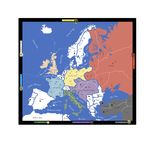
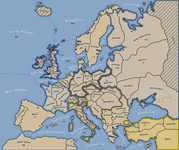
Diplomacy is the undisputed masterpiece of strategic negotiation: represent one of the 7 Great Powers of Europe (United Kingdom, France, Austria-Hungary, Germany, Italy, Russia or Turkey) in the years before World War I and negotiate alliances to expand your territory. With no dice, every move is determined by pure logic and diplomacy. 2-7 players, long and captivating games for those who love deep strategy and diplomatic bluffing.
The game game is in consignmentStock but only few copies are available
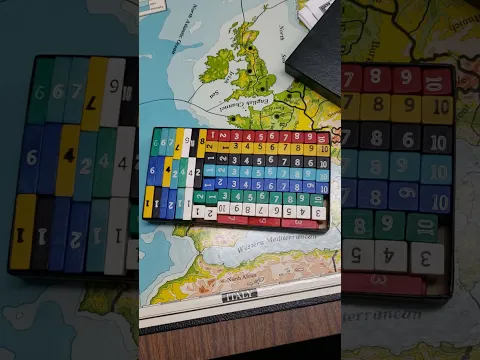
The first version by The Avalon Hill Game Co. likely had the widest release, but Avalon Hill re-released the game in 1999 with a vibrant new map and metal pieces. In 2008, they released a 50th anniversary edition, featuring a redesigned map and cardboard pieces representing armies and navies.
In the game, each player represents one of the seven Great Powers of Europe—Great Britain, France, Austria-Hungary, Germany, Italy, Russia, or Turkey—during the years leading up to World War I. Play begins in the Spring of 1901, and players must negotiate and strike deals with one another to successfully expand their borders. Moves are made in Spring and Autumn each year, using two types of military units: armies and fleets.
On any given turn, each military unit has limited actions: it can move into an adjacent territory, support an allied unit in an attack on an adjacent territory, support an allied unit in defending an adjacent territory, or hold its position. Players issue orders for each of their units in writing, and the outcome is determined purely by the combined strength of the units involved—there are no dice rolls or elements of chance.
With its incredibly simple movement system combined with deep negotiation mechanics, Diplomacy is highly regarded by many gamers.

| Mechanics: | Simultaneous Action Selection Area Movement |
| Categories: | Political/Negotiation |
| Alternative names: | |
| BARCODE: | 5010994126681 |
| This was seen 2662 times | |
The first version by The Avalon Hill Game Co. likely had the widest release, but Avalon Hill re-released the game in 1999 with a vibrant new map and metal pieces. In 2008, they released a 50th anniversary edition, featuring a redesigned map and cardboard pieces representing armies and navies.
In the game, each player represents one of the seven Great Powers of Europe—Great Britain, France, Austria-Hungary, Germany, Italy, Russia, or Turkey—during the years leading up to World War I. Play begins in the Spring of 1901, and players must negotiate and strike deals with one another to successfully expand their borders. Moves are made in Spring and Autumn each year, using two types of military units: armies and fleets.
On any given turn, each military unit has limited actions: it can move into an adjacent territory, support an allied unit in an attack on an adjacent territory, support an allied unit in defending an adjacent territory, or hold its position. Players issue orders for each of their units in writing, and the outcome is determined purely by the combined strength of the units involved—there are no dice rolls or elements of chance.
With its incredibly simple movement system combined with deep negotiation mechanics, Diplomacy is highly regarded by many gamers.
| Mechanics: | Simultaneous Action Selection Area Movement |
| Categories: | Political/Negotiation |
| Alternative names: | |
| BARCODE: | 5010994126681 |
| This was seen 2662 times | |
What players say
How many players it plays best with · 295 votes on BoardGameGeek
- 1 0 0 say it plays best, 5 recommend it, 218 do not recommend it
- 2 1 1 say it plays best, 19 recommend it, 218 do not recommend it
- 3 0 0 say it plays best, 22 recommend it, 208 do not recommend it
- 4 2 2 say it plays best, 37 recommend it, 188 do not recommend it
- 5 7 7 say it plays best, 83 recommend it, 137 do not recommend it
- 6 29 29 say it plays best, 139 recommend it, 72 do not recommend it
- 7 271 271 say it plays best, 15 recommend it, 1 do not recommend it
- 7+ 8 8 say it plays best, 24 recommend it, 135 do not recommend it
Best Suggested Not recommended
uplay user ratings: No uplay reviews yet. Be the first!
A selection of reviews rated 8 or higher. BoardGameGeek. BGG ratings are not included in the uplay average.
Tens are straight up masterpieces. They are the best in their genre, and I can't think of any way to change them that wouldn't just make them worse.
have already spent many days playing Diplomacy. If you have enough time for a full game and can find seven players, play it, otherwise you are missing out. A personal 10 out of 10.
One of the all-time classics. Like the Odyssey, Hamlet, or Chess. This game also serves as a great introduction to the wargame genre, since it's pretty simple and intuitive, yet very strategically deep.
An amazing turn-based WWI strategy game that beautifully blends tactics and social interactions in order to succeed. Another plus is that everyone's turns are at the same time, so you're never waiting around for someone else to go
Your review
Comments are moderated before publication: no links, insults or unrelated content. Respectful negative opinions are welcome.
Sign in to review