








|
|
|

3-5
90'
12
Extensive use of text
|
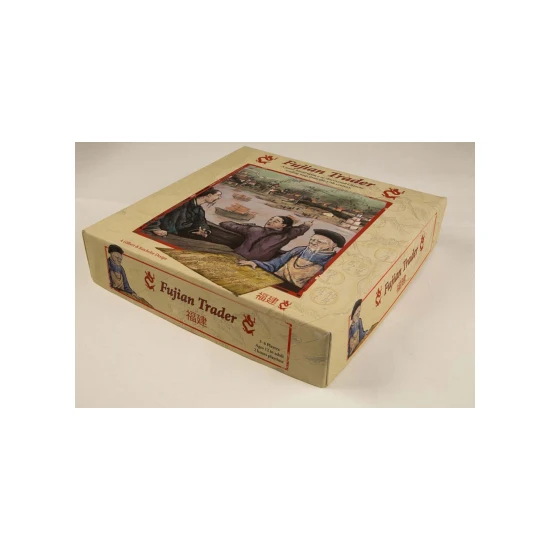
Fujian Trader
Publisher: Thinking Past
 Do you want to sell your copy of this game?

Use our marketplace utrade!
Fujian Trader
Contact us
Share on
The item is not available, you can use the alert to be notified when it will be back in stock.
PICTURES ON BGG
These photos are the property of boardgamegeek.com and do not refer specifically to the edition on this page.

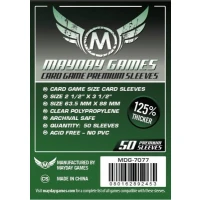
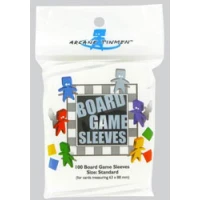
 Card sleeves in this game
115 cards of 63.0mm width and 88.5mm of height
3x
(50 Pcs)
2x
(100 Pcs)
2x
(100 Pcs)
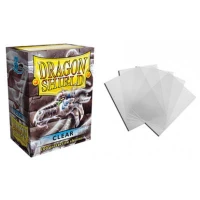
2x
(100 Pcs)

 Description
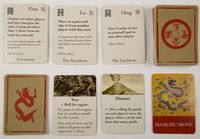
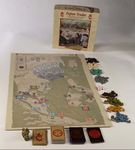
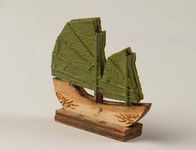
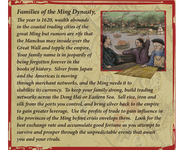
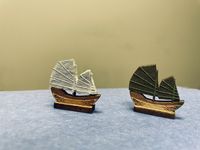
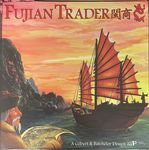
Fujian Trader is a victory-point based, gateway game. The theme and mechanics are based upon the re-discovered Selden Map which depicts trading routes in China and had been lost for nearly 300 years. In Fujian Trader, players assume the role of Ming-era merchant families following trading routes in the East China Sea. Victory-points are gained by trading (or raiding) the goods of iron, silk, and rice for silver and influence. To win, players must accrue the most victory-points in order to successfully endure the Manchu invasion and subsequent Ming Empire collapse at the end of the game.
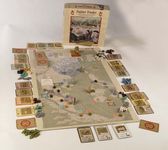
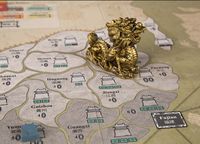
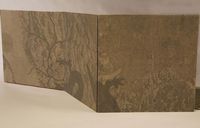
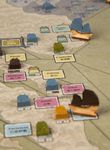
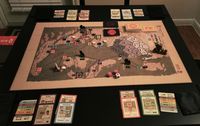
The game board is divided up into six different regions separated into six different colors. Each region has several ports. Players start out with a number of ports (dependent on the number of players) and may receive goods based off of which ports they control. When ports produce goods depends on the roll of a colored die. The color the die lands on coincides with the six colored regions and determines which produces goods for that round. Players may purchase additional ports with money gained from trading or incite rebellions in already controlled ports to wrestle them from an opponent.
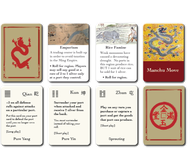
The game ends after the Manchu first invade the Ming Empire. The invasion starts once the last of three Manchu Move cards is drawn from the Event deck. Players then have a three rounds to trade goods and two rounds to store silver, thus accruing victory-points. After the third round of the invasion the game ends, and players tally up victory points to determine who wins.
 Additional information
| Mechanics: | Area Control/Area Influence Route/Network Building Trading |
| Categories: | Historical Economic Educational Exploration |
| Alternative names: | |
| BARCODE: | ????????? |
| This was seen 852 times | |
Description
Fujian Trader is a victory-point based, gateway game. The theme and mechanics are based upon the re-discovered Selden Map which depicts trading routes in China and had been lost for nearly 300 years. In Fujian Trader, players assume the role of Ming-era merchant families following trading routes in the East China Sea. Victory-points are gained by trading (or raiding) the goods of iron, silk, and rice for silver and influence. To win, players must accrue the most victory-points in order to successfully endure the Manchu invasion and subsequent Ming Empire collapse at the end of the game.
The game board is divided up into six different regions separated into six different colors. Each region has several ports. Players start out with a number of ports (dependent on the number of players) and may receive goods based off of which ports they control. When ports produce goods depends on the roll of a colored die. The color the die lands on coincides with the six colored regions and determines which produces goods for that round. Players may purchase additional ports with money gained from trading or incite rebellions in already controlled ports to wrestle them from an opponent.
The game ends after the Manchu first invade the Ming Empire. The invasion starts once the last of three Manchu Move cards is drawn from the Event deck. Players then have a three rounds to trade goods and two rounds to store silver, thus accruing victory-points. After the third round of the invasion the game ends, and players tally up victory points to determine who wins.
Card sleeves in this game
115 cards of 63.0mm width and 88.5mm of height
3x
(50 Pcs)
2x
(100 Pcs)
2x
(100 Pcs)
2x
(100 Pcs)
Additional information
| Mechanics: | Area Control/Area Influence Route/Network Building Trading |
| Categories: | Historical Economic Educational Exploration |
| Alternative names: | |
| BARCODE: | ????????? |
| This was seen 852 times | |

CAUTION! Not suitable for children under 3 years of age. It contains small parts which could be swallowed or inhaled.