

-
Choose website language
-
 Deutsch
DE
Deutsch
DE
-
 English
EN
English
EN
-
 Français
FR
Français
FR
-
 Español
ES
Español
ES
-
 Italiano
IT
Italiano
IT
-
 Polski
PL
Polski
PL
-
 Português
PT
Português
PT
-
Country to ship to






-
Choose website language
-
Deutsch
DE
-
English
EN
-
Français
FR
-
Español
ES
-
Italiano
IT
-
Polski
PL
-
Português
PT
-
Country to ship to


 (+39) 320 073 4588
 CONTACT US VIA EMAIL
-
Choose website language
-
Deutsch
DE
-
English
EN
-
Français
FR
-
Español
ES
-
Italiano
IT
-
Polski
PL
-
Português
PT
-
Country to ship to

-
Menu

-
Ranks

-
Boardgame

-
RPG

-
Party

-
CG

-
Accessories

-
Lego

-
Books

-
Comics



|
|
|
|
|
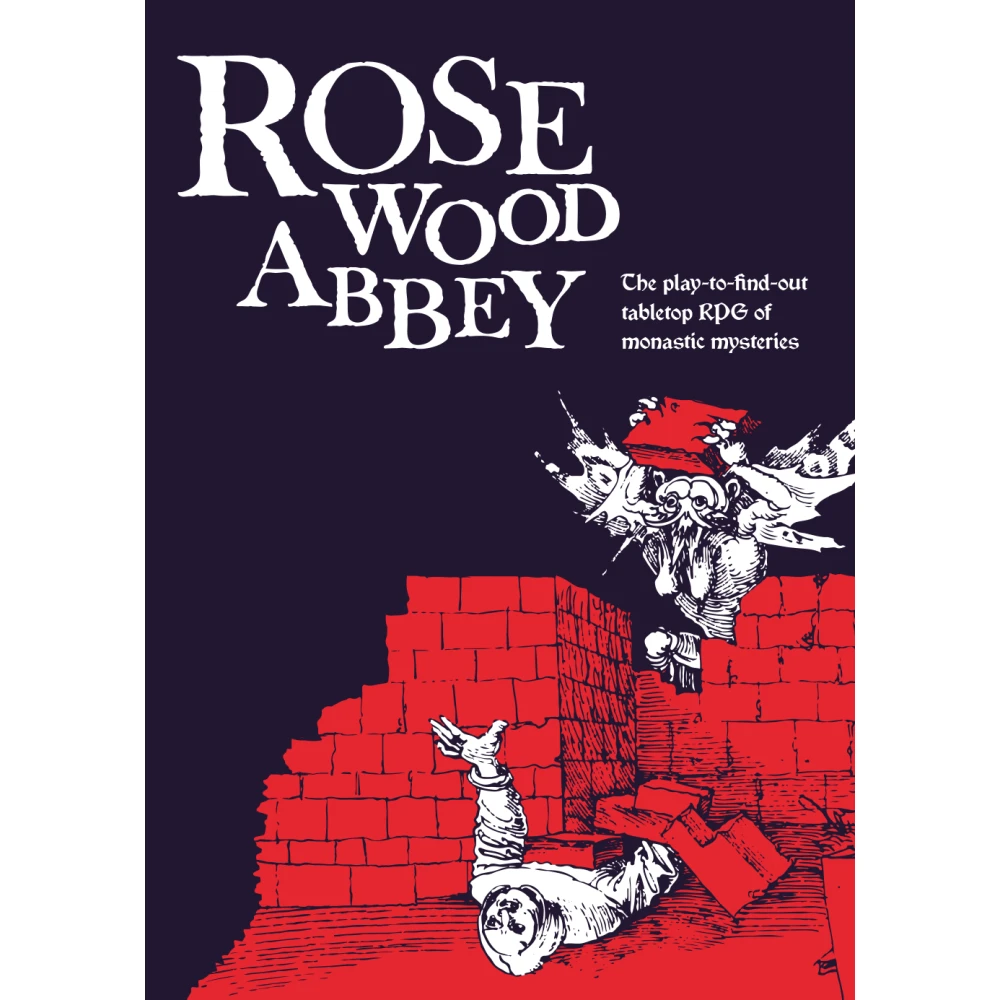
Rosewood Abbey Rpg
 Do you want to sell your copy of this game?


 Description
Rosewood Abbey is a roleplaying game by Kalum from The Rolistes about upholding the truth no matter the consequences.
You're one of the Fratres Herodoti. This informal brotherhood of scholars swore an oath to knowledge and truth.
Will you keep to your oath? ...as your brothers and flock are bewitched by the rumors they spin?
This Carved from Brindlewood (PbtA) game is inspired by Umberto Eco’s The Name of the Rose and the British mystery television series Cadfael.
What do I get?
The rule book features:
- An entertaining and informative Replay transcript of a full session inspired by the tabletalk RPGs (テーブルトークRPG) format common in Japan.
- The Rules and everything needed to play.
- Links to the print-at-home Character sheet, Basic, Friars, and Providence Moves sheet, Rumor Mill, Rumor Apocrypha, and Collaboration sheet.
- Three mysteries:
- The Rose in the Garden by Kalum
- Mocking Grotesquery by Sean F Smith
- Fugit Inreparabile Tempus by Kalum
The Game
Ideal for 3 to 6 players, Cantor included, the game works well for one-shots but truly shines for short campaigns, thanks to its unique "Rumor Mill" story-building mechanism.
As a "Carved from Brindlewood" game, it is directly adapted from the roleplaying game Brindlewood Bay and build on Jason Cordova's Clue-based emergent whodunnit system.
Rosewood Abbey's system and mysteries offer a high level of replayability with only limited preparation required from the game master.
Content Warning
Rosewood Abbey has roots in Walloon, Flemish, and European folklore, which is often irreverent towards religion. This game engages with images of the Catholic Church and God, as well as actions Christians consider to be sinful or virtuous.
These actions can include crimes, blasphemy, intimate and sexual acts, as well as violence or murder.
While in continuation of the tradition paillarde, European bawdy folkloric tales and songs, Rosewood Abbey is not intended as a commentary on contemporary religious beliefs and practices. It is not a statement about divine interventions in our own world (nervous laugh).
Setting
Between the 12th and the 13th centuries, the Abbazia di Palissandro was a monastery at the feet of the Alps in Northern Italy. A small village has developed within a reasonable walking distance.
The monks feed the poor, care for the sick, and educate a few children. Interactions beyond these monastic responsibilities are something abbey authorities frown upon but not uncommon.
God, Devils, and Details
The Ancient
An important figure in local folklore, the Ancient is the subject of speculation, wonder, and fear. The inquisitive Fratres Herodoti doubt such a character or creature ever existed.
Regardless, the locals praise or blame the Ancient for events, good or bad.
Virtuous Figure, Sinful Figure
Once it’s time to fill in the first Obsession in the Rumor Mill (see below), the players must pick a character among the Suspects encountered through the current and previous Mysteries.
This Suspect becomes the Virtuous Figure or Sinful Figure based on whether the Talk of the Moment is itself Virtuous or Sinful.
The Rumor Mill & Rumor Apocrypha
The Rumor Mill Sheet tracks the history, figures, and consequences of Rumors running wild at the abbey. It captures the phantasms troubling the monks and their flock, their intensity, and the characters impacted by them.
The Routine
This Routine functions as a framework for the Cantor and the players, offering a rhythm for narration. Use the Routine to aid the game’s improvisation and fiction; ignore it when it hinders those play elements.
Replay
 Additional information
| Mechanics: | |
| Categories: | |
| Alternative names: | |
| BARCODE: | 9791281213401 |
| This was seen 129 times | |
Description
Rosewood Abbey is a roleplaying game by Kalum from The Rolistes about upholding the truth no matter the consequences.
You're one of the Fratres Herodoti. This informal brotherhood of scholars swore an oath to knowledge and truth.
Will you keep to your oath? ...as your brothers and flock are bewitched by the rumors they spin?
This Carved from Brindlewood (PbtA) game is inspired by Umberto Eco’s The Name of the Rose and the British mystery television series Cadfael.
What do I get?
The rule book features:
- An entertaining and informative Replay transcript of a full session inspired by the tabletalk RPGs (テーブルトークRPG) format common in Japan.
- The Rules and everything needed to play.
- Links to the print-at-home Character sheet, Basic, Friars, and Providence Moves sheet, Rumor Mill, Rumor Apocrypha, and Collaboration sheet.
- Three mysteries:
- The Rose in the Garden by Kalum
- Mocking Grotesquery by Sean F Smith
- Fugit Inreparabile Tempus by Kalum
The Game
Ideal for 3 to 6 players, Cantor included, the game works well for one-shots but truly shines for short campaigns, thanks to its unique "Rumor Mill" story-building mechanism.
As a "Carved from Brindlewood" game, it is directly adapted from the roleplaying game Brindlewood Bay and build on Jason Cordova's Clue-based emergent whodunnit system.
Rosewood Abbey's system and mysteries offer a high level of replayability with only limited preparation required from the game master.
Content Warning
Rosewood Abbey has roots in Walloon, Flemish, and European folklore, which is often irreverent towards religion. This game engages with images of the Catholic Church and God, as well as actions Christians consider to be sinful or virtuous.
These actions can include crimes, blasphemy, intimate and sexual acts, as well as violence or murder.
While in continuation of the tradition paillarde, European bawdy folkloric tales and songs, Rosewood Abbey is not intended as a commentary on contemporary religious beliefs and practices. It is not a statement about divine interventions in our own world (nervous laugh).
Setting
Between the 12th and the 13th centuries, the Abbazia di Palissandro was a monastery at the feet of the Alps in Northern Italy. A small village has developed within a reasonable walking distance.
The monks feed the poor, care for the sick, and educate a few children. Interactions beyond these monastic responsibilities are something abbey authorities frown upon but not uncommon.
God, Devils, and Details
The Ancient
An important figure in local folklore, the Ancient is the subject of speculation, wonder, and fear. The inquisitive Fratres Herodoti doubt such a character or creature ever existed.
Regardless, the locals praise or blame the Ancient for events, good or bad.
Virtuous Figure, Sinful Figure
Once it’s time to fill in the first Obsession in the Rumor Mill (see below), the players must pick a character among the Suspects encountered through the current and previous Mysteries.
This Suspect becomes the Virtuous Figure or Sinful Figure based on whether the Talk of the Moment is itself Virtuous or Sinful.
The Rumor Mill & Rumor Apocrypha
The Rumor Mill Sheet tracks the history, figures, and consequences of Rumors running wild at the abbey. It captures the phantasms troubling the monks and their flock, their intensity, and the characters impacted by them.
The Routine
This Routine functions as a framework for the Cantor and the players, offering a rhythm for narration. Use the Routine to aid the game’s improvisation and fiction; ignore it when it hinders those play elements.
Replay
Additional information
| Mechanics: | |
| Categories: | |
| Alternative names: | |
| BARCODE: | 9791281213401 |
| This was seen 129 times | |
CAUTION! Not suitable for children under 3 years of age. It contains small parts which could be swallowed or inhaled.