








Two players might want an immediate rematch, a head-to-head game to study for weeks or a problem to solve on the same side. “Works with two” is only the first filter. The second concerns how much the other person shapes your decisions: do you need to anticipate their next move, read their bluff or listen to their hypothesis? This gives you a much more precise basis for choosing than a list sorted by rating.
For a direct head-to-head contest, I'd start with Duello per la Terra di Mezzo. For two people intrigued by different roles, I'd consider Kelp. For those who want to cooperate and enjoy investigations, Chronicles of Crime offers a complete change of pace. These are alternatives to one another, not rungs on a ladder where the most complex game is necessarily the destination.
What do you need?
- You want to thwart each other on every turn
- Duello per la Terra di Mezzo presents several visible threats to keep track of at once.
- You enjoy working out what the other player is hiding
- Kelp builds its contest around a predator and prey with different tools.
- You prefer comparing theories
- Chronicles of Crime offers a shared investigation; consider the app and the language of the edition.
- One of you hates being targeted
- Choose cooperation: blocking your opponent is a central part of a duel.
The suggestions explained
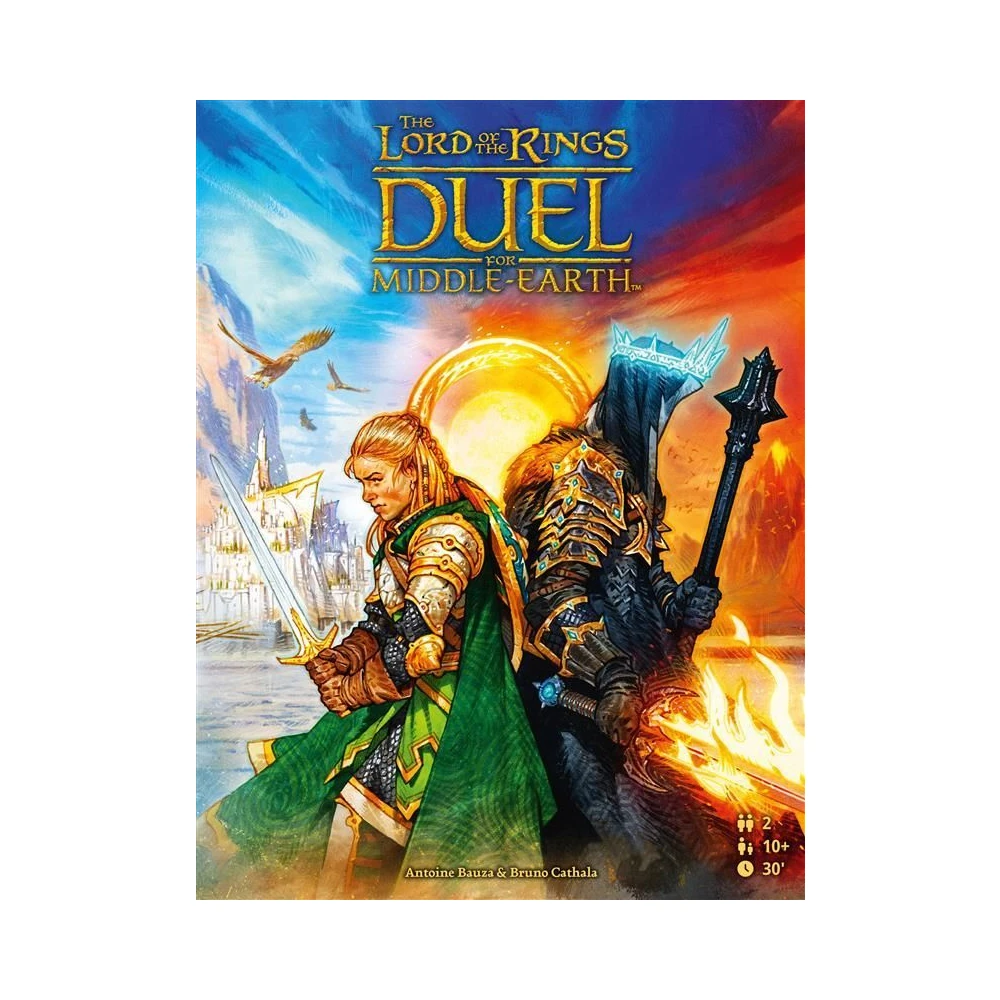
Il Signore degli Anelli: Duel for Middle-earth
For players who want a tight contest over shared choices
Edition language: Italian
See price and buyI'd choose it for two players who enjoy spotting their opponent's threat a turn before it becomes decisive. The available cards are a contested resource: taking a useful one can leave your opponent with exactly the one they were after. Presence on the map, the Ring's journey and alliances give each choice a different significance. It's a good candidate if you want to discuss after the game the moment when you could have changed direction. The setting helps you make sense of the conflict, but doesn't require turning the evening into a test of Tolkien knowledge.
The trade-off to know
It's exclusively for two and requires you to keep a constant eye on your opponent. I wouldn't suggest it as a background activity while doing something else. If you want to work on the same problem, I'd prefer the investigation in Chronicles of Crime; if you're looking for very different tools for each player, I'd look at Kelp.
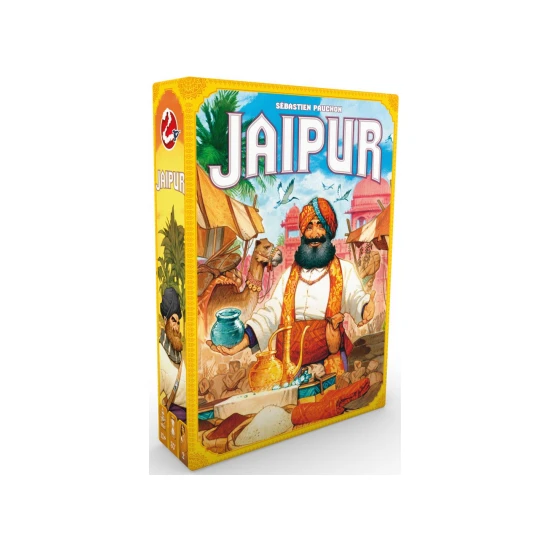
Jaipur (NUOVA EDIZIONE ITALIANA)
For two players who enjoy deciding when to close a deal
Edition language: Italian
See price and buyJaipur makes the contest a matter of opportunity: you collect goods from the market, trade them and decide when to sell, while the other player is also trying to get rich. Rewards for selling several cards at once give you a concrete reason to wait, without automatically making waiting the right choice. I'd suggest it to those who prefer observing what interests their rival through card trading, rather than directly attacking one of their pieces. This is the Italian edition for two players.
The trade-off to know
The core activity is still collecting and selling goods: this isn't an adventure to experience together or a game you can open up to more players when friends arrive. If you're mainly interested in building a pattern on your own board, I'd look at Patchwork.

Onitama
For anticipating the moves that will return to your opponent
Edition language: Italian
See price and buyIn Onitama, the available moves are shown on face-up cards. After using one, you swap it with the card in the centre, so choosing a move also means considering which option will return to circulation. I'd pick it for two players who enjoy thinking through a position with just a few pieces and discussing a concrete threat, without looking for a story or powers to collect. The board, five squares on each side, clearly defines the field of play.
The trade-off to know
Visible information doesn't make the consequences easy to predict. A large gap in experience with abstract games can affect the contest; the playing time shown in the listing isn't a promise about how long you'll spend deciding.
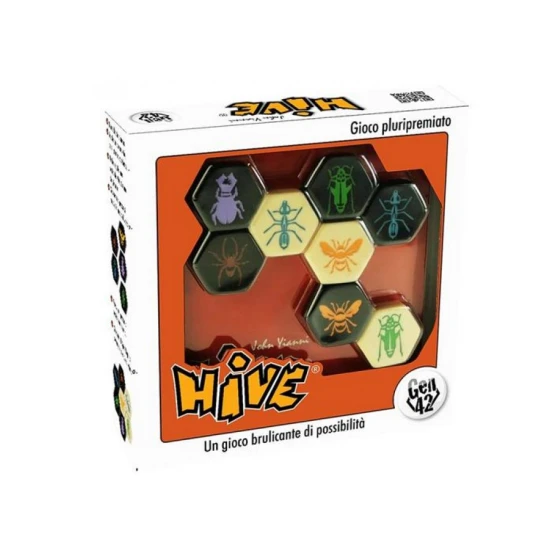
Hive (Edizione Ghenos)
For an abstract contest where the pieces build the playing field
Edition language: Italian
See price and buyHive replaces the chessboard with an arrangement of hexagonal tiles that touch one another. The insects move in different ways, and the target is the opposing queen, so the geometry you build is directly related to what you're trying to achieve. I'd choose it for players who enjoy positional play and want to recognise the pieces through their identities too. Here the theme helps you remember concrete differences without becoming a plot to follow.
The trade-off to know
You need to learn how the different insects move and accept a contest aimed at trapping the other player. The lack of a board doesn't mean an uneven or cluttered surface will do: the layout must remain easy to read.

Sky Team (EDIZIONE ITALIANA)
For coordinating silently at the controls of the same aircraft
Edition language: Italian
See price and buySky Team is cooperative and designed exclusively for two people, in the roles of pilot and co-pilot. Dice must be assigned to cockpit controls to manage aspects such as the aircraft's axis, speed and landing gear as you land. I'd recommend it to anyone looking for a shared objective while still wanting to feel responsible for their own decisions: silent placement makes coordination different from the open discussion of an investigation. The listing identifies this as the Italian version.
The trade-off to know
Cooperation doesn't mean you can freely comment on every placement. If your enjoyment comes from discussing every choice together, that restriction may be a drawback; the player count also stays at two, even when the scenarios change.

Patchwork - Revised Ed (EDIZIONE ITALIANA)
For fitting pieces together while keeping an eye on buttons and time
Edition language: Italian
See price and buyPatchwork combines a visual puzzle with an economic choice: a piece that fits your quilt well costs buttons and advances you along the time track. Some tiles also generate further income, so a useful shape isn't the only thing to consider. I'd give it as a gift or suggest it to two players who prefer developing their own project while still competing over opportunities to buy pieces. The version offered is the Revised Edition, listed as Italian.
The trade-off to know
The box contains a competition for two, not a free-form design activity. Anyone who finds comparing shapes, remaining space and costs demanding might prefer Jaipur; here, you also need room for the two boards and the tiles available to choose from.
A duel is defined by what you concede
In Duello per la Terra di Mezzo, taking a card also changes which cards are available to your opponent. Before choosing the reward that benefits you most, look at the opportunity you're opening up on the other side. It's the kind of tension I'd want for a competitive pair: you don't need negotiations with a third player to make a seemingly small decision interesting.
The three instant-win conditions also force you to shift your priorities. You can have a sound economic plan and still have to interrupt it because your rival threatens to win on another front. If abandoning what you're building to hold the other player back irritates you, this contest may feel intrusive. That's not a flaw to fix by buying an expansion: it's the heart of the experience.
Asymmetry means learning the other point of view too
Kelp sets up two different approaches: the octopus uses cards and hidden information, while the shark manages dice and hunting opportunities. This gives the players on either side different questions to consider. The octopus player must weigh up what they are giving away; the shark player must work out when to invest resources to turn a suspicion into an attack. I'd recommend it to anyone who enjoys this gap between intention and the information available.
Swapping roles in a later game is a good way to understand the other player's difficulties, not a promise of automatic balance. During the first rules explanation, it's worth learning both players' objectives, even if you only study your own actions in detail. Check the publisher's clarifications too: Kelp has an official rules update, so an old video explanation may use an earlier procedure.
In cooperative play, speaking time is the resource you need to share
An investigation can work well with two because there are only a few people to share the clues and insights among. But having a shared objective doesn't stop one person from directing everything. In Chronicles of Crime, I'd suggest alternating who handles the device and who pieces together the connections, giving both players time to suggest a lead before following one up.
The app is necessary, so the phone is part of the experience here. If you're looking for an evening away from screens, choose something else. Consider replayability too: once you know the solution, going through a case again doesn't offer the same sense of discovery. For those who want to keep playing the same system against the same person, a duel offers a different kind of longevity from a collection of investigations.
Questions before buying
Is a game for two to four always a good choice for two players?
No. The number indicates a supported player count; to choose, you need to understand what stays interesting without other opponents. Negotiation, majority mechanics and social deduction can change considerably.
Does cooperative play overcome a large gap in experience?
It can help if the experienced player lets the other person make decisions too. If they always provide the solution, sharing the victory isn't enough to make the game a shared experience.
Do I need to know other games before starting Duello per la Terra di Mezzo?
It's a standalone game. Its connection to 7 Wonders Duel doesn't mean you need to own or know that game; it's best to learn this game's rules directly.
Found your direction?
Explore the product pages to compare editions and choose the one for you.
Explore Board games