









Langue:
Anglais

|
|
|
|
Idéal à 2 joueurs
12 votes sur 12
Âge conseillé par les joueurs : 12+
2 votes sur 3
1-4
180'
12
Etwas notwendiger Text
|
RAN
Éditeur: GMT Games

 Voulez-vous vendre votre copie de ce jeu ?

Utilisez notre marché utrade !
RAN
Contactez-nous
Partager sur
L'article n'est pas disponible, vous pouvez utiliser l'alerte pour être averti lorsqu'il sera de nouveau en stock.
PHOTOS SUR BGG
Ces photos sont la propriété de boardgamegeek.com et ne font pas spécifiquement référence à l'édition présentée sur cette page.












 Descriptif
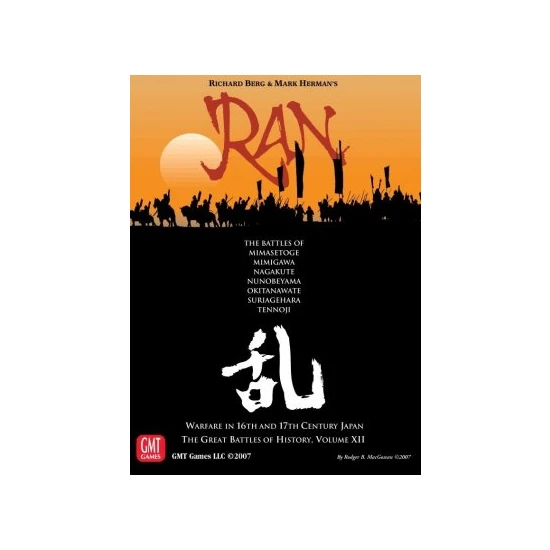
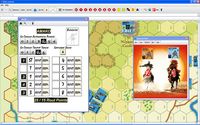
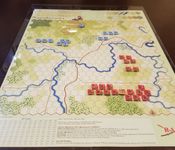
Guerre de samouraïs dans le Sengoku Jidai - Japon 16e-17e siècle. RAN est le douzième jeu de la série Great Battles of History, et le deuxième de la série Samurai (juste après le jeu homonyme). RAN simule la haute forme de guérilla développée par les samouraïs japonais, où les batailles étaient en réalité un pur décor aux actes individuels de courage, d'audace et de dévotion. Bien que la victoire politique et tactique soit certainement la chose la plus importante, les têtes tranchées des samouraïs ennemis étaient juste à un pas, en ordre de valeur et d'importance. Malgré la présence des arquebuses arrivées du Portugal, la guerre japonaise restait encore un mouvement non linéaire et riche de danses à coups de lames. RAN, le nom que le réalisateur japonais Akira Kurosawa a choisi pour sa version orientale du Roi Lear, signifie approximativement "chaos".
Les batailles de RAN sont :
Les batailles de RAN sont :
- Mimasetoge
- Mimigawa
- Nagakute
- Nunobeyama
- Okitanawate
- Suriagehara
- Tennoji
 Informations supplémentaires
| Mécanique: | Hex et compteur |
| Catégories: | Médiéval Guerre |
| Noms alternatifs: | RAN 乱 RAN Ran: Warfare in 16th and 17th Century Japan 乱 |
| BARCODE: | NOEAN_889 |
| Dans 4 listes de souhaits Dans les collections 2 Cela a été vu 10001 fois | |
Descriptif
Guerre de samouraïs dans le Sengoku Jidai - Japon 16e-17e siècle. RAN est le douzième jeu de la série Great Battles of History, et le deuxième de la série Samurai (juste après le jeu homonyme). RAN simule la haute forme de guérilla développée par les samouraïs japonais, où les batailles étaient en réalité un pur décor aux actes individuels de courage, d'audace et de dévotion. Bien que la victoire politique et tactique soit certainement la chose la plus importante, les têtes tranchées des samouraïs ennemis étaient juste à un pas, en ordre de valeur et d'importance. Malgré la présence des arquebuses arrivées du Portugal, la guerre japonaise restait encore un mouvement non linéaire et riche de danses à coups de lames. RAN, le nom que le réalisateur japonais Akira Kurosawa a choisi pour sa version orientale du Roi Lear, signifie approximativement "chaos".
Les batailles de RAN sont :
Les batailles de RAN sont :
- Mimasetoge
- Mimigawa
- Nagakute
- Nunobeyama
- Okitanawate
- Suriagehara
- Tennoji
Informations supplémentaires
| Mécanique: | Hex et compteur |
| Catégories: | Médiéval Guerre |
| Noms alternatifs: | RAN 乱 RAN Ran: Warfare in 16th and 17th Century Japan 乱 |
| BARCODE: | NOEAN_889 |
| Dans 4 listes de souhaits Dans les collections 2 Cela a été vu 10001 fois | |
Ce que disent les joueurs
À combien de joueurs il est le meilleur · 12 votes sur BoardGameGeek
- 1 1 1 le trouvent idéal, 8 le recommandent, 2 le déconseillent
- 2 12 12 le trouvent idéal, 0 le recommandent, 0 le déconseillent
- 3 0 0 le trouvent idéal, 4 le recommandent, 5 le déconseillent
- 4 0 0 le trouvent idéal, 3 le recommandent, 6 le déconseillent
- 4+ 0 0 le trouvent idéal, 0 le recommandent, 8 le déconseillent
Idéal Conseillé Déconseillé
Avis des utilisateurs uplay: Aucun avis uplay publié. Soyez le premier !
Votre avis
Les commentaires sont modérés avant publication : pas de liens, insultes ou contenus hors sujet. Les avis négatifs respectueux sont acceptés.
Connectez-vous pour donner votre avis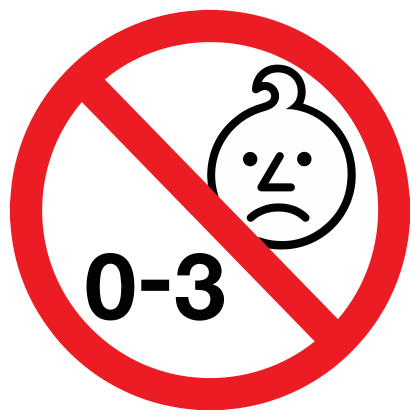
ATTENTION ! Ne convient pas aux enfants de moins de 3 ans. Il contient de petites pièces qui pourraient être avalées ou inhalées.