








|
|
|

3-5
90'
12
Umfangreicher Einsatz von Text
|
Fujian Trader
Editore: Thinking Past
 Vuoi vendere la tua copia di questo gioco?

Usa il nostro marketplace utrade!
Fujian Trader
Contattaci
Condividi su
L'articolo non è disponibile, puoi utilizzare il nostro sistema di notifica per sapere quando sarà nuovamente ordinabile.
IMMAGINI SU BGG
Queste foto sono di proprietà di boardgamegeek.com e non si riferiscono specificatamente all'edizione di questa pagina.
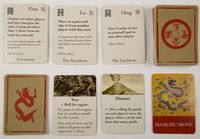
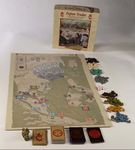
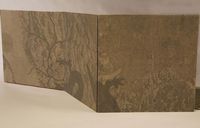
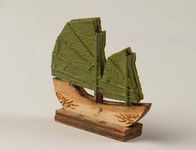

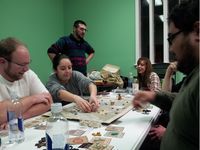
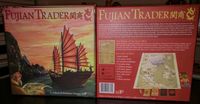
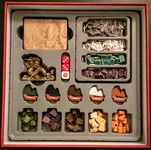
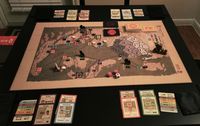

 Bustine per le carte in questo gioco
115 carte: 63.0mm di larghezza e 88.5mm di altezza (63.0x88.5)
3x
(50 Pz)
2x
(100 Pz)

2x
(100 Pz)
2x
(100 Pz)

 Descrizione
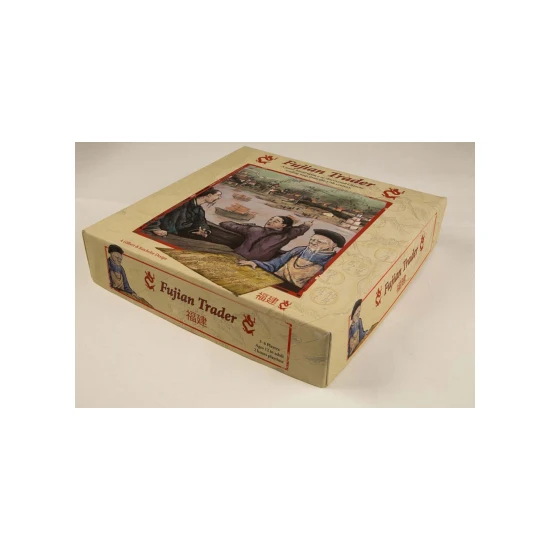
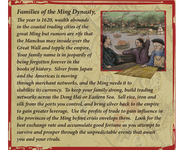
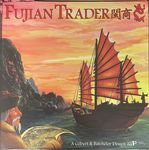
Fujian Trader is a victory-point based, gateway game. The theme and mechanics are based upon the re-discovered Selden Map which depicts trading routes in China and had been lost for nearly 300 years. In Fujian Trader, players assume the role of Ming-era merchant families following trading routes in the East China Sea. Victory-points are gained by trading (or raiding) the goods of iron, silk, and rice for silver and influence. To win, players must accrue the most victory-points in order to successfully endure the Manchu invasion and subsequent Ming Empire collapse at the end of the game.
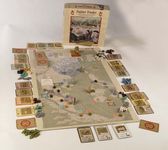
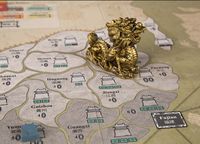
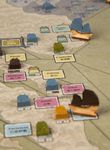
The game board is divided up into six different regions separated into six different colors. Each region has several ports. Players start out with a number of ports (dependent on the number of players) and may receive goods based off of which ports they control. When ports produce goods depends on the roll of a colored die. The color the die lands on coincides with the six colored regions and determines which produces goods for that round. Players may purchase additional ports with money gained from trading or incite rebellions in already controlled ports to wrestle them from an opponent.
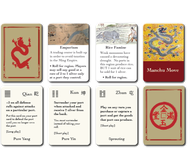
The game ends after the Manchu first invade the Ming Empire. The invasion starts once the last of three Manchu Move cards is drawn from the Event deck. Players then have a three rounds to trade goods and two rounds to store silver, thus accruing victory-points. After the third round of the invasion the game ends, and players tally up victory points to determine who wins.
 Ulteriori Informazioni
| Meccaniche: | Controllo del territorio Costruzione strade-collegamenti Commercio e scambi |
| Categorie: | Storici Commercio/Economia Educativi Esplorazione |
| Nomi alternativi: | |
| BARCODE: | ????????? |
| È stato visto 845 volte | |
Descrizione
Fujian Trader is a victory-point based, gateway game. The theme and mechanics are based upon the re-discovered Selden Map which depicts trading routes in China and had been lost for nearly 300 years. In Fujian Trader, players assume the role of Ming-era merchant families following trading routes in the East China Sea. Victory-points are gained by trading (or raiding) the goods of iron, silk, and rice for silver and influence. To win, players must accrue the most victory-points in order to successfully endure the Manchu invasion and subsequent Ming Empire collapse at the end of the game.
The game board is divided up into six different regions separated into six different colors. Each region has several ports. Players start out with a number of ports (dependent on the number of players) and may receive goods based off of which ports they control. When ports produce goods depends on the roll of a colored die. The color the die lands on coincides with the six colored regions and determines which produces goods for that round. Players may purchase additional ports with money gained from trading or incite rebellions in already controlled ports to wrestle them from an opponent.
The game ends after the Manchu first invade the Ming Empire. The invasion starts once the last of three Manchu Move cards is drawn from the Event deck. Players then have a three rounds to trade goods and two rounds to store silver, thus accruing victory-points. After the third round of the invasion the game ends, and players tally up victory points to determine who wins.
Bustine per le carte in questo gioco
115 carte: 63.0mm di larghezza e 88.5mm di altezza (63.0x88.5)
3x
(50 Pz)
2x
(100 Pz)
2x
(100 Pz)
2x
(100 Pz)
Ulteriori Informazioni
| Meccaniche: | Controllo del territorio Costruzione strade-collegamenti Commercio e scambi |
| Categorie: | Storici Commercio/Economia Educativi Esplorazione |
| Nomi alternativi: | |
| BARCODE: | ????????? |
| È stato visto 845 volte | |

ATTENZIONE! Non adatto ai bambini al di sotto dei 3 anni di età. Contiene piccole parti che potrebbero essere ingerite o inalate.