




People who don't regularly play board games aren't necessarily looking for something simplistic. They might really appreciate an interesting decision and have very little patience for twenty minutes of explanation without knowing what it's for. Presenting a concrete action works better: “We're building the landscape together, but each of us is trying to score points”, or “We're betting on a race where the camels carry one another around”.
I'd choose one main game and one clear promise. Carcassonne, King of Tokyo and Camel Up emphasise building, risk and prediction respectively. None of the three suits every group: comparing these differences is precisely how you avoid turning one enthusiast's experience into an entrance exam for everyone else.
What do you need?
- Your friends like to look things over, think and choose at a relaxed pace
- Carcassonne offers visible choices on a shared landscape.
- The group enjoys a laugh when someone gets attacked
- King of Tokyo can make the most of that rapport, provided everyone accepts elimination.
- There are three to eight of you and you want to follow the same event
- The second edition of Camel Up keeps the race at the centre of the conversation.
- Someone doesn't want to make up jokes or act out a role
- All three ask you to make game choices, without testing your acting skills.
The suggestions explained

Carcassonne (Edizione 2022)
For people who want to build something visible
Edition language: Italian
See price and buyCarcassonne begins with a straightforward task: finding a place for a tile that matches the landscape. The interesting step is deciding whether to commit a piece to it or keep it back, and how long to leave it committed. I'd suggest it to people who enjoy a concrete choice without having to read a hand of cards with different effects. The table shows what's happening and lets you explain many consequences with a gesture. Interaction can emerge gradually too: at first you build your own project, then you learn to notice how tiles can bring competing interests closer together.
The trade-off to know
It isn't conflict-free, and the tiles you draw limit what you can achieve. The landscape also takes up more and more space. If you mainly want to laugh about a shared event, Camel Up is a closer fit; if you're looking for aggressive competition that's immediately easy to read, I'd look at King of Tokyo.
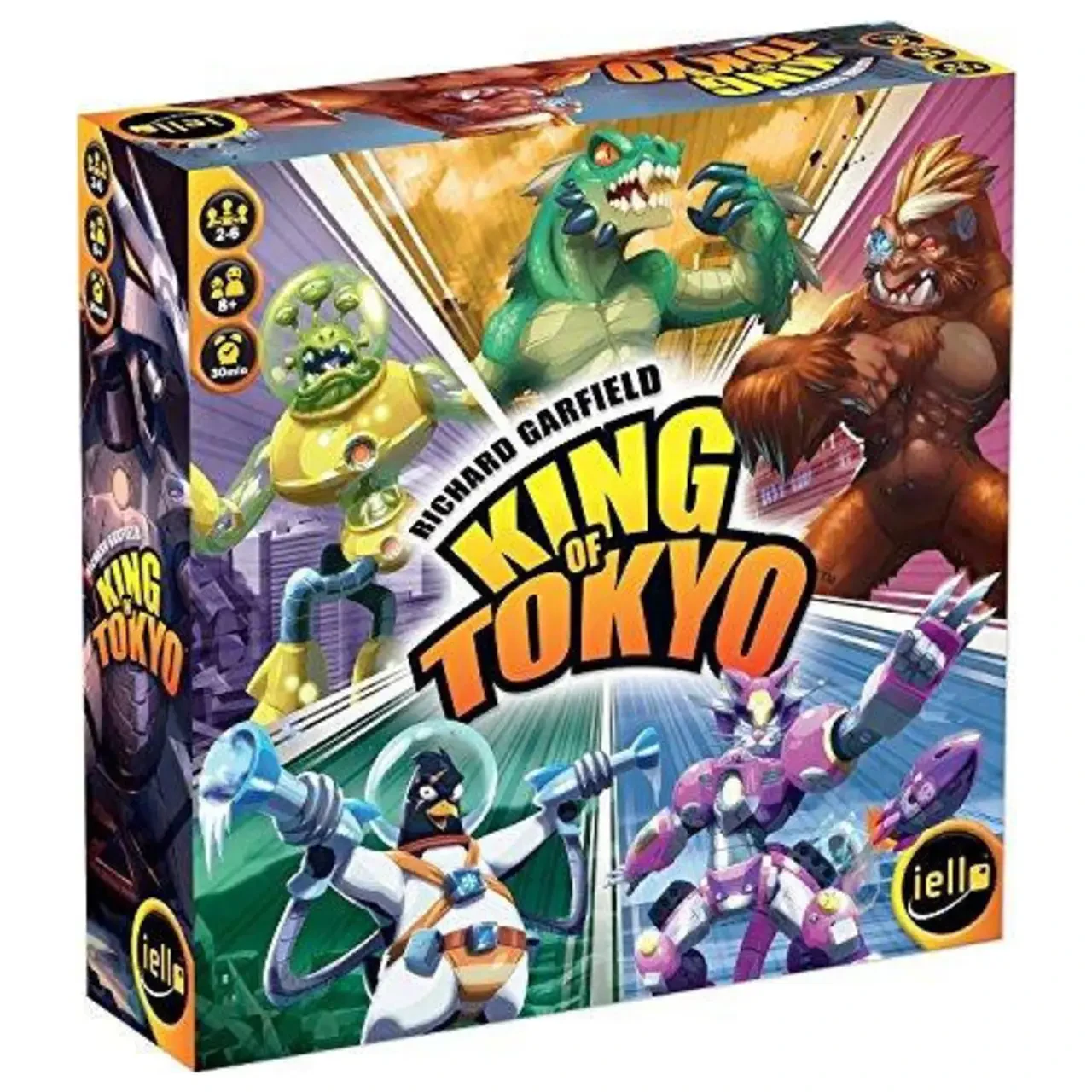
King of Tokyo (Nuova Edizione)
For a group that accepts risk and attacks
Edition language: Italian
See price and buyKing of Tokyo makes the reason for choosing it clear: your monster is aiming for points or trying to be the last one standing. The dice make results visible, and cards bought with energy add options to explore. I'd recommend it when the group enjoys reacting to a stroke of luck, commenting on an overambitious decision and targeting one another in good spirits. The theme is an accessible invitation to play, even if you're unfamiliar with modern board games. Randomness can make the first contest less intimidating, but it doesn't remove the need to decide which risks to accept.
The trade-off to know
You can be knocked out of the game, and someone sensitive to attacks might have a bad evening. I wouldn't choose it just because it features colourful monsters and a low recommended age. To keep everyone involved in the same race without elimination, I'd prefer Camel Up, within its stated player count.
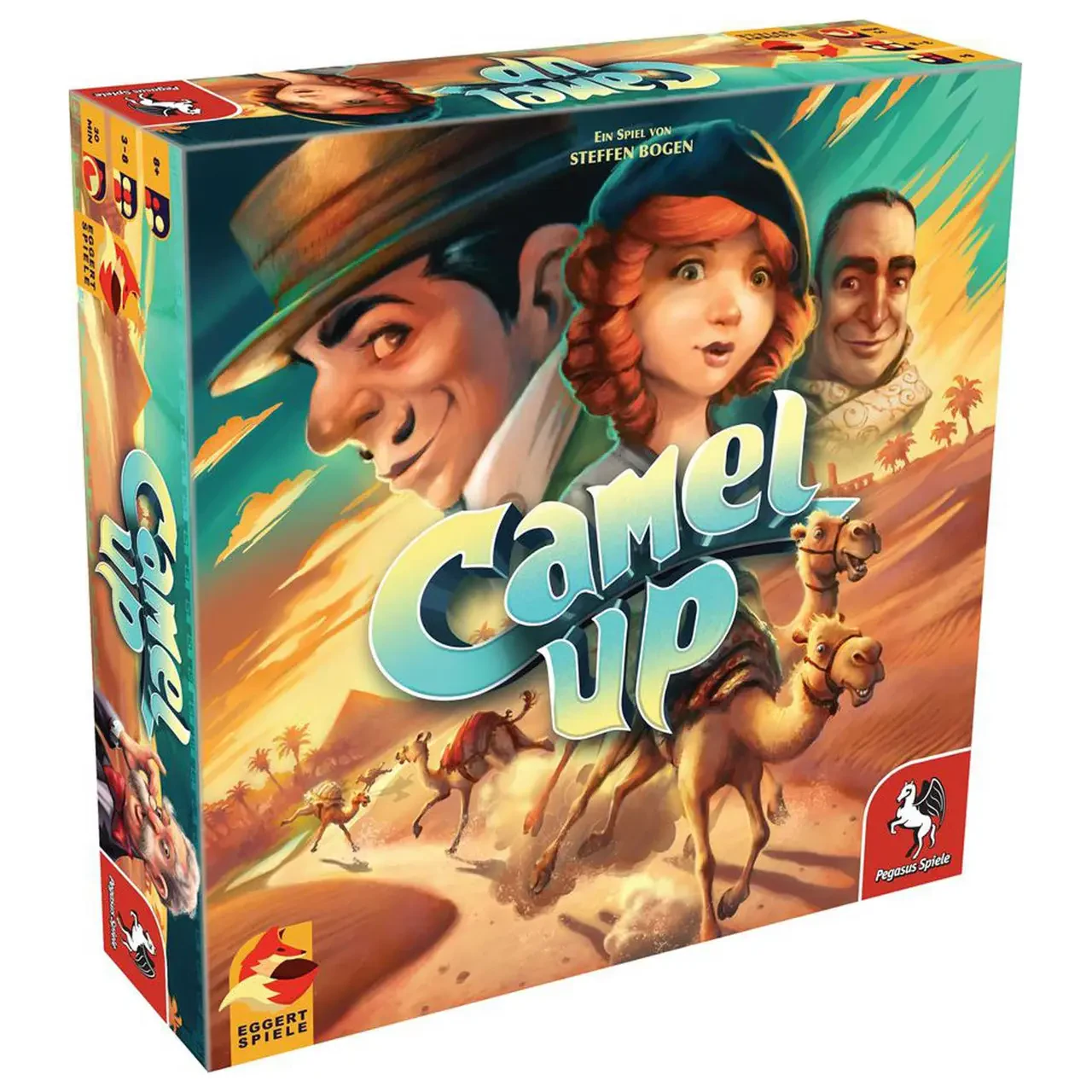
Camel Up (Second Edition)
For commenting on the race together, with up to eight people
Edition language: English
See price and buyIn Camel Up, no one simply has “their own camel” to guide to victory: you try to work out which one is worth backing as the race changes. The fact that camels can stack on top of one another makes movement surprising and gives everyone at the table a shared scene to follow. I'd choose it for friends who want to chat around brief decisions, without an individual creative challenge. The second edition shown in the listing supports three to eight players. Making a prediction earlier promises a better reward, but means committing with less information.
The trade-off to know
The race depends on dice and doesn't always reward the prediction that seems most reasonable. It isn't my choice for players who want a high degree of control or find reversals frustrating. It also needs a table that's ready for play: in a living room with plates and glasses still scattered around, a small clear space isn't enough.
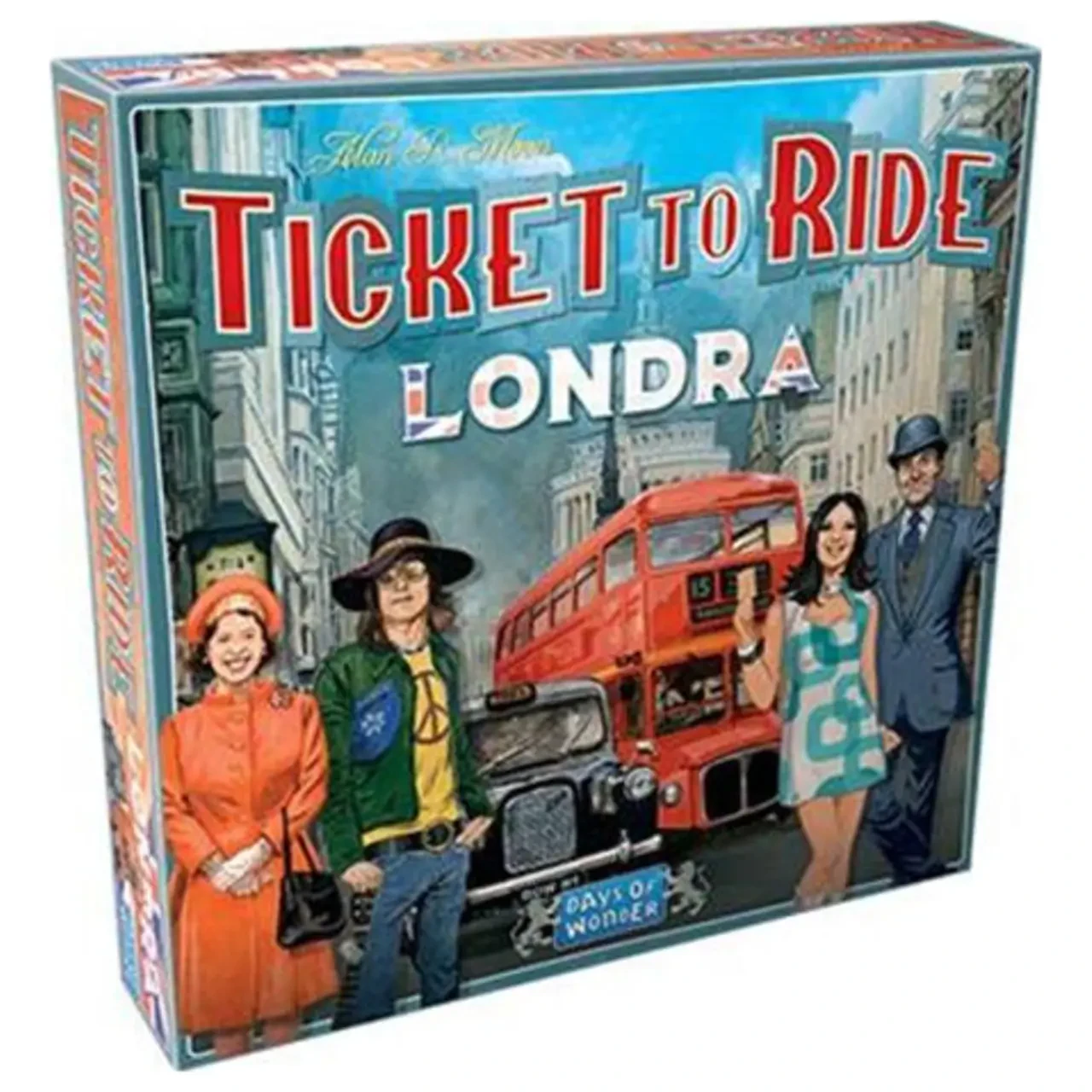
Ticket to Ride: Londra
For introducing route building in a city
Edition language: Italian
See price and buyTicket to Ride: Londra focuses on bus routes and Destination Tickets in the British capital. Connecting places is an objective you can point to directly on the map, which helps when friends are encountering this kind of game for the first time. I'd choose it for a group of two to four who want to make decisions about recognisable routes, without starting with a long list of individual powers.
The trade-off to know
The map and tickets still require attention to your objectives, even though the listing indicates a short playing time. This isn't the choice for five or more friends, and it shouldn't be confused with the Europa box, which offers travel on a different scale.

Sushi Go!
For explaining drafting through combinations of dishes
Edition language: Italian
See price and buySushi Go! uses card selection to build combinations: rolls, sets of sashimi and nigiri with wasabi aren't all the same investment. The food makes the different card families recognisable, while drafting introduces the idea of choosing between opportunities that won't all be yours. I'd suggest it to a group of up to five who prefer a deck of cards to a large map and enjoy comparing small collections.
The trade-off to know
Before you start, you need to explain how the different dishes score points: the illustrations are no substitute for that explanation. This isn't the game to buy for a table of eight, for which the separate game Sushi Go Party! is available.
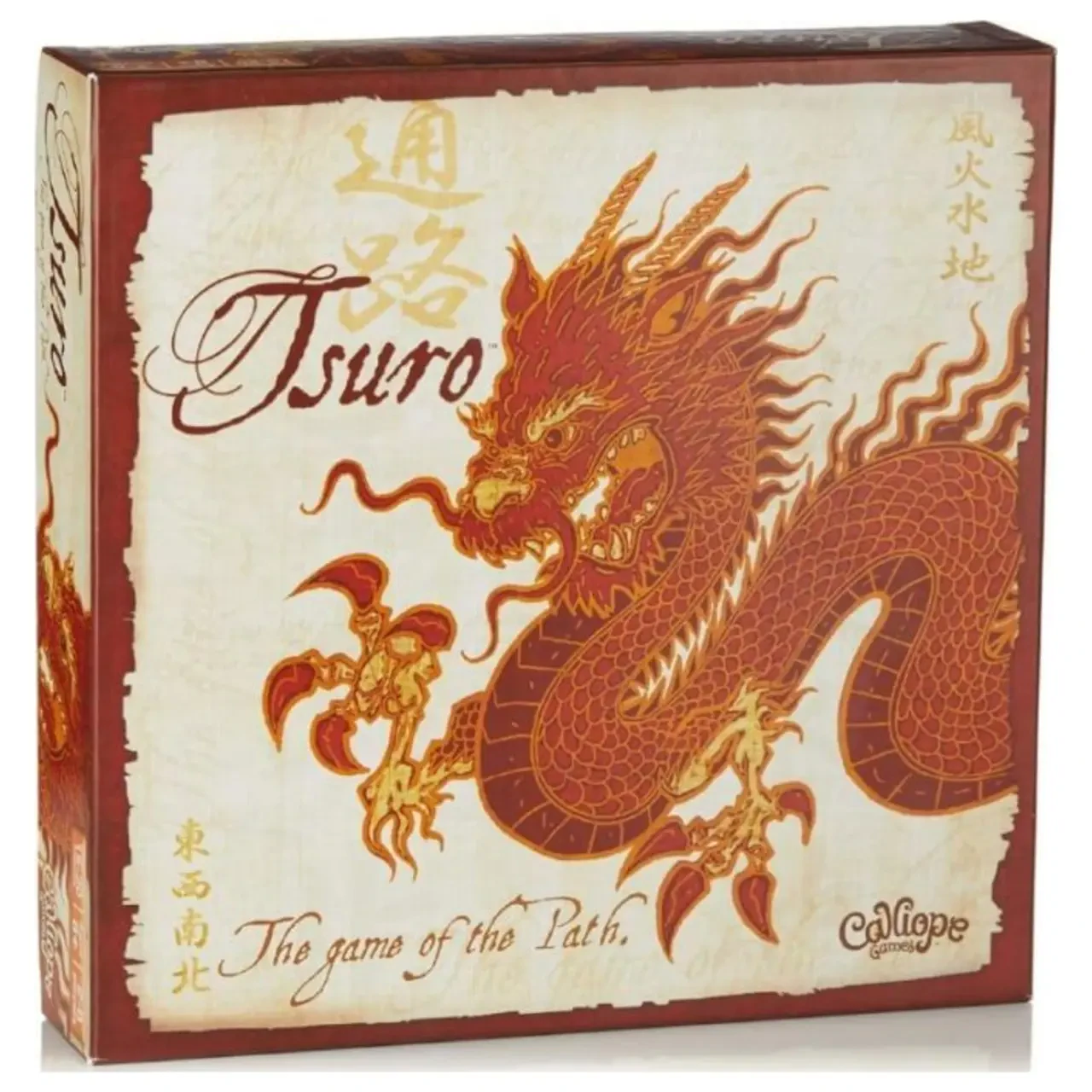
Tsuro
For following a path and seeing immediately who it affects
Edition language: Italian, English, German, French, Spanish, Dutch
See price and buyTsuro centres on paths that can connect and cross: choosing a tile means looking at where it will take your piece and which other routes it will touch. I'd choose it when you need a task you can demonstrate on the board and your friends prefer reading a visual situation to interpreting card text. The listing gives a player count of two to eight, a useful option when your first game night involves more than the usual group of four.
The trade-off to know
Other players' connections can divert your path, even off the board. So the simplicity of the action doesn't guarantee you'll be able to build undisturbed: anyone who finds an immediate setback hard to take may prefer a cooperative game.

The Game: Quick & Easy
For tackling a sequence of numbers and colours together
Edition language: Italian
See price and buyThe Game: Quick & Easy gives the group a common opponent: the challenge of discarding all fifty cards onto the two central piles. One runs in ascending order and the other in descending order, while colour lets you play in the opposite direction, as described in the listing. It's the option I'd choose if your friends prefer cooperation and want to understand what's at stake in a choice through visible numbers, rather than immediately learning how different powers and characters match up.
The trade-off to know
Cooperation requires everyone to follow how the piles develop and understand the colour exception. I wouldn't use it as a backdrop to separate conversations, or let the most experienced player dictate everyone else's decisions.
Show a choice before listing the exceptions
To explain Carcassonne, I'd put a few tiles on the table and show a choice between extending a city and completing a road. Then I'd show why a piece you've committed isn't available elsewhere. The resource to understand isn't just the tile you've drawn: it's the ability to use your followers again. A visible example makes a rule useful before it becomes something to remember.
With King of Tokyo, I'd start instead with the victory conditions and what the dice symbols mean. The experience you're promising is choosing between damage, healing, energy and points, while accepting that the outcome isn't entirely under your control. Before handing out the monsters, I'd also say that players can be eliminated. Discovering this when it happens to a beginner undermines trust in the explanation far more than a minor forgotten rule.
Other players' turns are part of your game
In Camel Up, the race remains interesting even when someone else is taking their turn. A move can change the value of your prediction and give you a new talking point. To my mind, this makes it a compelling choice for friends looking for a sociable evening who want to stay engaged with the same event, rather than each optimising a separate project.
Carcassonne leaves more room for individual thought; King of Tokyo makes the consequences of a roll immediately visible. Neither requires the experienced player to keep explaining the best move. Help by reminding people which actions are legal, then let them choose. Correcting every decision turns an accessible game into a demonstration of the superiority of the person who already knows it.
A successful first game leaves you wanting to make more choices
I wouldn't include every possible extra just because it's in the box. First, people need to understand the game's core action and see what it produces. In Carcassonne, fields also deserve a separate explanation: they commit a piece until final scoring, so they change how you assess moves. If you agree on a simplified first try, clearly call it a trial run and explain what you're leaving out.
At the end, I'd ask which moment they enjoyed: completing something, taking a risk, blocking a rival or witnessing a reversal. That's much more useful information than simply asking “Did you enjoy it?” If the group wants to try the same game again, the second play can be the real success of the evening: the participants already know the shared language and can finally use it to make their own decisions.
Questions before buying
Which of the three would I choose for a first game with four players?
Carcassonne if you enjoy building and thinking things through; King of Tokyo if you enjoy attacks and risk; Camel Up if the main aim is to follow and discuss a changing situation together.
Should you let first-time players win?
I'd rather make the information and consequences clear, then play seriously without being ruthless. Feeling that your choices matter is more useful than a win you've been handed without knowing it.
Is the playing time on the box enough to plan the evening?
Allow time for setup, explanation and questions too. A first game includes learning; don't plan your friends' return home down to the minute based only on the stated playing time.
Found your direction?
Explore the product pages to compare editions and choose the one for you.
Explore Board games