





A setting book can be a wonderful read and still leave you with almost all of the next session to prepare. A ready-made adventure can provide locations, objectives and obstacles, but still ask the GM to study and adapt them. The useful question is how much work you want to take out of preparation: inventing the opening problem, connecting clues, creating opponents or adding depth to the world?
Start with what the group will do in the next session. Planning a heist requires information on the target, security and people to deal with; a mystery needs a web of discoveries; an open-ended journey benefits from places with conflicting interests. Reading the table of contents with that need in mind is more effective than choosing the book with the largest map.
What do you need?
- You need to run a game in a few days
- Look for a scenario with a limited scope and read through its entire structure first, including the possible outcomes.
- The group wants to choose its own direction freely
- Favour locations, factions and objectives that can be used in different combinations.
- You want a new scenario as well as reusable material
- Consider a book that explicitly offers a mix of complete adventures and setting tools.
- You are looking for options for a single character
- You probably need a rules supplement, not a campaign for the group to read.
The suggestions explained
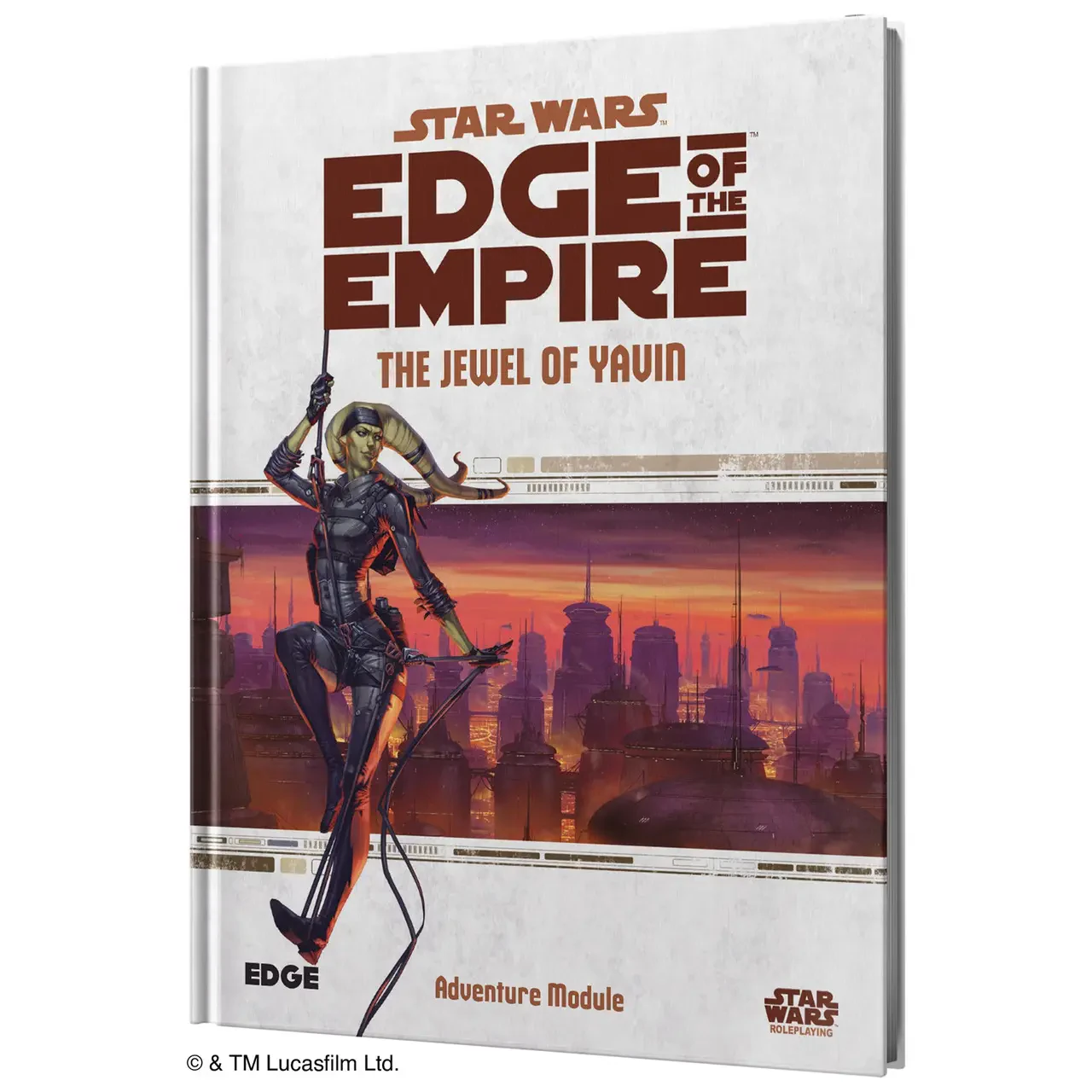
Star Wars: Edge of the Empire - The Jewel of Yavin
For a group that wants to plan a heist
Edition language: English
See price and buyThe Jewel of Yavin centres on stealing a gem in Cloud City, using the rules of Star Wars: Edge of the Empire. I would choose it when the group enjoys gathering information, discussing a plan and then reacting to what throws it into disarray. The Cloud City guide gives the GM material to reuse beyond the immediate objective. It is an option with a clear identity: before choosing it, I would get the players’ agreement on the heist premise so that preparation and the group’s interests align.
The trade-off to know
This is not an introductory rulebook. It requires the relevant rules system and a GM willing to study the situation. If the players get bored when planning is needed or prefer a very straightforward mission, the heist premise can be an obstacle even when everyone loves Star Wars.
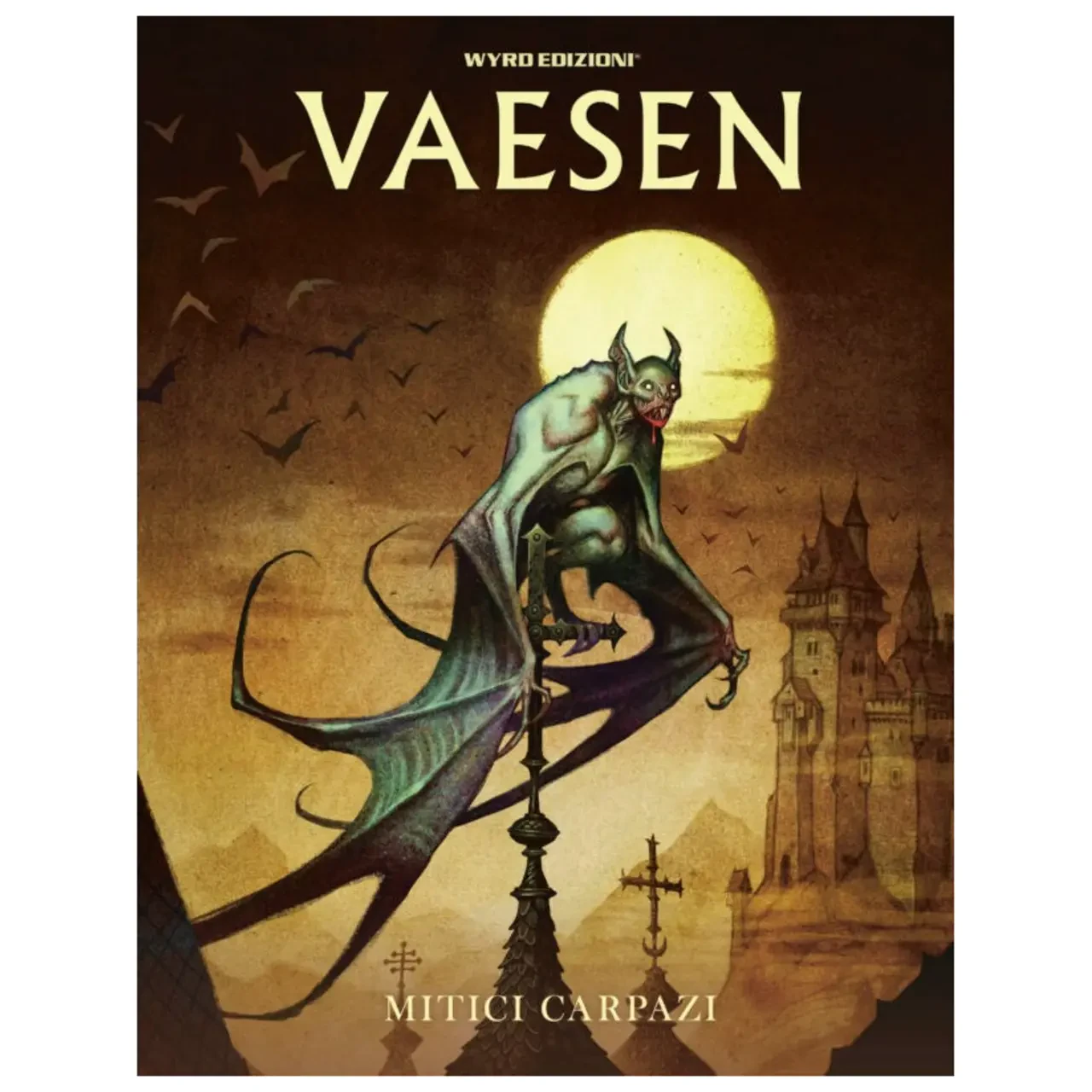
Vaesen - Mitici Carpazi
For combining ready-made mysteries with a new region
Edition language: Italian
See price and buyMitici Carpazi expands Vaesen with a different region and three complete mysteries. I would consider it for a group that wants to keep investigating but feels the need for new places and traditions. The advantage of the book’s mixed format is that you can start with a pre-written case and keep the rest as a resource for later sessions. Prague, the local society and the region’s creatures provide connections to revisit: in my view, the book offers more if the GM lets at least some of the investigation’s consequences resurface in the campaign.
The trade-off to know
It remains a supplement for Vaesen, so it does not replace the rulebook needed to play. It is also a horror offering: choose it for the kind of tension the group wants, not just for an interest in vampires and folklore. Anyone seeking a single adventure without an interest in the region will get less use from the rest of the book.

Il Richiamo Di Cthulhu - Le Case Della Follia Vol.1: Dietro Porte Chiuse (GDR)
For a collection of scenarios to use separately or link together
Edition language: Italian
See price and buyLe Case della Follia Vol. 1: Dietro Porte Chiuse contains five scenarios for Il Richiamo di Cthulhu, with stated compatibility with the Set Introduttivo or the seventh-edition Manuale Base. The description says they can be used as separate adventures, inserted into a campaign or linked into a mini-campaign. I would choose it when you want ready-made material but also want to decide how much effort to devote to continuity between episodes.
The trade-off to know
The specified rules are required, and each scenario still needs to be read and prepared by the Keeper. The collection is not a standalone rulebook; also consider its horror tone before suggesting it to a group mainly interested in action.

Vampiri: La Masquerade - Chicago By Night (GDR)
For a city of relationships, ambitions and political conflicts
Edition language: Italian
See price and buyChicago by Night offers a city to bring to life through characters, locations and factions from Vampiri: La Masquerade. The product listing describes more than fifty Kindred with biographies, secrets and relationships, ideas for chronicles and a complete story linked to the Lasombra. I would consider it for a Storyteller who wants a web of social intrigue to develop over time, with material to choose according to their coterie’s actions.
The trade-off to know
The number of characters calls for selection: you do not need to introduce them all in the first session. Check which edition of the rules the book requires, and do not treat a rich setting as a ready-made sequence of scenes to read at the table.

Mausritter - La Tenuta (GDR)
For exploring a region of Mausritter through eleven adventures
Edition language: Italian
See price and buyLa Tenuta expands Mausritter with a hexcrawl setting around Portomattone and eleven illustrated adventures. The listed contents include a campaign guide, maps and materials for character inventories. I would choose it if you want to combine individual sessions with geographical continuity, giving the group room to decide which locations to explore without having to invent every destination from scratch.
The trade-off to know
It is material for expanding Mausritter: pair it with the rules used by your group. Eleven adventures alone do not determine the number of sessions in the campaign; exploration, detours and player choices can alter the pace.

Fabula Ultima - Atlante Techno Fantasy (GDR)
For planning a techno fantasy campaign for Fabula Ultima
Edition language: Italian
See price and buyThe Atlante Techno Fantasy for Fabula Ultima offers ten locations with hooks and advice, three new classes and five antagonists at progressively higher levels, along with other options. I would consider it if you want to build a campaign about resistance, technology and inequality, choosing material from the book that supports the group’s characters. It is material for designing the world and its conflicts, with an explicitly dystopian slant.
The trade-off to know
It is not presented as a complete linear adventure to follow scene by scene. It requires Fabula Ultima and decisions from the Game Master and the group about which options to adopt; buying it does not replace that collaborative creation process.
Ready-made means organised, not that you already know the material
When assessing an adventure, look for a problem the characters can recognise and credible reasons to get involved. Read what happens if they ignore the assignment, arrive late or negotiate with someone who seemed to be an enemy. You do not need to anticipate every detour: you need to understand which elements hold the situation together. A sequence of scenes is easy to follow as long as the players are on board with its direction, but requires care when they take another route.
For preparation, separate information for the GM from materials to show the players. A map with secrets, a plot summary and a letter to hand to the players serve three different purposes. Keep what you will actually use in the next session within easy reach. Buying a very long book does not oblige you to memorise it: it may be more useful to study the first location and its inhabitants’ motivations closely.
When a setting saves work
A setting is particularly useful when the group already has a direction. If they want to establish a base, negotiate with a faction or explore a region, a good collection of locations and interests saves you from inventing every detail from scratch. Its value does not depend solely on pages of history: look for ongoing conflicts, people with incompatible goals and visible consequences. These are the elements that turn into choices, rather than remaining information to recount.
Mitici Carpazi for Vaesen is an example of a book that combines both: alongside coverage of the region and its beings from folklore, it offers three complete mysteries. The Jewel of Yavin, on the other hand, starts with a heist in Cloud City and also includes material on the city. The practical difference is the main focus: in the first case, you can choose an investigation as an entry point into a region; in the second, you have a criminal objective around which to organise the group.
Adapting the book without sacrificing player choice
Before bringing an adventure into your campaign, check why those particular characters would care about it. Payment may be enough for mercenaries, but not for a group bound by a promise they urgently need to fulfil. Changing the patron or linking a location to a relationship that has already emerged in play often takes less work than rewriting encounters. Share the premise with the players, leaving hidden only the details worth discovering.
Avoid treating the printed ending as a result you must achieve at any cost. Instead, use the opponents’ intentions and resources to respond to the group’s decisions. In an investigation, prepare what each discovery reveals; in a heist, what can change when an alarm goes off. The duration will also depend on how much time you spend discussing plans and relationships: the page count alone does not let you promise a certain number of sessions.
Questions before buying
Can I give the adventure to the players to read?
Usually it is best to share only the premise and the materials intended for them. The GM should first check where secrets, hidden identities and solutions appear. A setting book may also have chapters reserved for the person running the game.
How do I know whether the adventure suits my characters?
Check the system, edition and stated requirements, then assess the group’s motivations and capabilities. Even mechanically compatible characters may be unsuited to the premise: resolve the issue with an agreement beforehand, rather than forcing their hand during the session.
Is a book without a ready-made adventure less useful?
No. If you already have a good starting situation, a region with interesting locations and characters may be more useful than a plot to adapt. It is less suitable when you are mainly looking for a ready-made structure for your next session.
Found your direction?
Explore the product pages to compare editions and choose the one for you.
Explore Role-playing games